 Fil Caravan
Rugs, Carpets & Textiles
Antique Gordes Prayer Rug (Seccade), Western Anatolia
Hand-knotted wool prayer rug · Ghiordes (Gordes), Western Anatolia · early 20th century
US $2,800.00 · or best offer
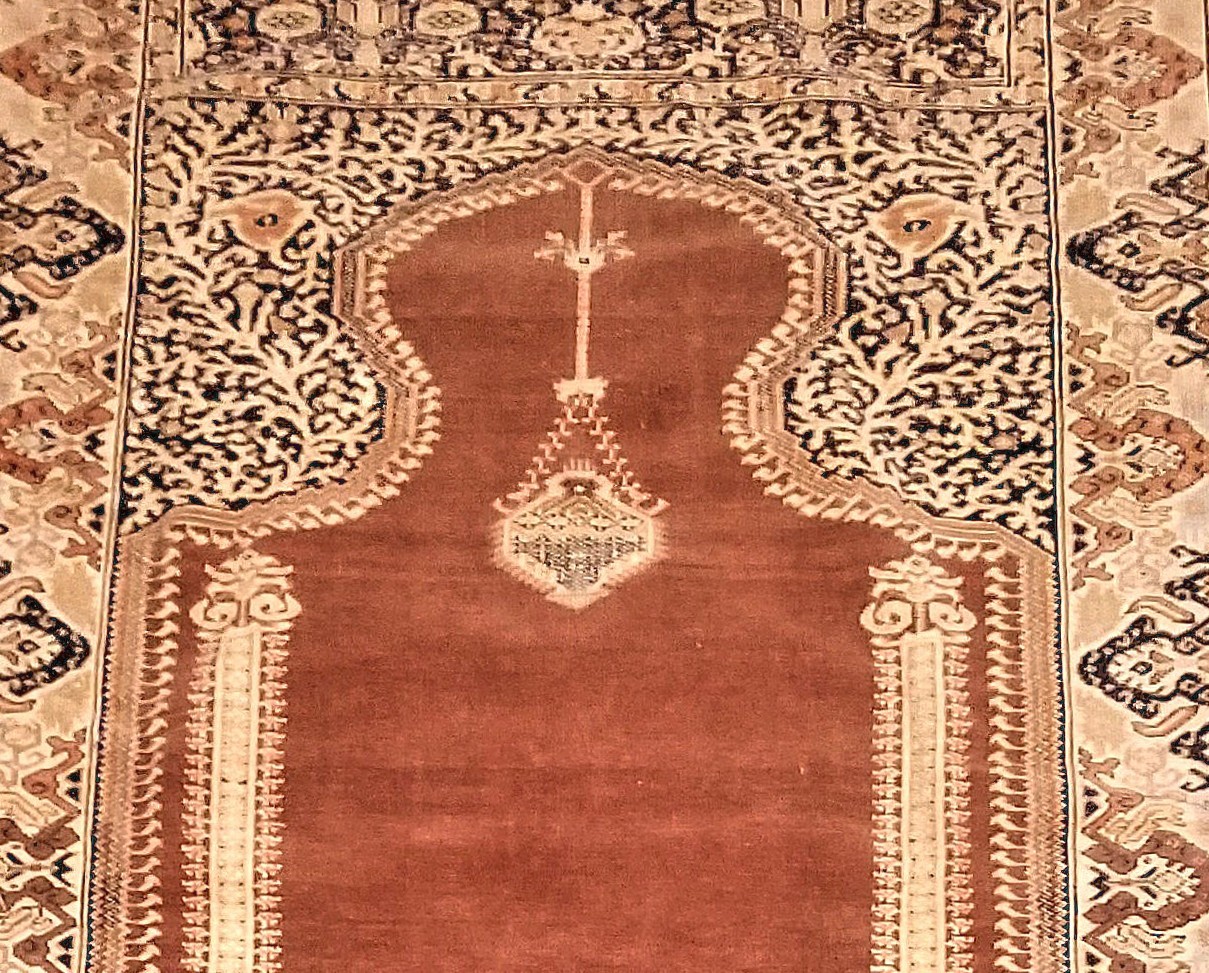
Description
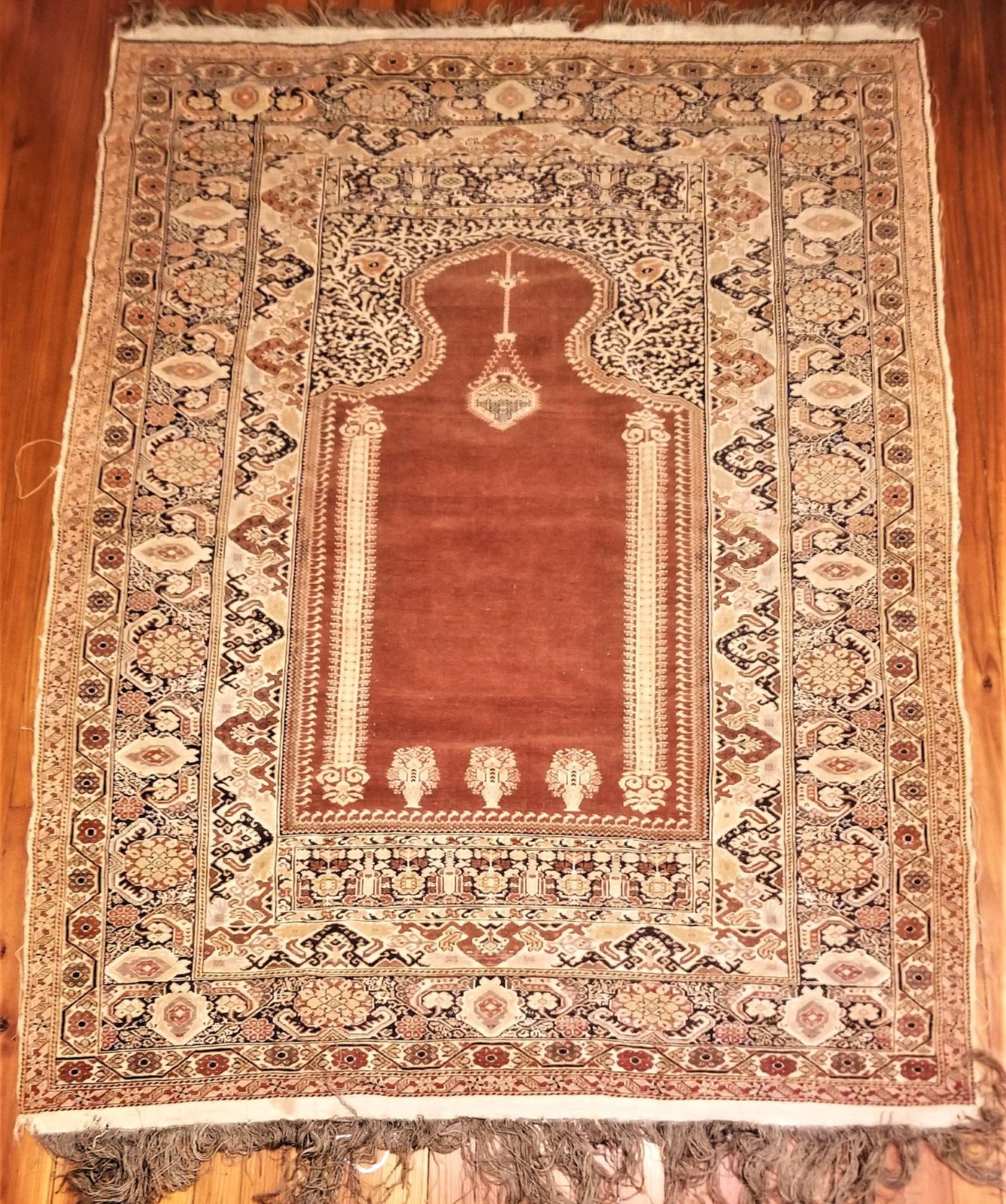
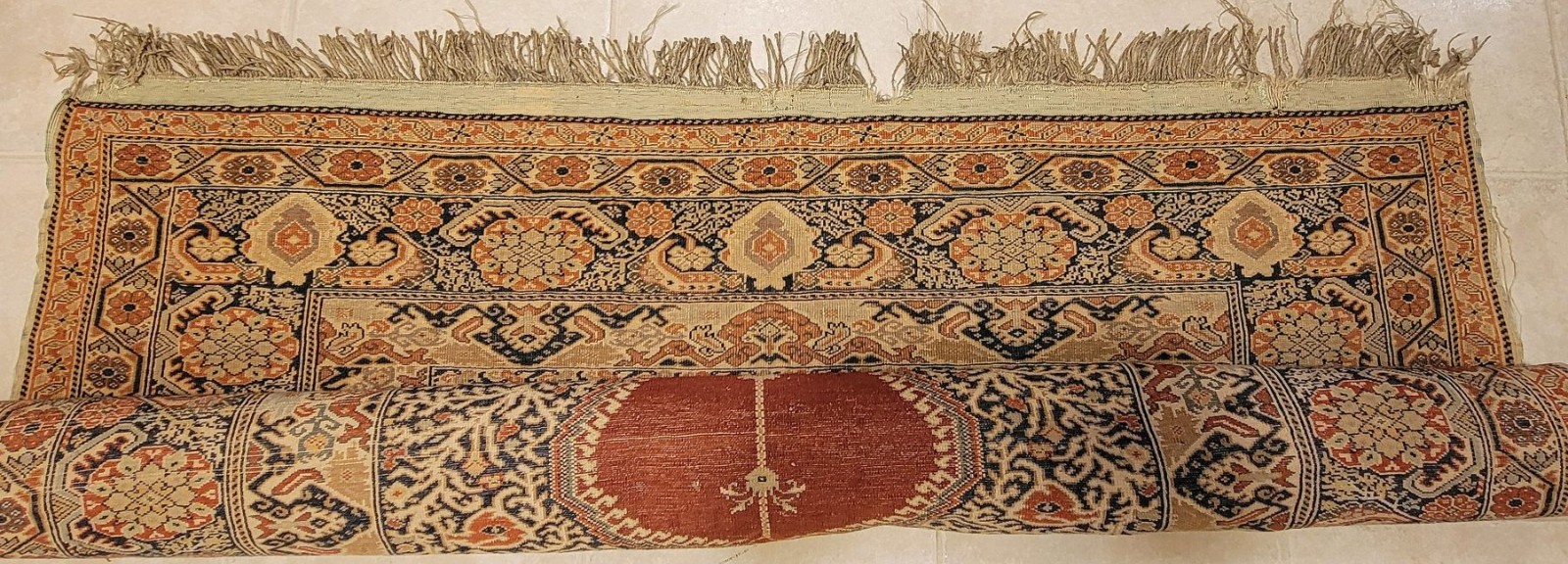
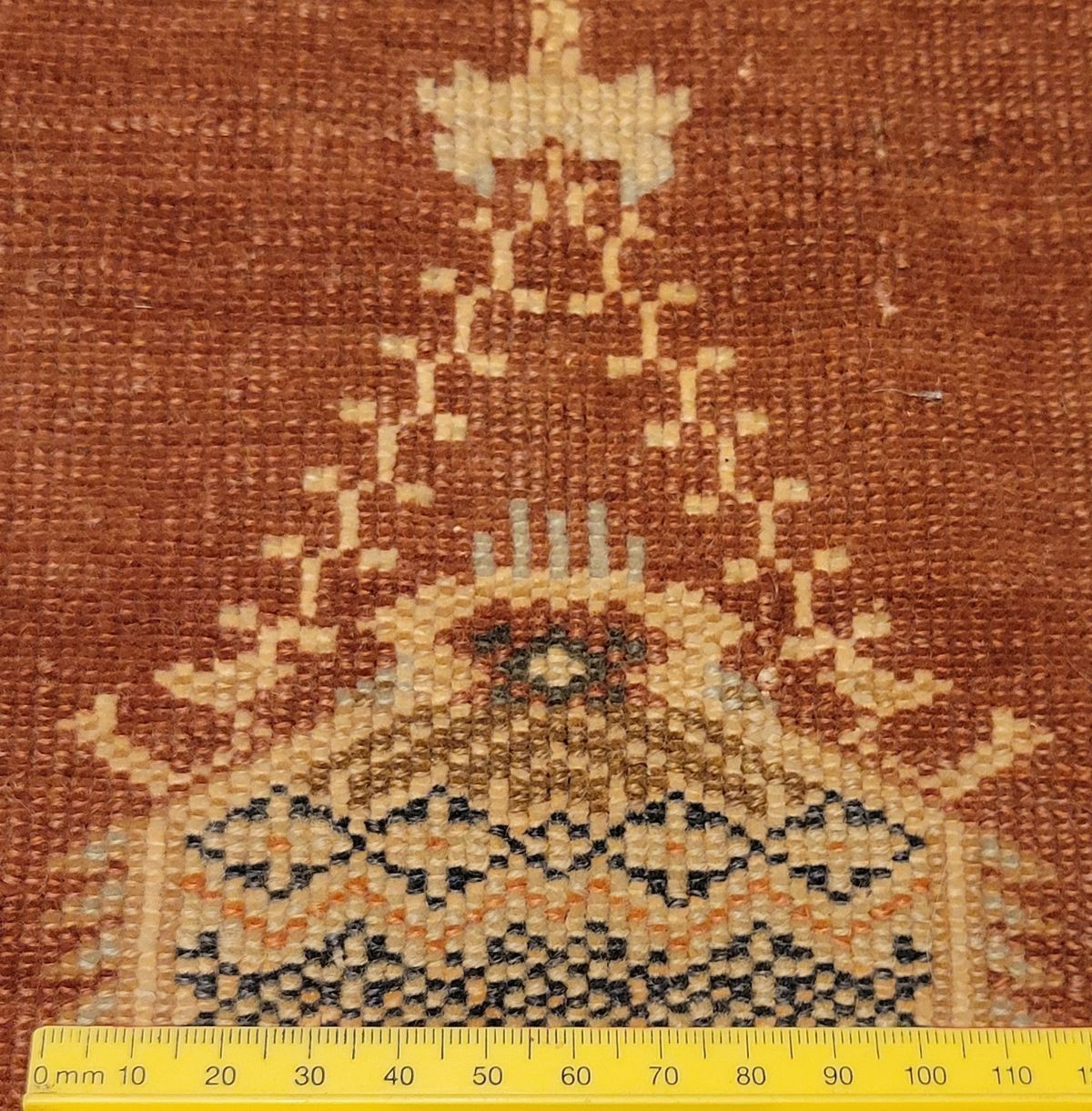
An early 20th-century Gordes prayer rug, woven as a seccade, the traditional format that provides a clean, designated space for daily devotional prayer. The field is a deep terracotta beneath a high-arched mihrab, with the symbolic hanging mosque lamp at its center, and the wool pile retains a high luster.
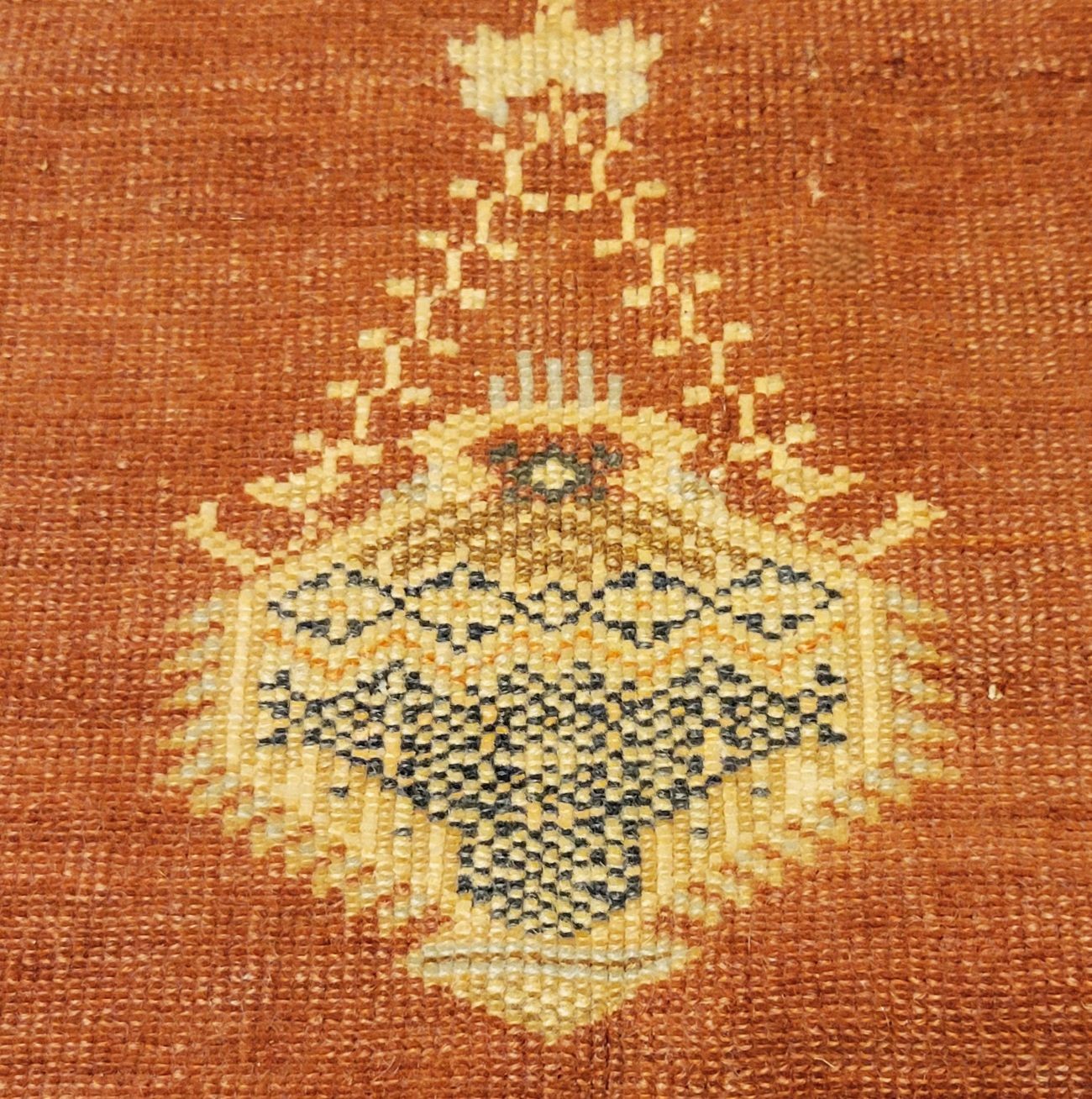
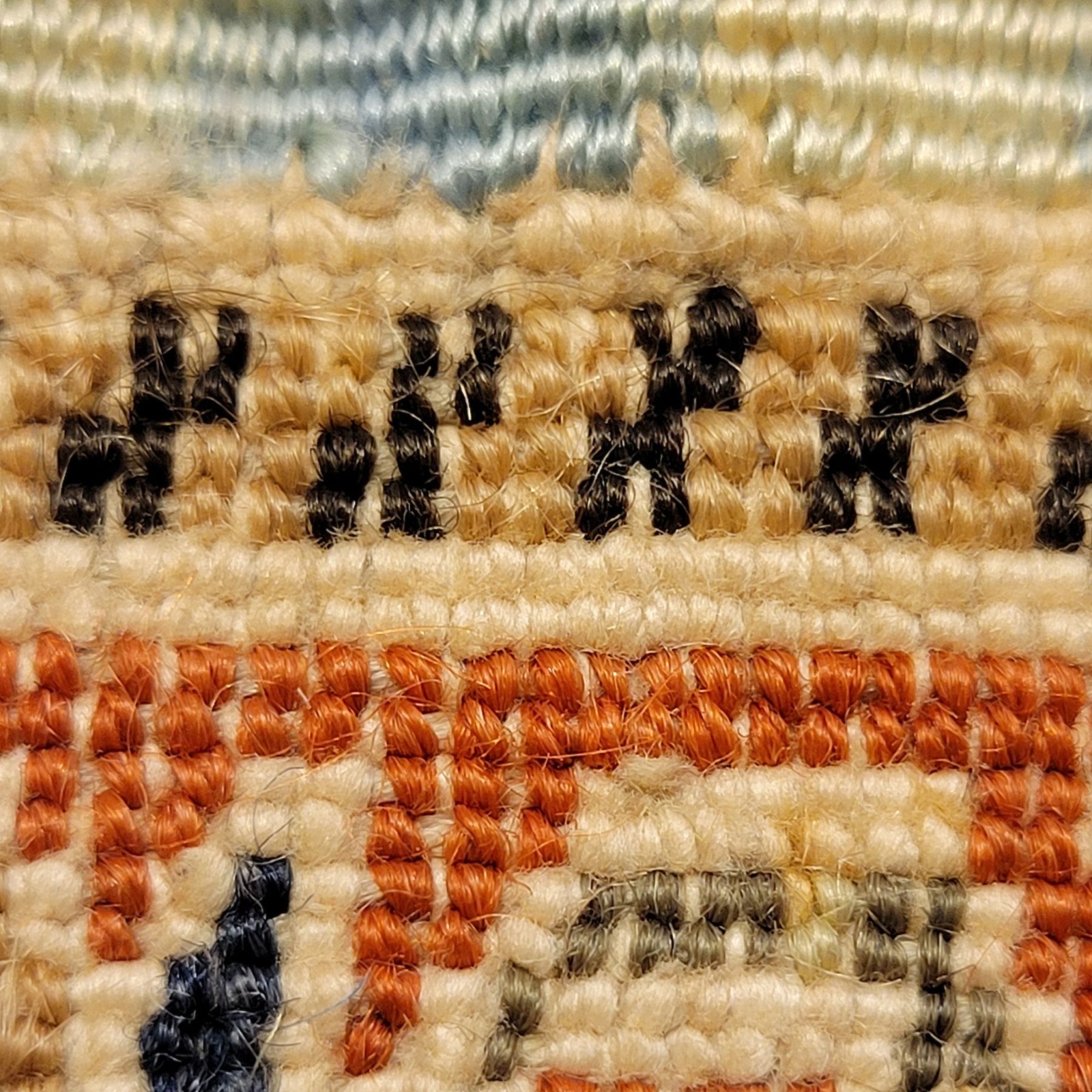
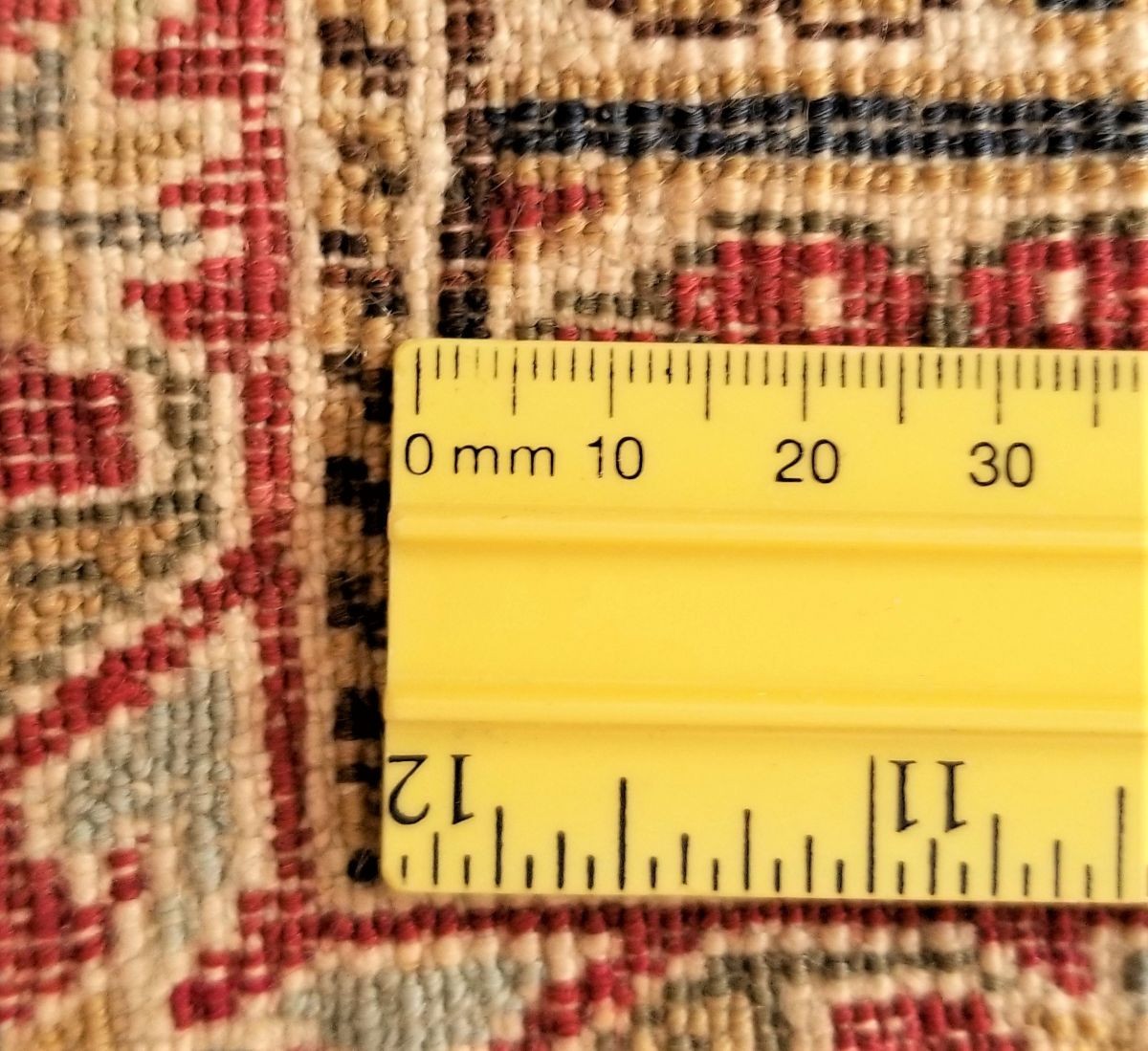
The knotting is the symmetrical double Ghordian (Turkish) knot at a density of 1,970 knots per dm², approximately 127 knots per square inch, worked over a finely spaced cotton warp foundation with consistent weft tension, the marks of refined workshop production. The dyes are traditional vegetable and insect colors, madder root and indigo among them.
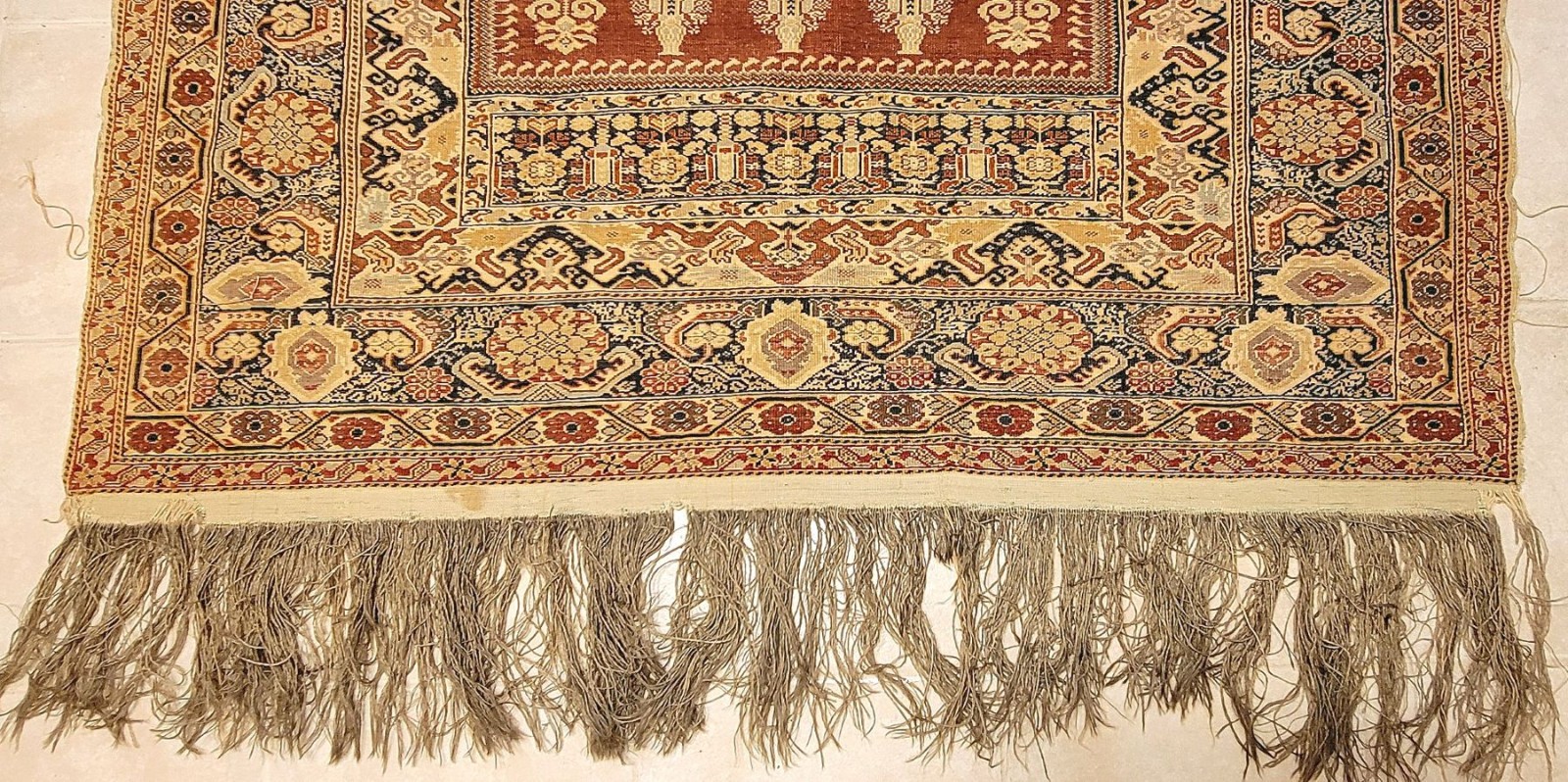
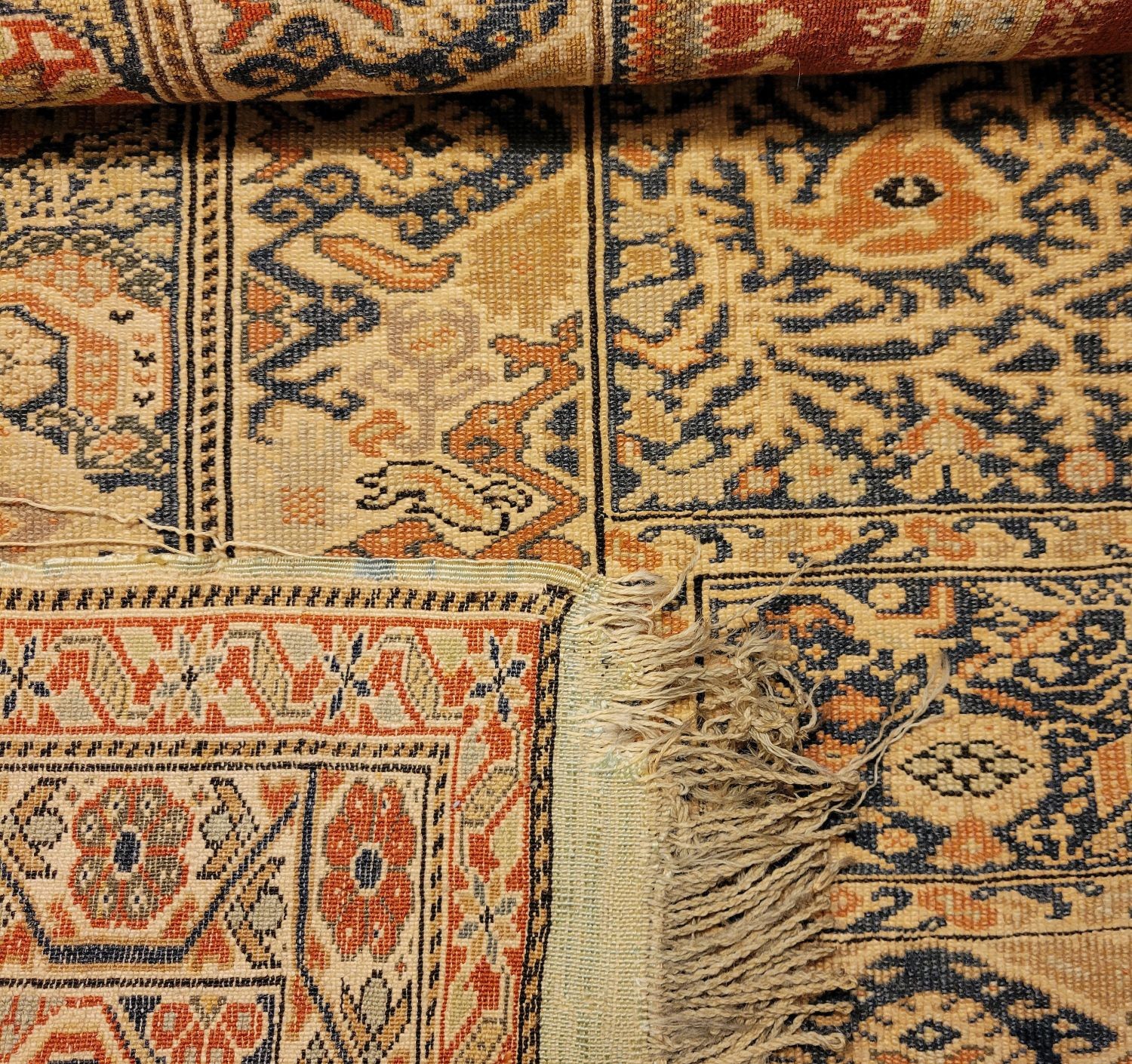
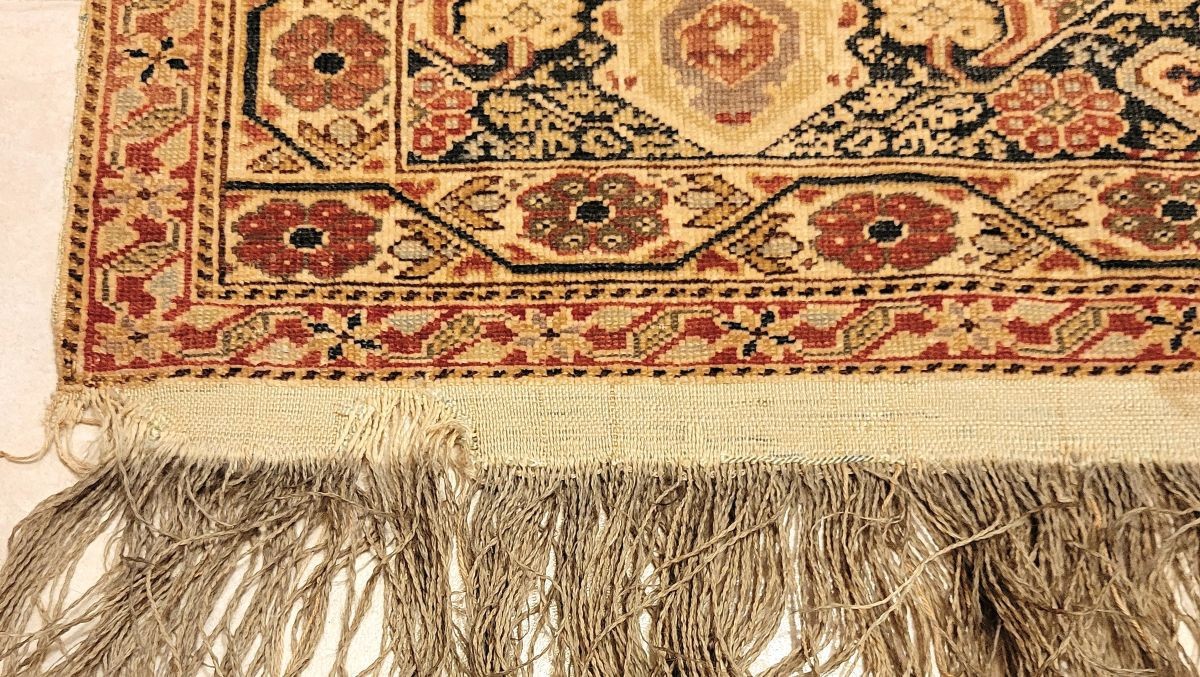
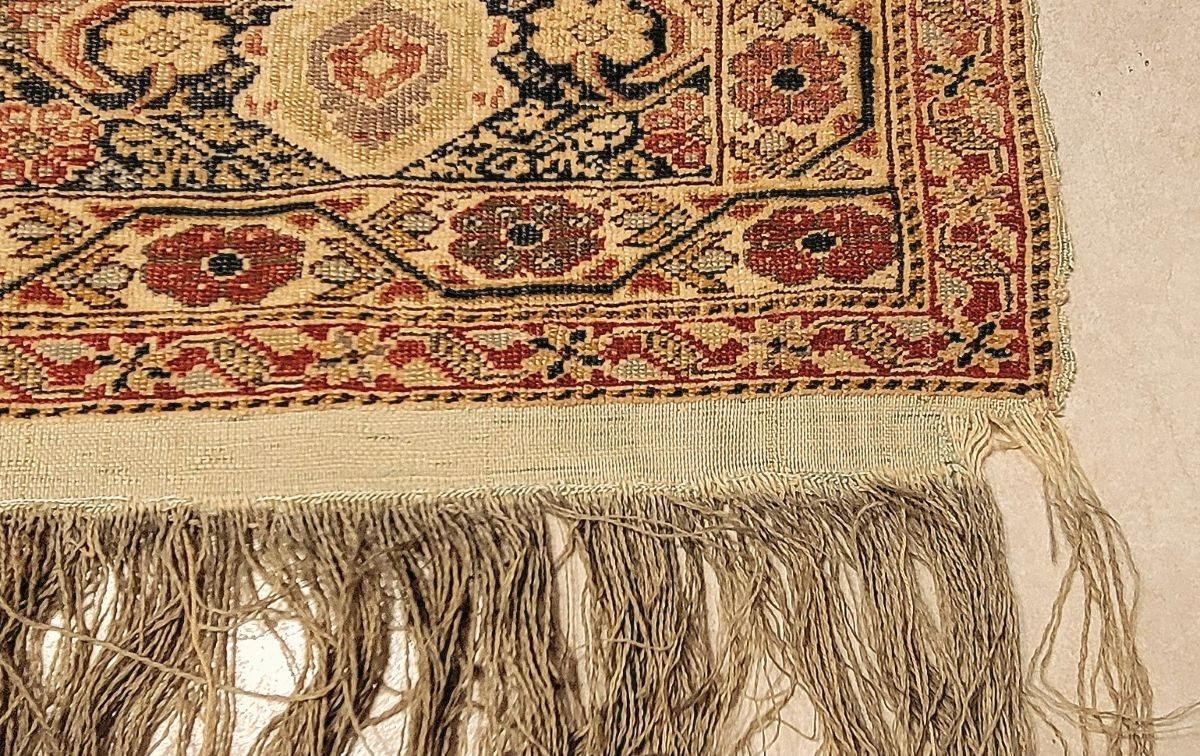
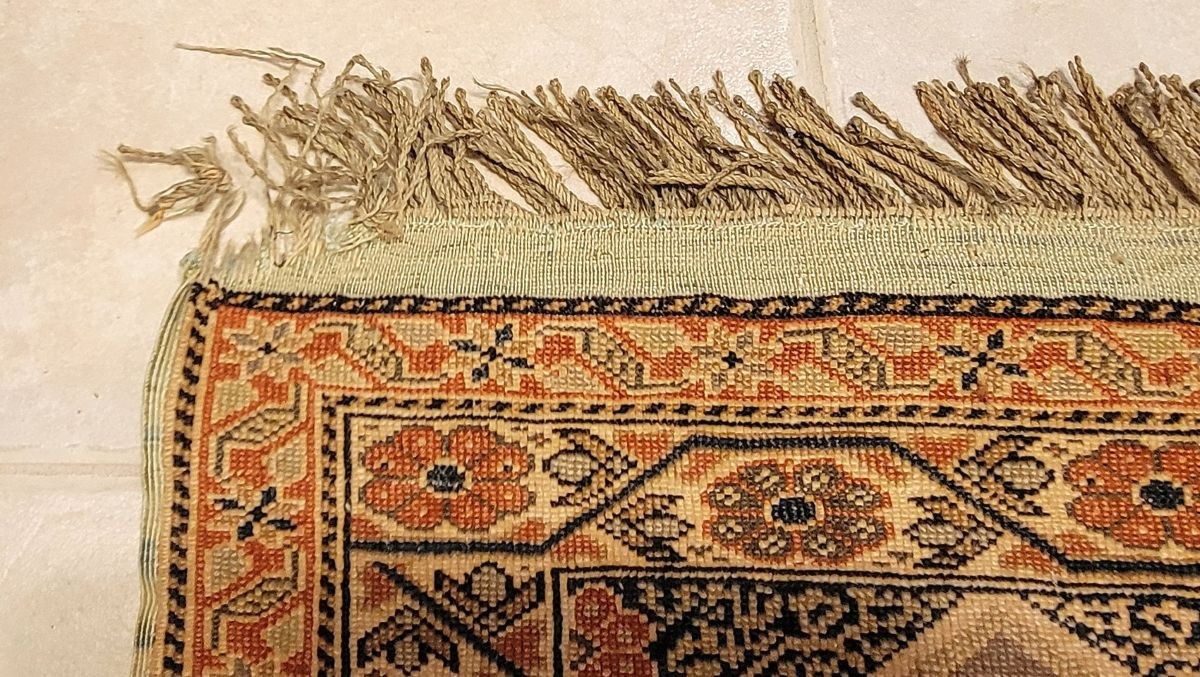
The edges are finished with a delicate light blue and ivory silk selvage, a luxury detail common to high-status Anatolian commissions, and the ends terminate in silk kilim finishes. The exceptional preservation of the pile and the absence of floor wear across the field suggest the rug spent most of its life as a wall hanging; the fraying patterns on the silk kilim ends and fringe bear the characteristic marks of long-term suspension rather than foot traffic.
Photographs
Details
| Origin | Ghiordes (Gordes), Western Anatolia |
| Period | Early 20th century |
| Knot structure | Symmetrical double Ghordian (Turkish) knot |
| Density | 1,970 knots per dm² (~127 KPSI) |
| Dyes | Traditional vegetable and insect dyes (madder root, indigo) |
| Foundation | Cotton warp, wool pile |
| Finishing | Light blue and ivory silk selvages; silk kilim ends |
| Reference | eBay item 277941976159 |
Condition
Pre-owned, unrestored. The field is unusually well preserved with little floor wear. The corners and silk kilim ends show authentic age-related fraying and stabilization marks; the transition from pile to silk kilim ends remains structurally sound.
More from Rugs, Carpets & Textiles
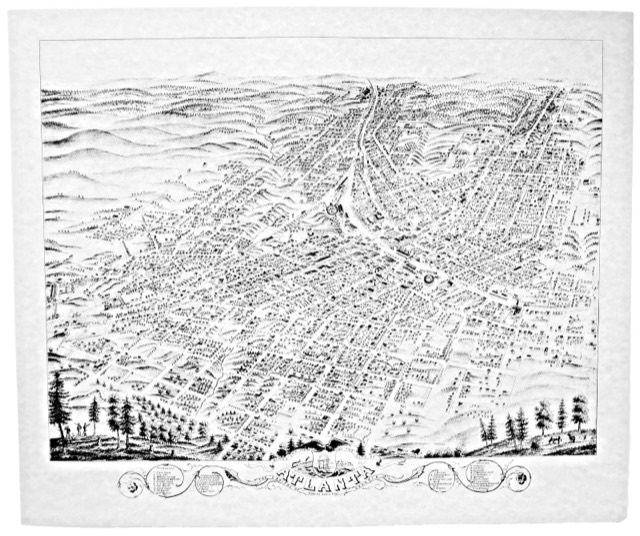
Bird's Eye View of Atlanta, after A. Ruger, 1871
US $7.50 · or best offer
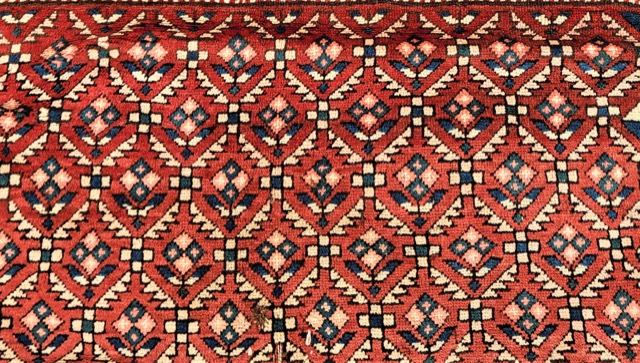
Armenian Memorial Rug, Dated 1916, Inscribed Karabakh
US $3,600.00 · or best offer
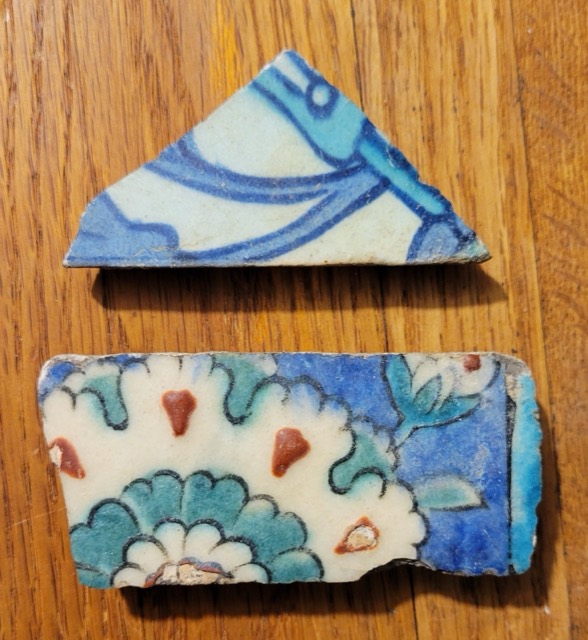
Two Ottoman Tile Fragments, Iznik and Iznik Style
US $175.00 · or best offer
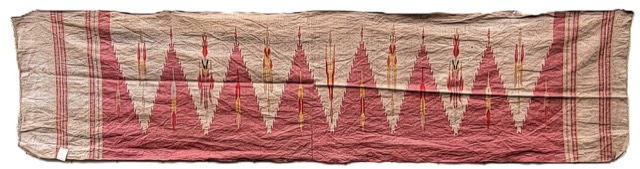
Ottoman Yalı Curtain Panel, Zok Brocade, circa 1850
US $650.00 · or best offer
Fil Caravan · Art & Antiques, New York · inquiries@filcaravan.com
eBay item 277941976159 · https://www.ebay.com/itm/277941976159
https://filcaravan.com/listings/277941976159.html