 Fil Caravan
Rugs, Carpets & Textiles
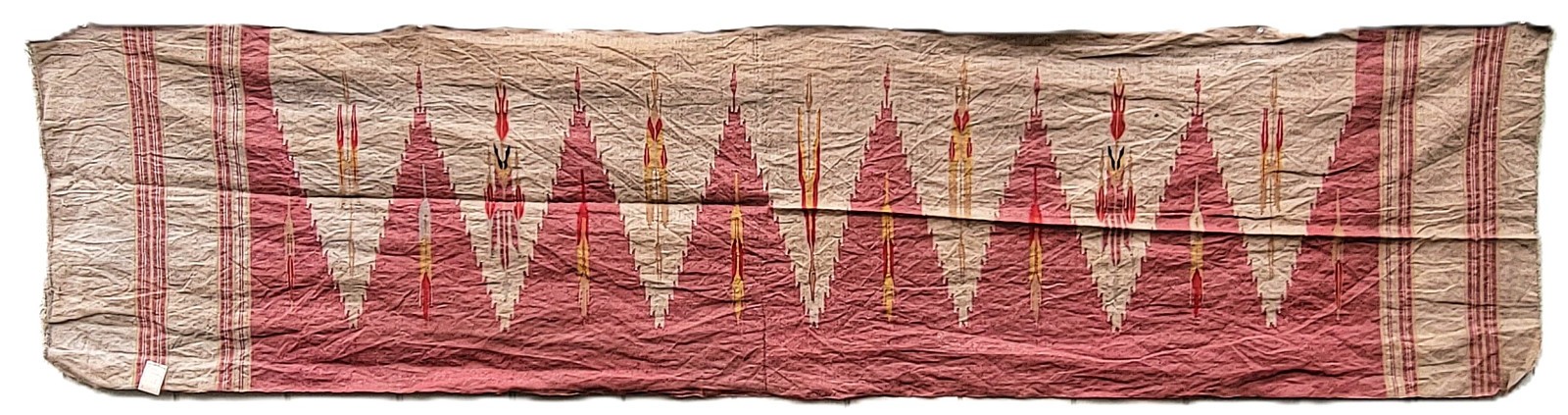
Ottoman Yalı Curtain Panel, Zok Brocade, circa 1850
Hand-loomed zok brocade curtain panel · Ottoman Turkey, likely Aleppo · circa 1850
US $650.00 · or best offer
Description
A rare mid-nineteenth-century Ottoman yalı curtain, hand loomed throughout in the tapestry-based brocade technique known as zok, a form of pattern weaving traditionally practiced in Ottoman-period Aleppo. Long, narrow panels of this kind hung over the tall windows and doorways of the stately waterfront mansions, the yalıs, that line the Bosporus in Istanbul.
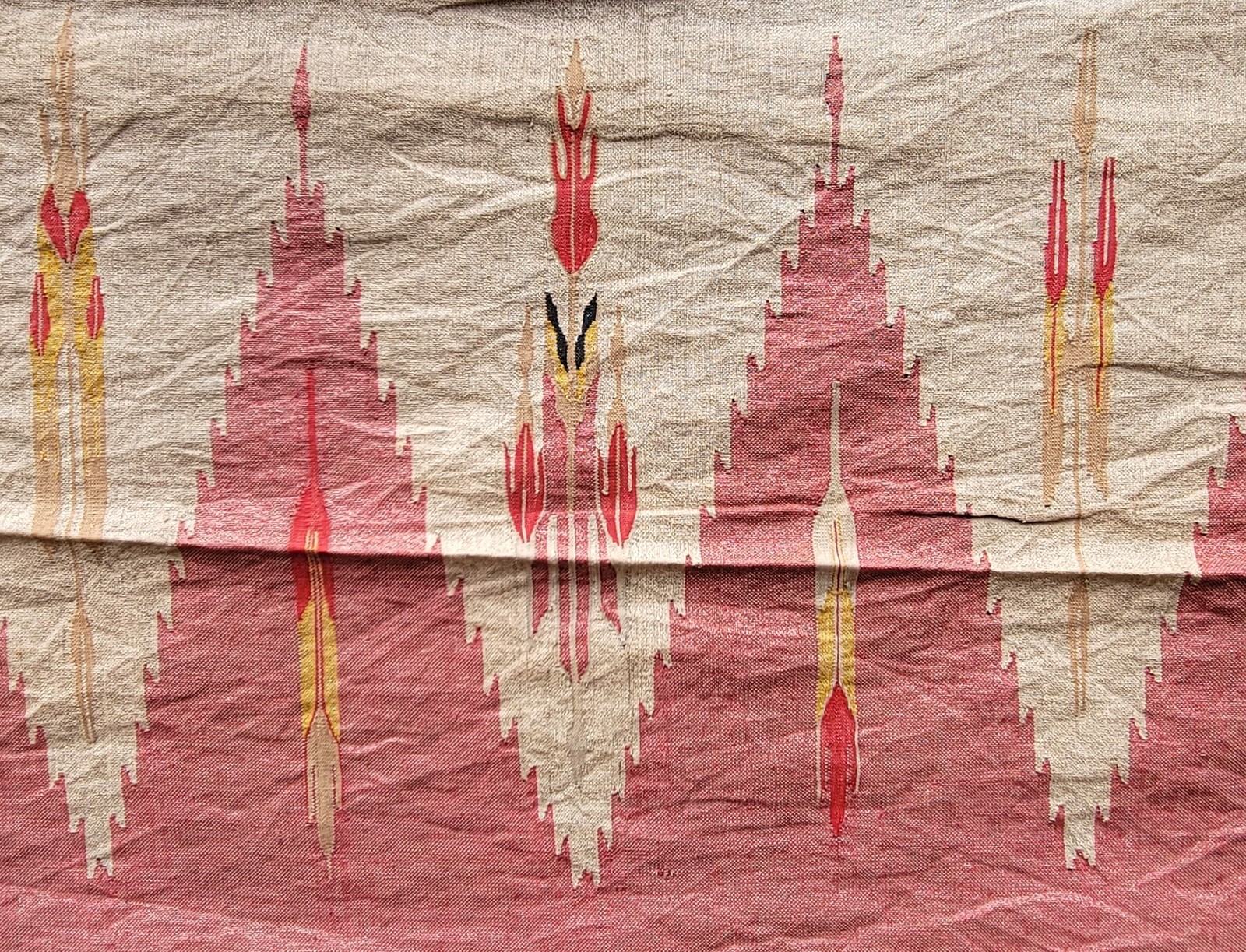
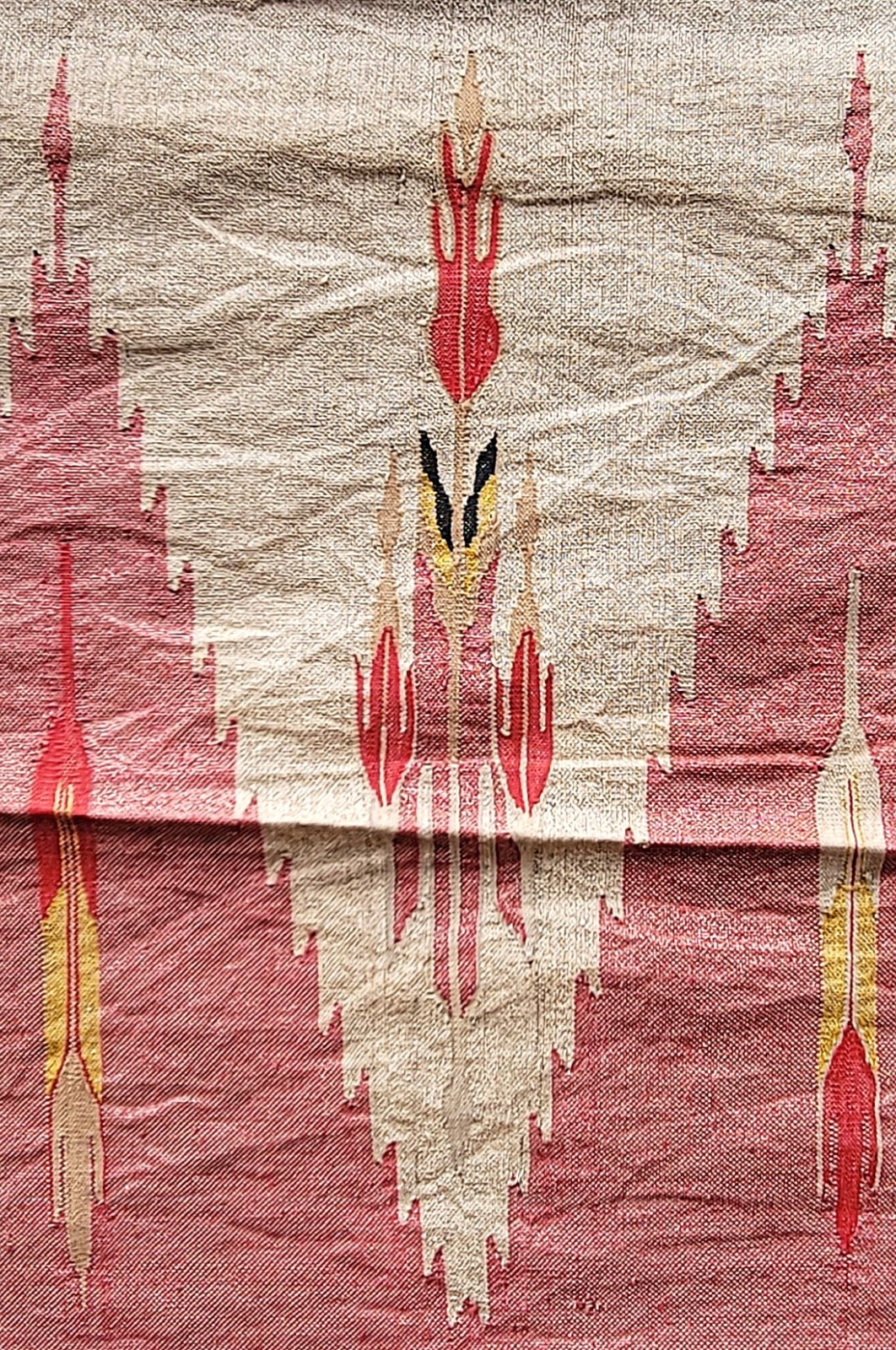
The zok method interlaces colored weft threads directly on the loom to build the pattern, without supplementary warp or added embroidery. It is structurally close to kilim weaving but refined for brocaded furnishing textiles. The vivid arrow, or tulip-flame, motifs radiating through serrated geometric fields are hallmarks of Ottoman Aleppo design, found in both textiles and ceremonial garments.
This example is notable for its two-sided construction and for the richly dyed silk accents set within a linen and cotton framework. The repetition of vertical motifs and the rhythmic movement of the serrated flame bands reflect a distinctly regional visual language, merging local taste with Ottoman imperial aesthetics. Panels such as this were neither embroidered nor printed nor factory-made; each was woven on a narrow loom, requiring intensive labor and close coordination between design and execution.
Photographs
Details
| Region | Ottoman Turkey (likely Aleppo) |
| Date | Circa 1850 |
| Technique | Hand-loomed "zok" brocade (tapestry weave) |
| Medium | Linen foundation with cotton and silk brocade weft |
| Size | ~2'2" x 9'0" (66 cm x 274 cm) |
| Construction | Two-sided |
| Reference | eBay item 277829042582 |
Condition
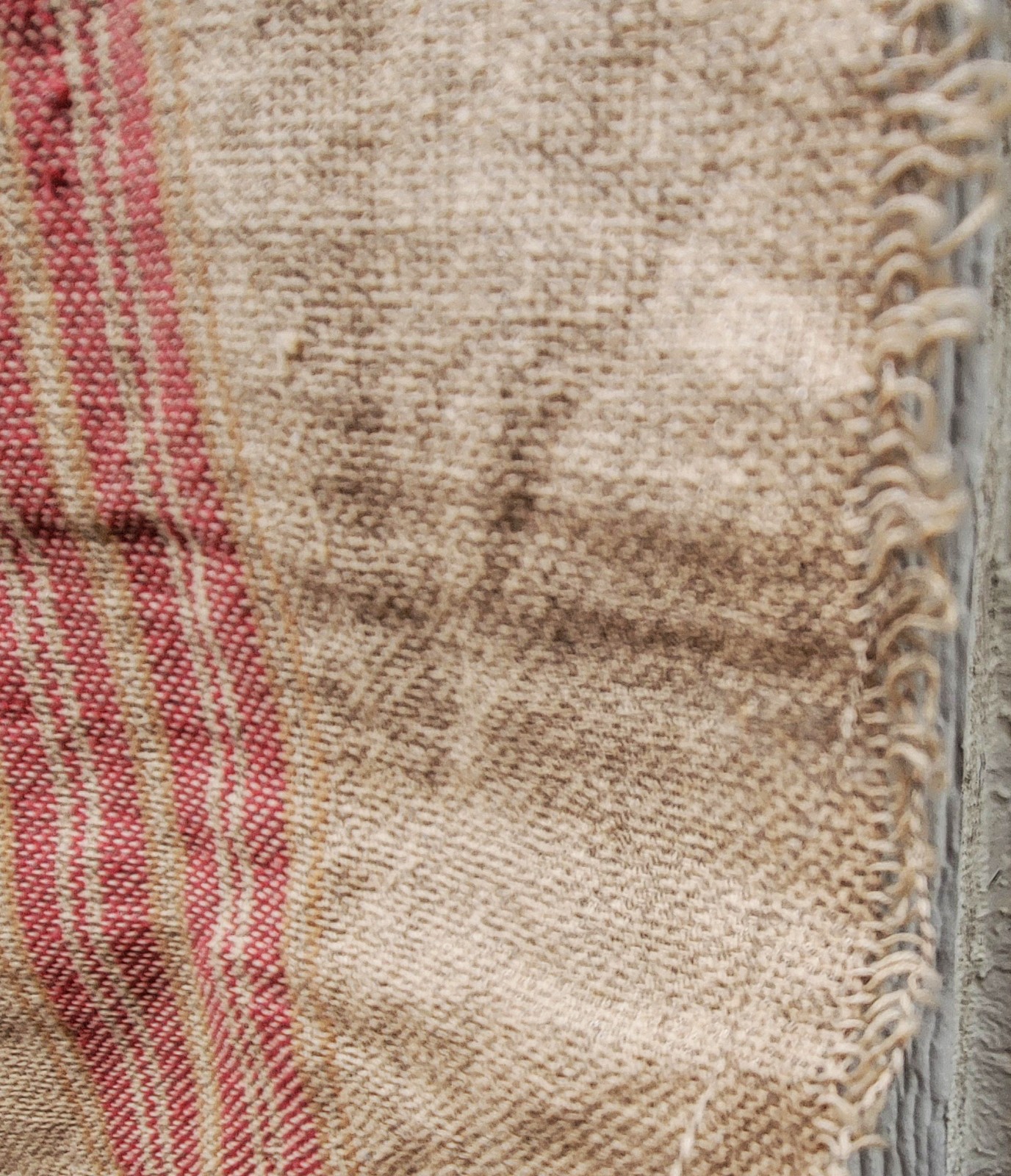
Good antique condition overall, with scattered stains, some edge curling, loose threads at the ends, and edge creases from storage. The panel is structurally sound and well preserved, with no evident restoration or repair; it would benefit from professional cleaning and pressing.
More from Rugs, Carpets & Textiles
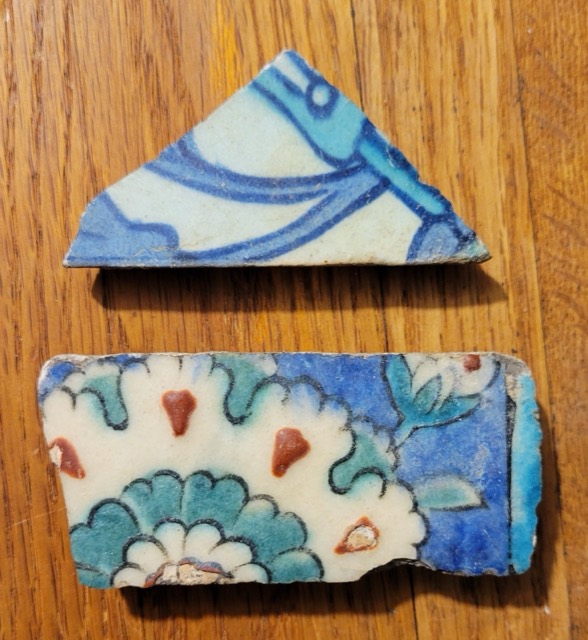
Two Ottoman Tile Fragments, Iznik and Iznik Style
US $175.00 · or best offer
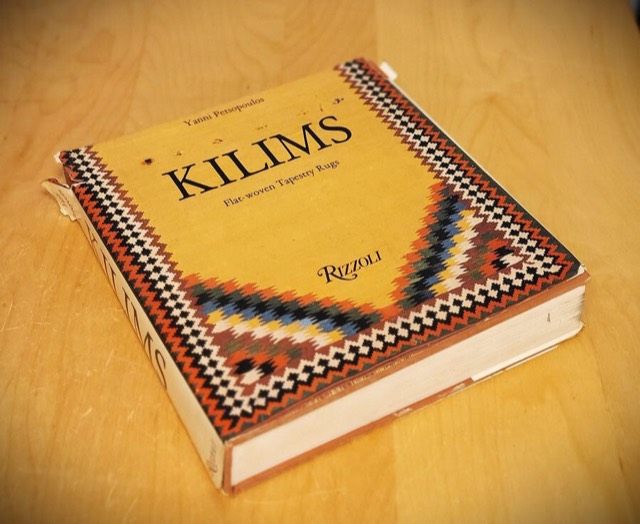
Kilims: Flat Woven Tapestry Rugs by Yanni Petsopoulos
US $45.00
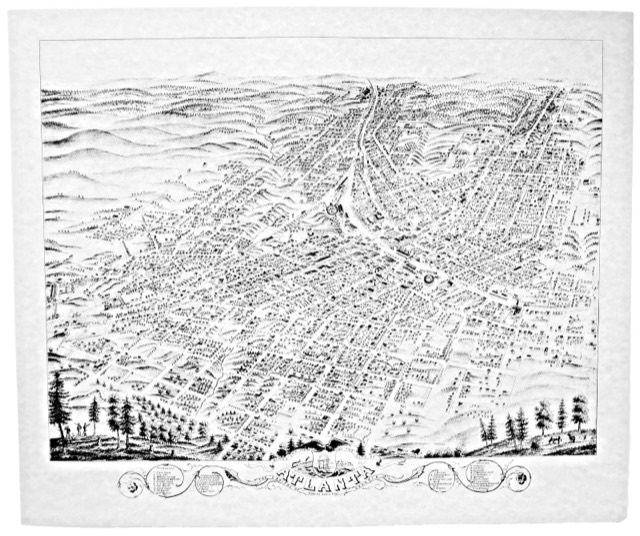
Bird's Eye View of Atlanta, after A. Ruger, 1871
US $7.50 · or best offer
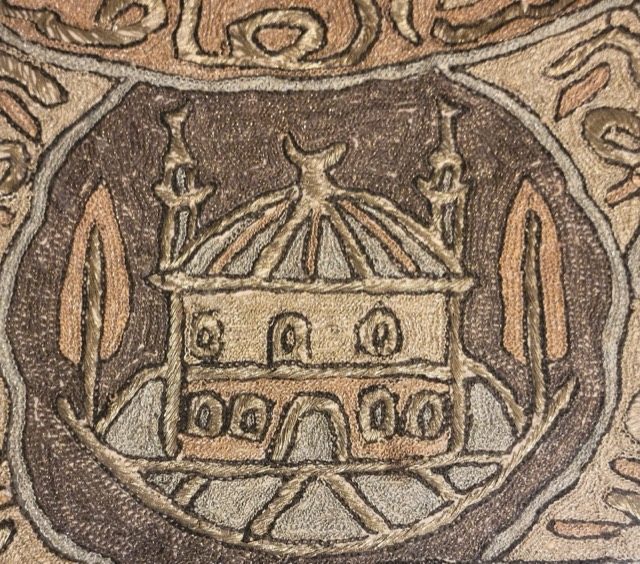
Ottoman Metal-Thread Panel with the Tughra of Abdul Hamid II
US $1,400.00 · or best offer
Fil Caravan · Art & Antiques, New York · inquiries@filcaravan.com
eBay item 277829042582 · https://www.ebay.com/itm/277829042582
https://filcaravan.com/listings/277829042582.html