 Fil Caravan
Cameras & Instruments
Ernst Leitz Wetzlar Stand IIa Microscope, No. 74142
Brass compound microscope · Ernst Leitz, Wetzlar, with New York branch marking · circa 1905–1910
US $625.00 · or best offer
Description
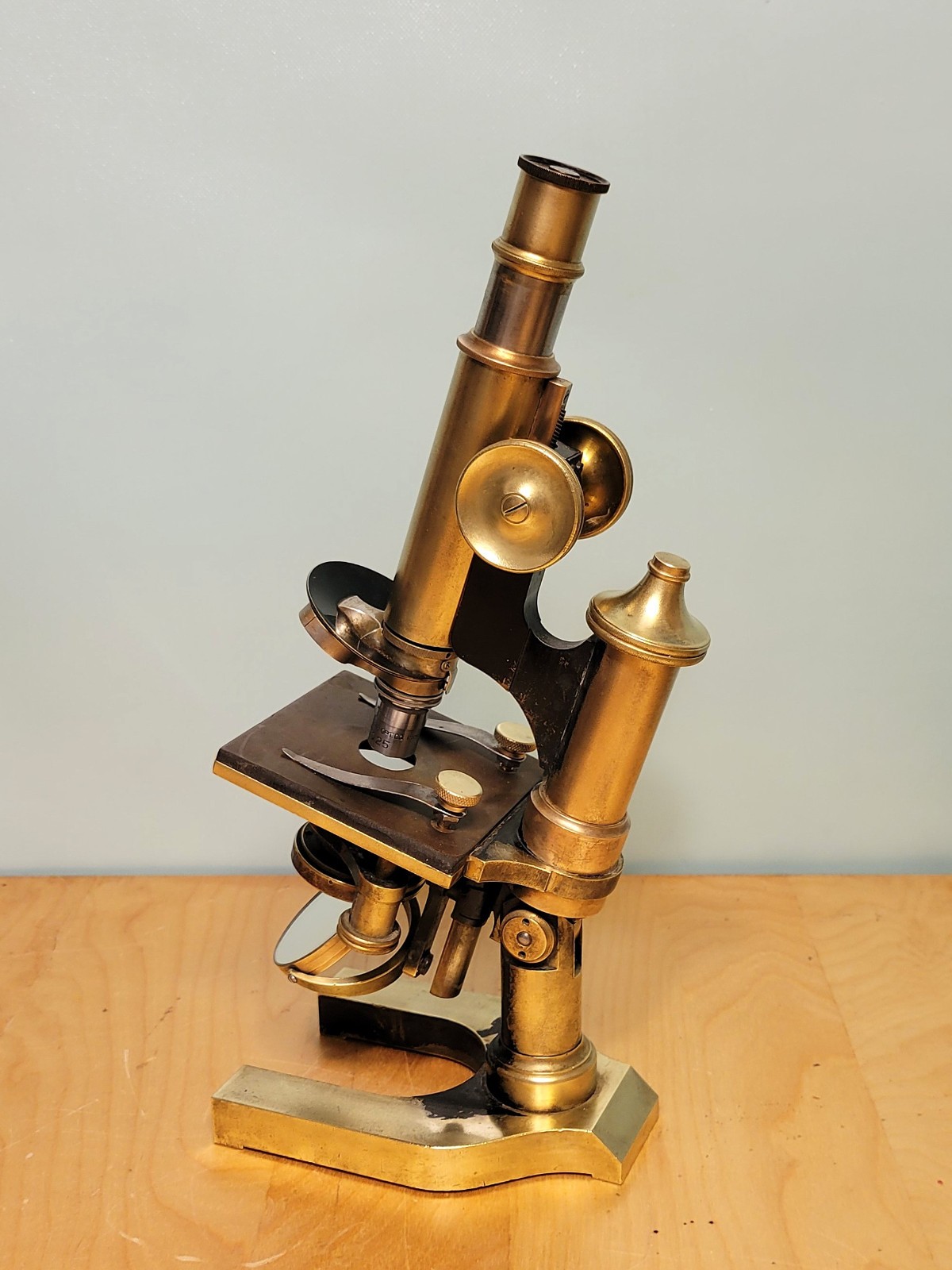
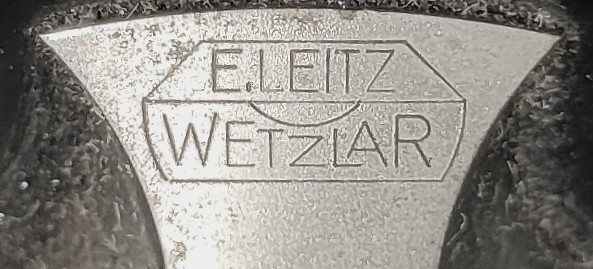
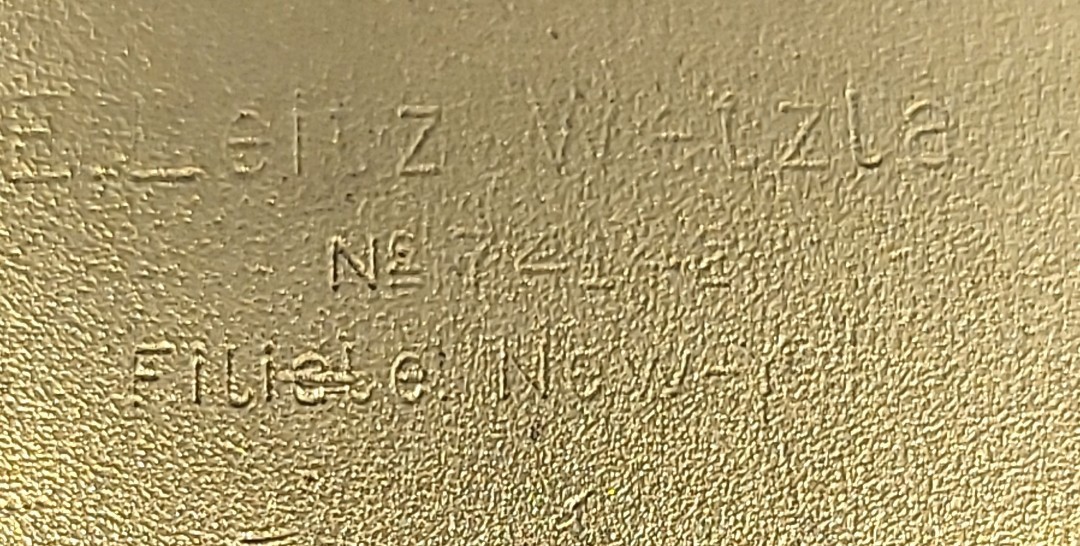
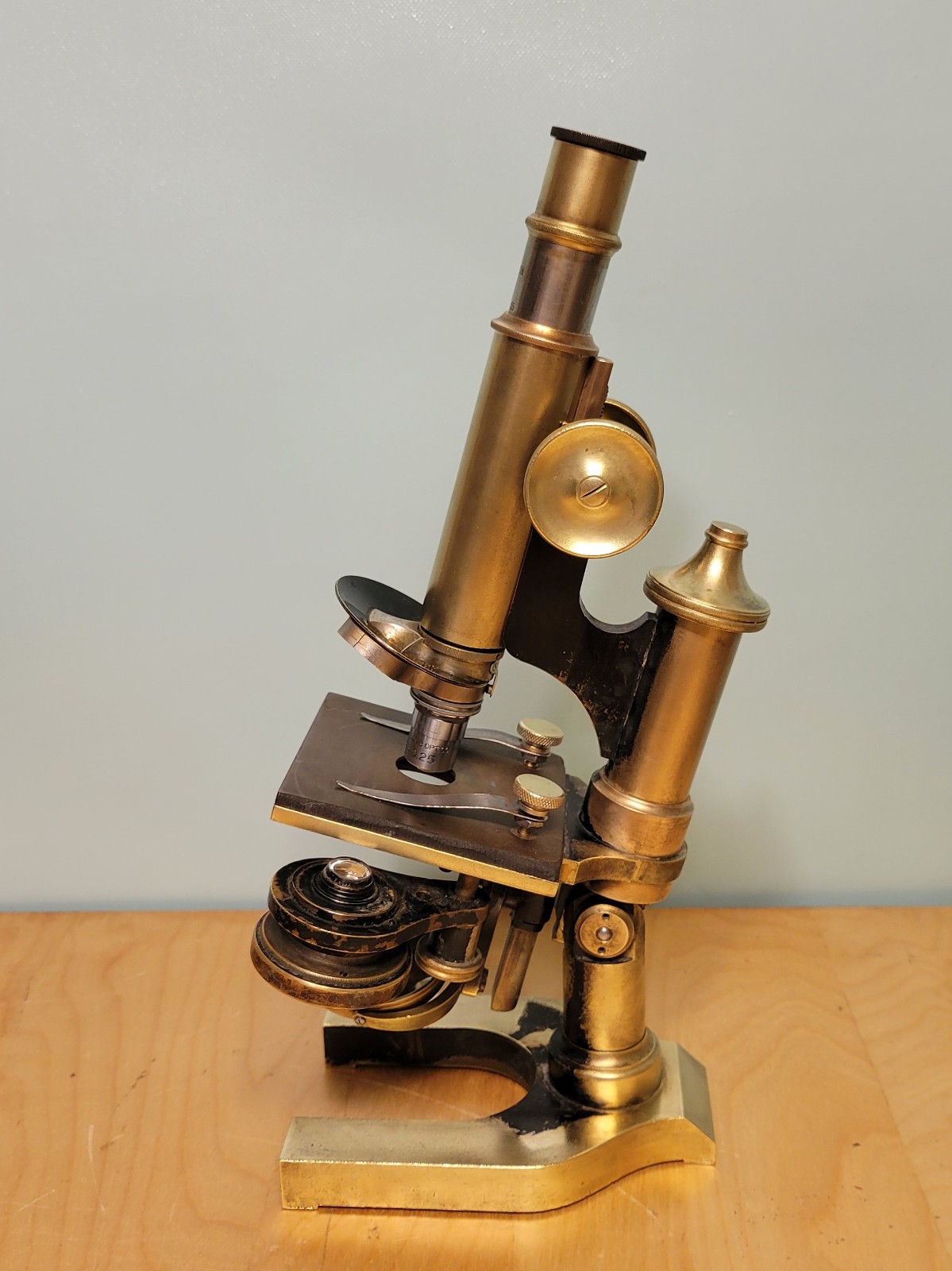
An early 20th-century Stand IIa compound microscope made in Wetzlar, Germany by Ernst Leitz and distributed through the firm's New York branch. The base is stamped Ernst Leitz Wetzlar / No. 74142 / Filiale New York; the serial number places production approximately between 1905 and 1910.
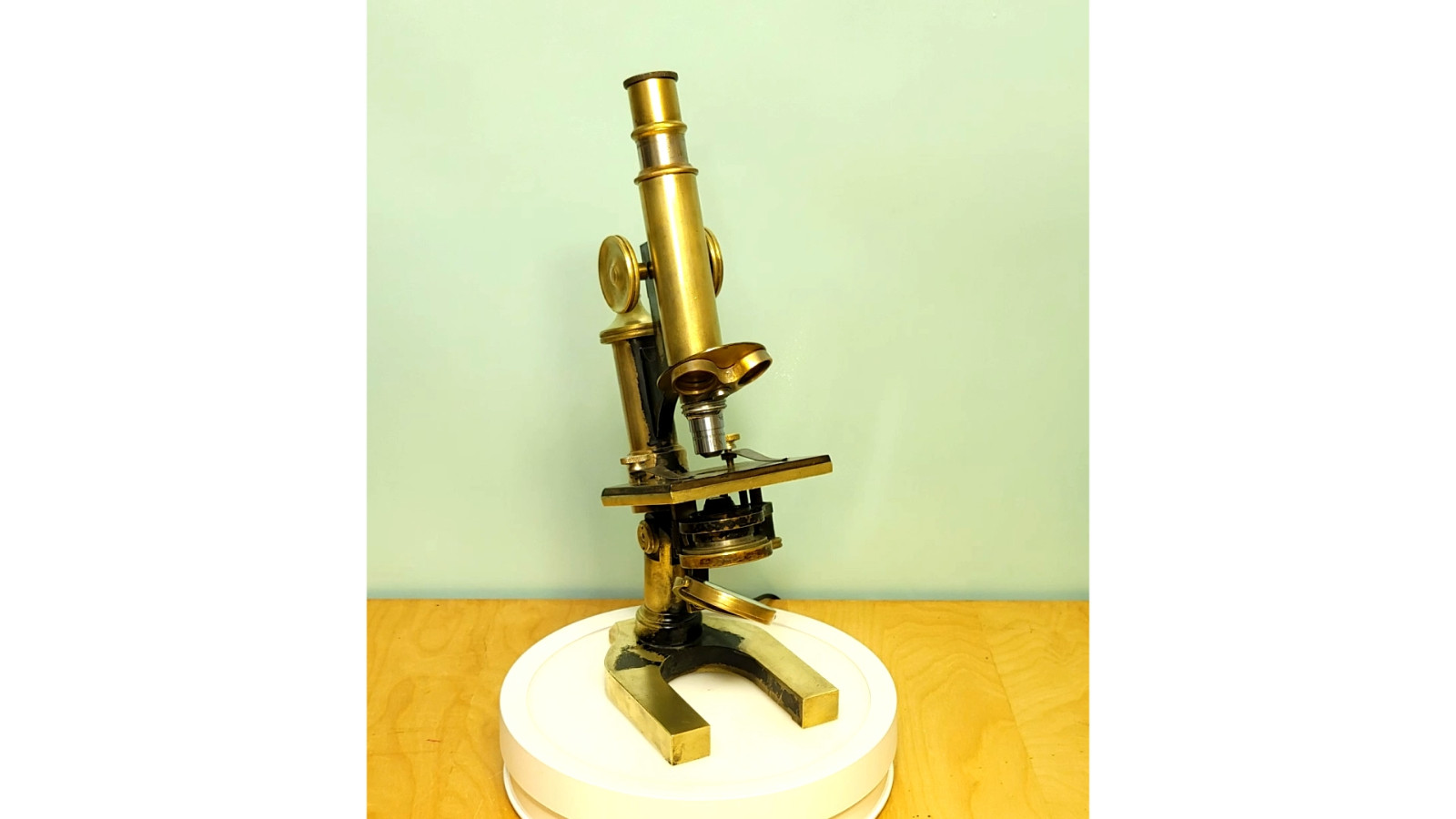
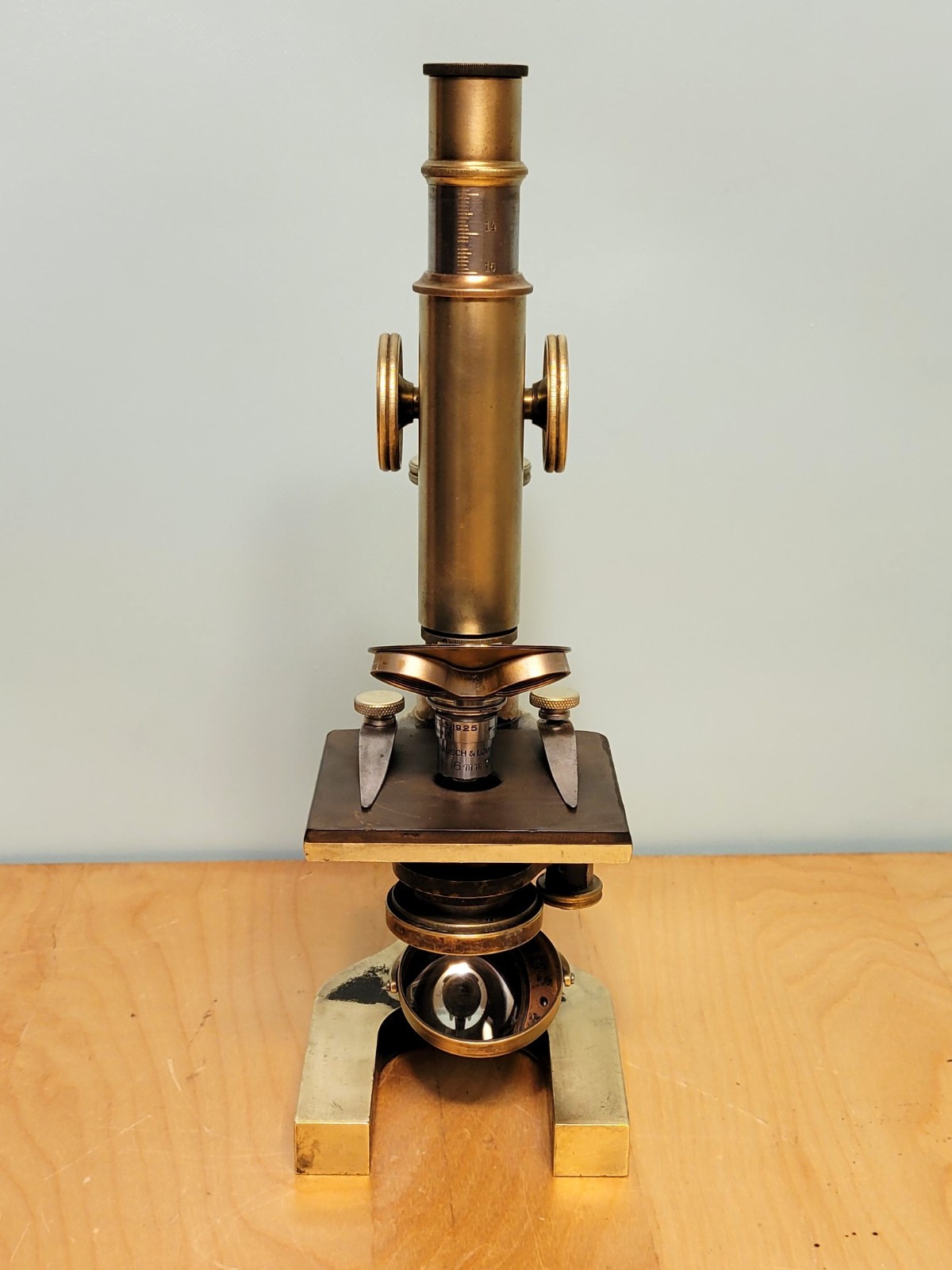
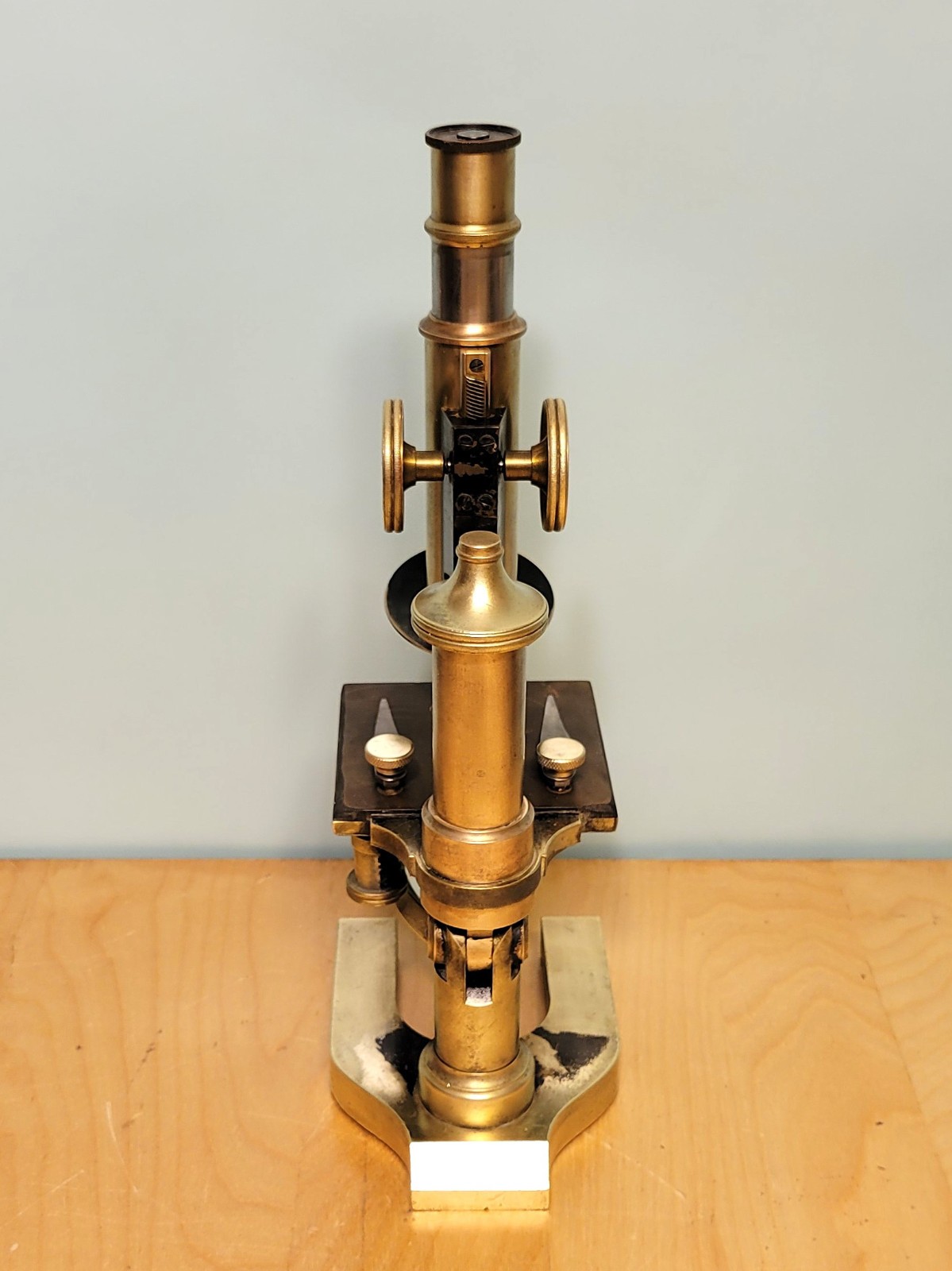
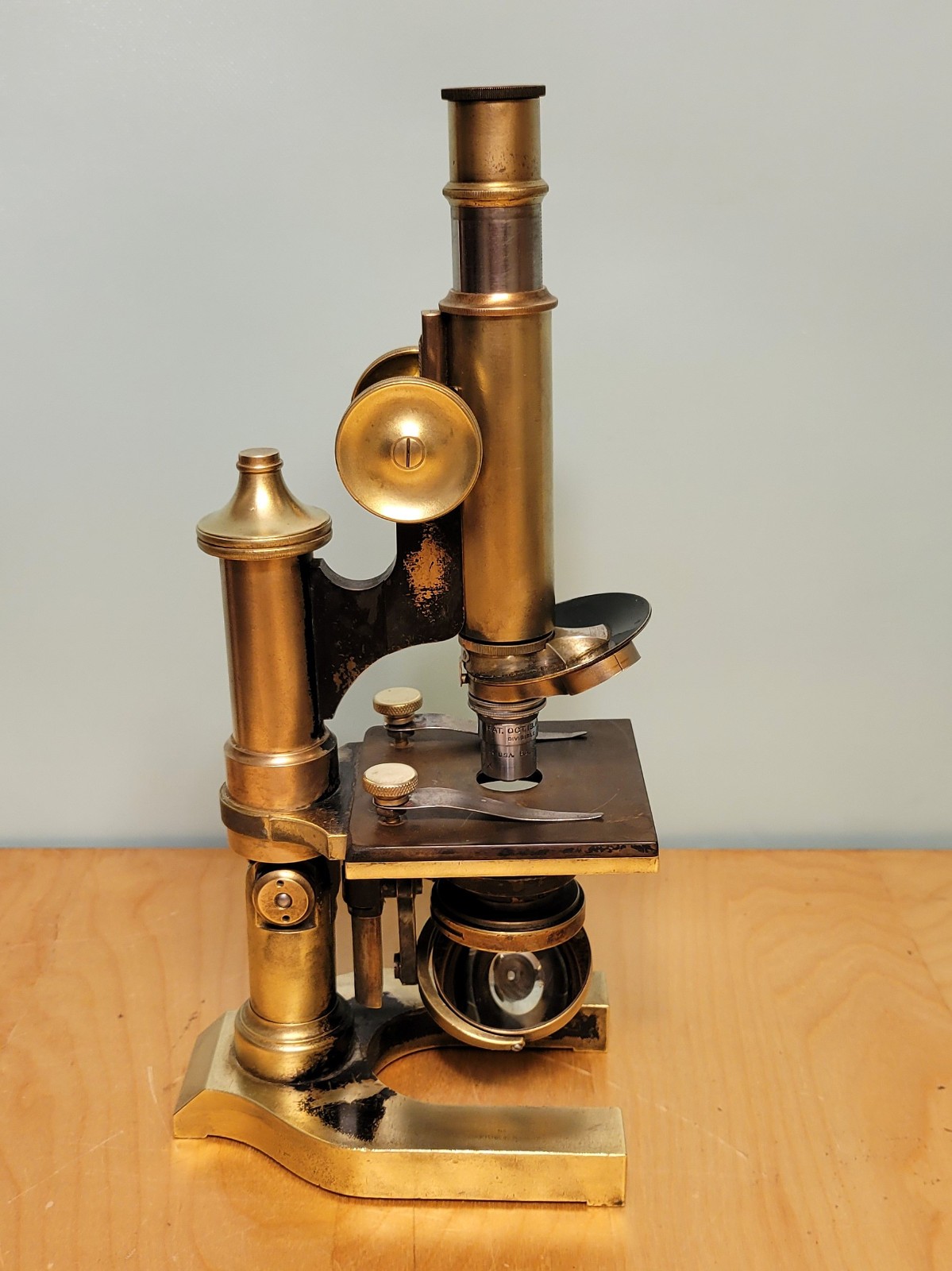
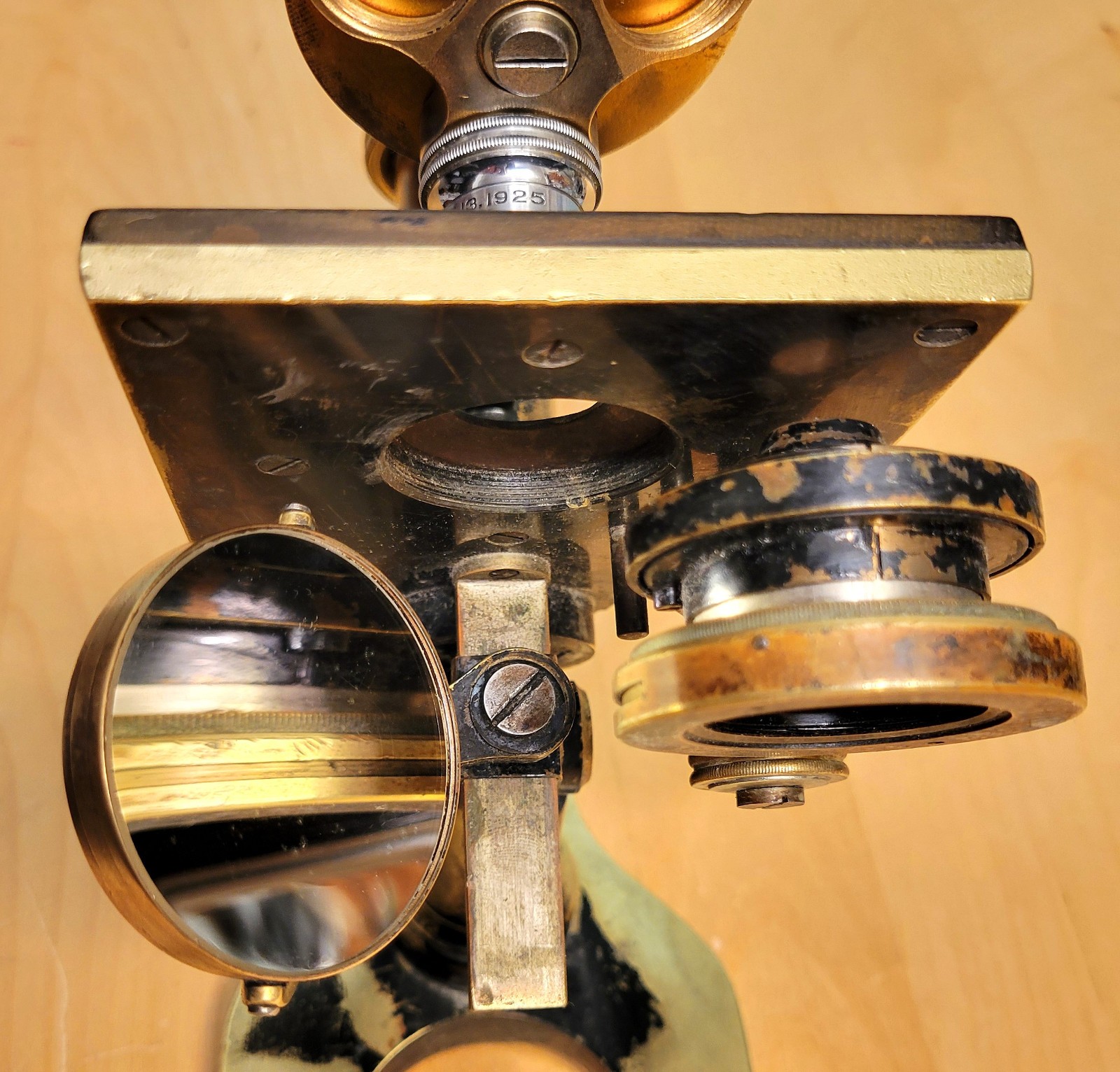
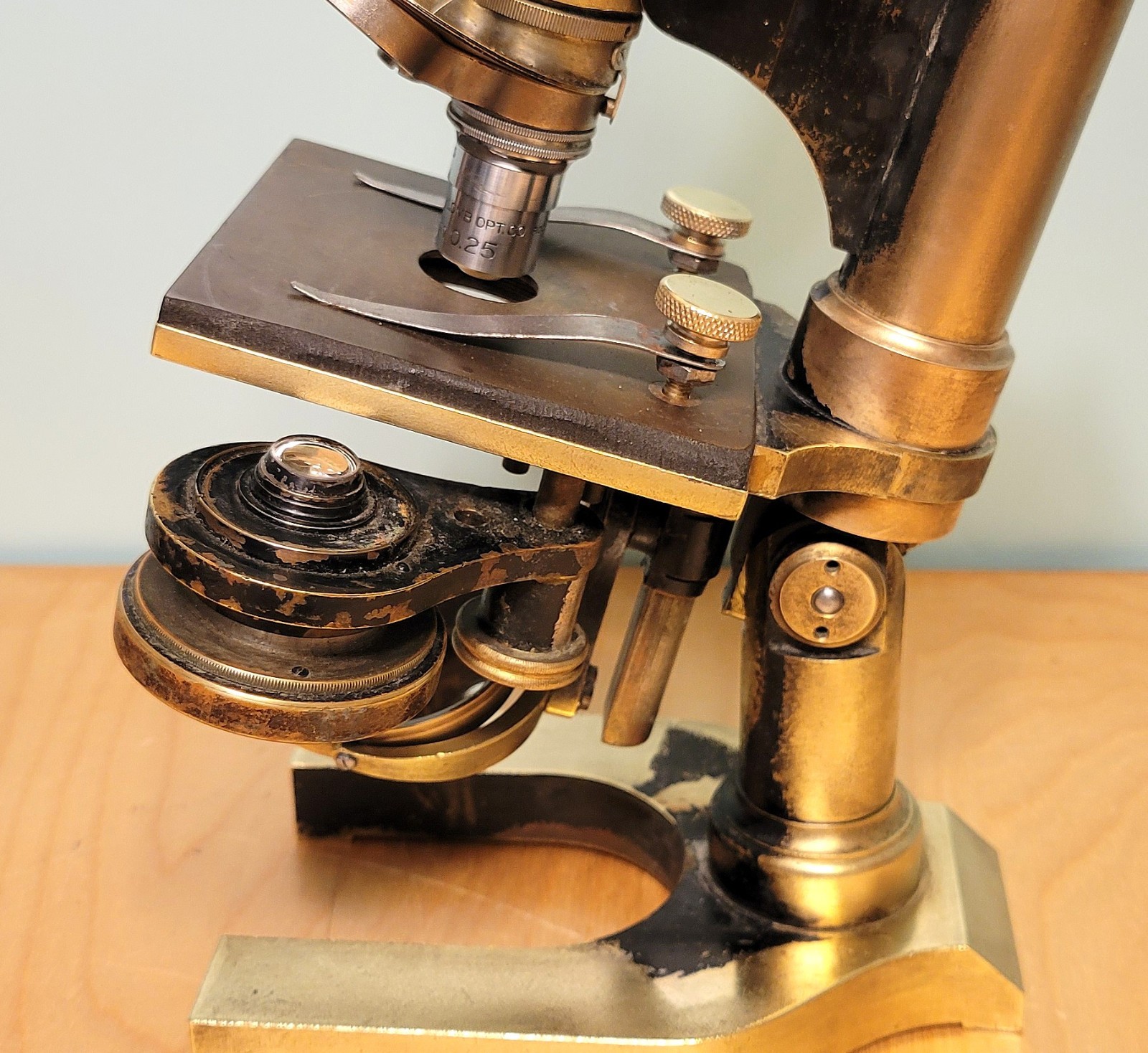
The Stand IIa was a professional medium-size laboratory model intended for routine biological and medical work. Construction is lacquered brass with the original black enamel stage and fittings, and the instrument retains its correct early 20th-century configuration: inclinable body tube, fixed square stage, coarse focus by rack and pinion, fine focus by micrometer screw, graduated draw tube in millimeters, substage illuminating apparatus with swing-out condenser, iris diaphragm with lateral control, triple nosepiece, and plane and concave mirror.
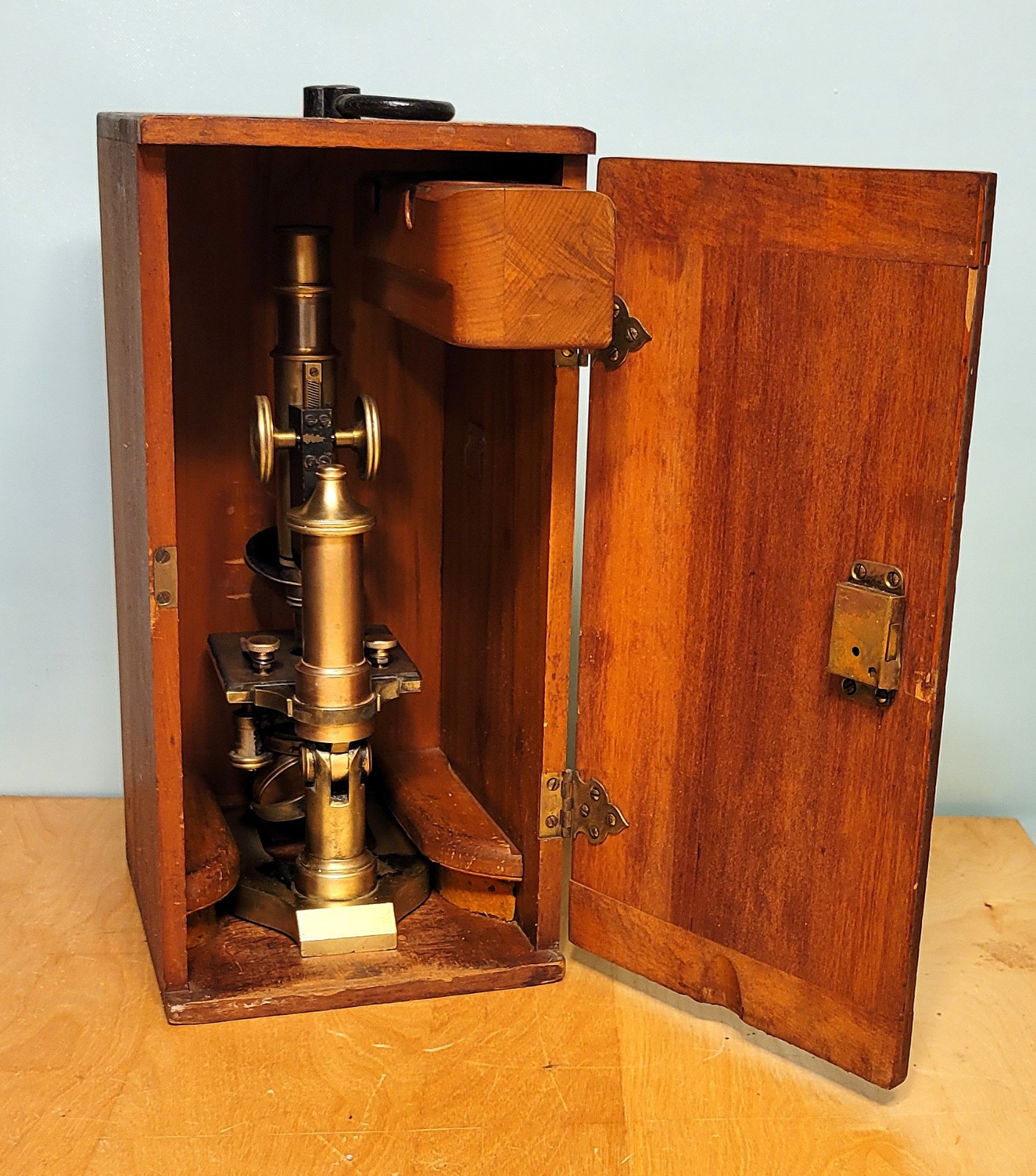
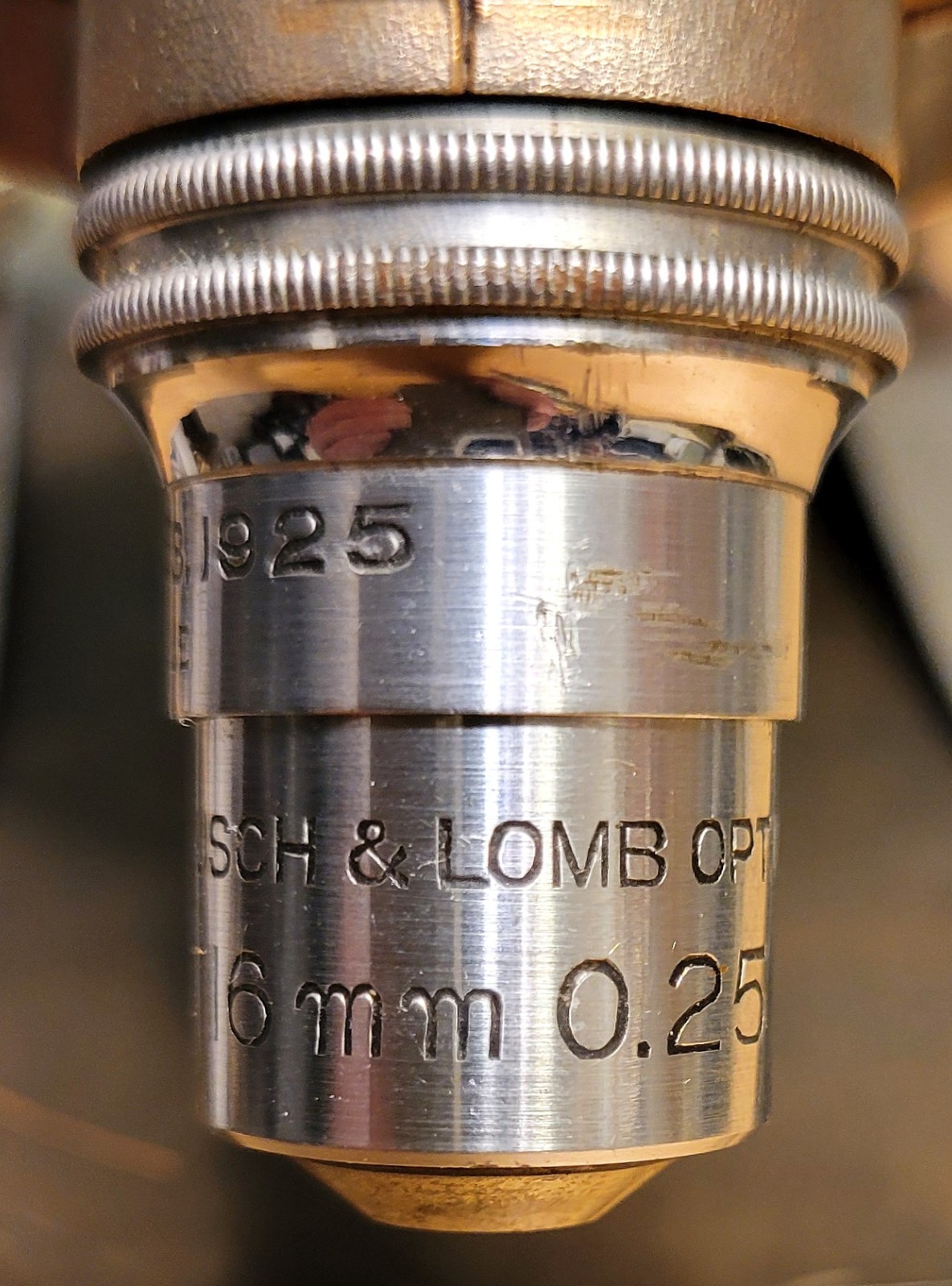
Optics included are a Bausch & Lomb 16mm objective (NA 0.25) and a 12X eyepiece, giving approximately 120X total magnification, well suited to prepared slides, botanical samples, and fibers. The original fitted wooden case accompanies the instrument.
Photographs
Details
| Maker | Ernst Leitz, Wetzlar, Germany; New York branch |
| Model | Stand IIa compound microscope |
| Serial Number | 74142 |
| Period | Circa 1905–1910 |
| Material | Lacquered brass with black enamel stage and fittings |
| Optics | Bausch & Lomb 16mm objective NA 0.25; 12X eyepiece |
| Magnification | Approx. 120X total |
| Accessories | Original fitted wooden case |
| Reference | eBay item 277758404699 |
Condition
The original black enamel shows age wear consistent with use and the brass retains a natural patina. Optics are clear, focus mechanisms operate smoothly, and no structural damage was observed.
More from Cameras & Instruments
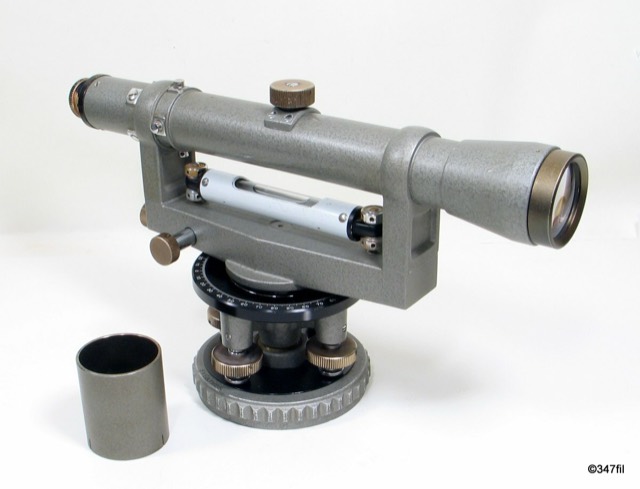
Lietz (Sokkisha) Dumpy Level, Model 110
US $240.00 · or best offer
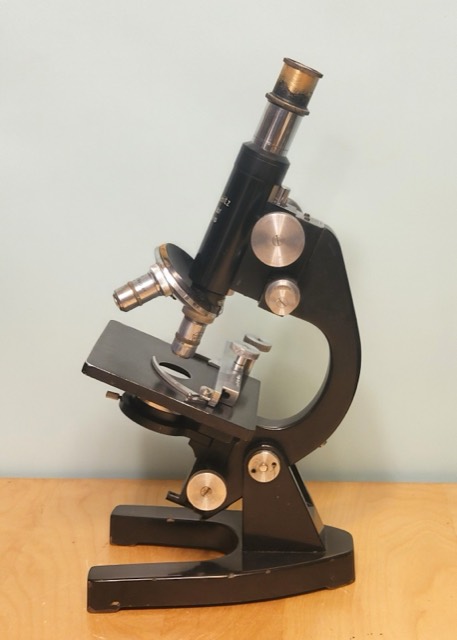
Ernst Leitz Wetzlar Model GT Microscope, No. 404910
US $325.00 · or best offer
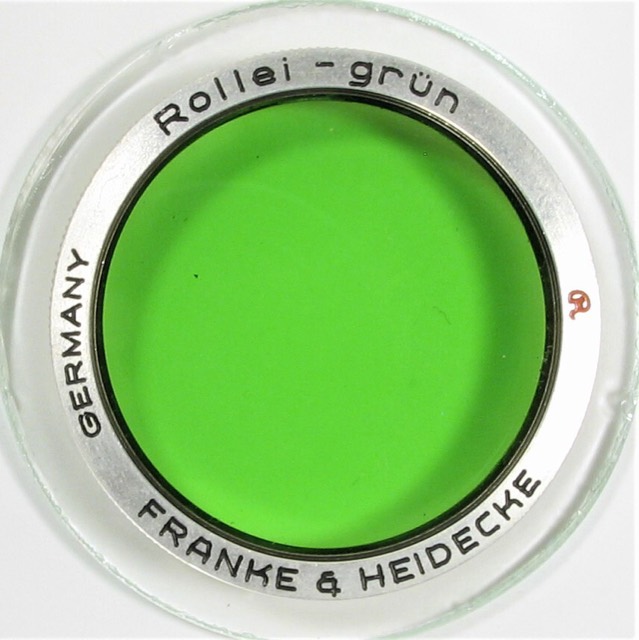
Franke & Heidecke Rollei-grün Green Filter, 28.5 mm
US $30.00 · or best offer
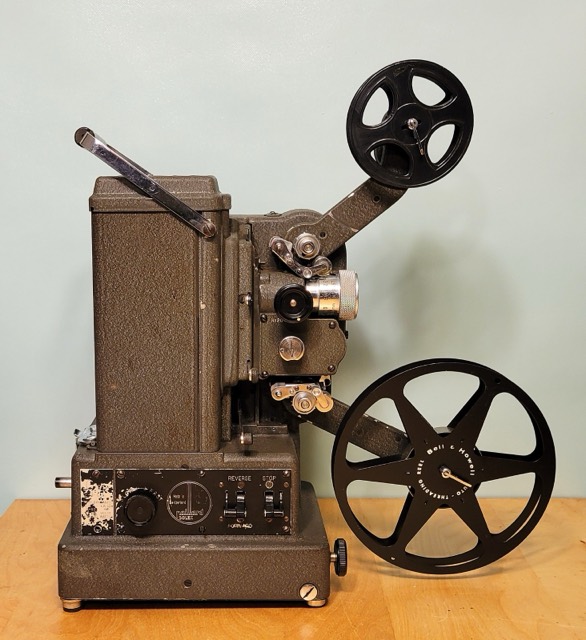
Paillard Bolex G816 Projector with Kern-Paillard Lenses
US $275.00 · or best offer
Fil Caravan · Art & Antiques, New York · inquiries@filcaravan.com
eBay item 277758404699 · https://www.ebay.com/itm/277758404699
https://filcaravan.com/listings/277758404699.html