 Fil Caravan
Books & Manuscripts
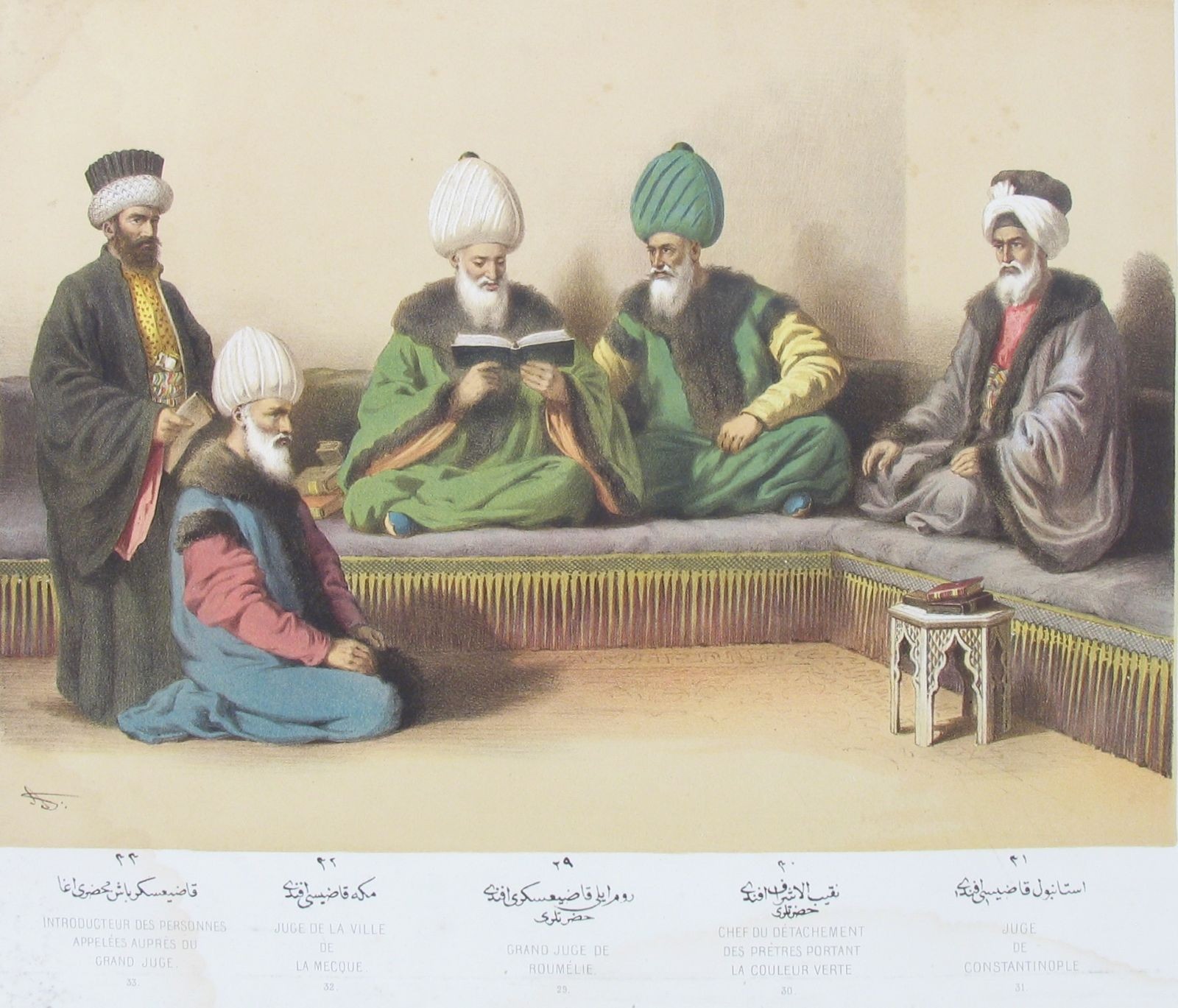
Arif Pasha, Ottoman Court Costumes, Plate 7, 1863
Chromolithograph from "Costumes de la Cour Ottomane" · printed by Lemercier, Paris · 1863 first edition
US $450.00 · or best offer
Description
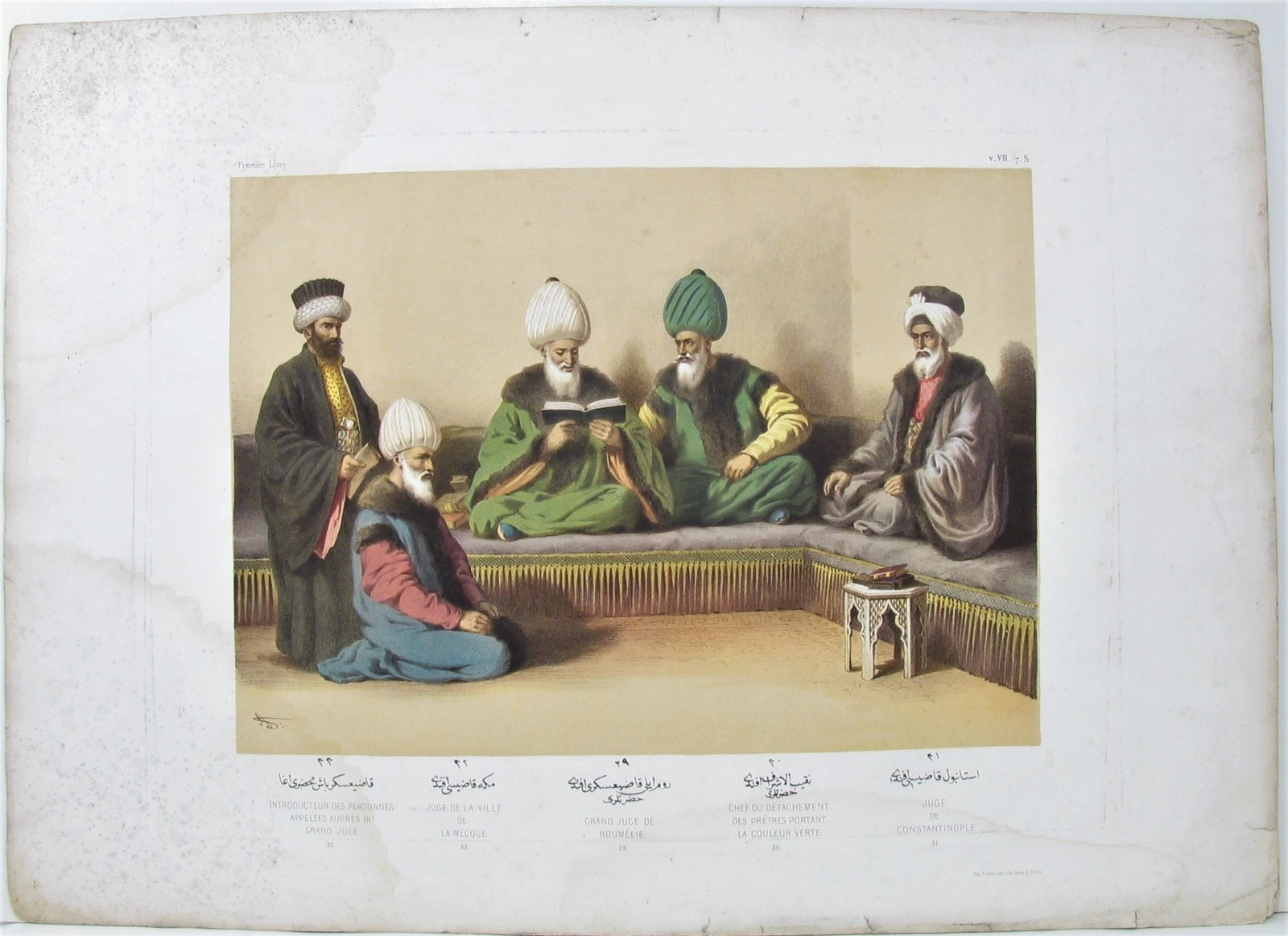
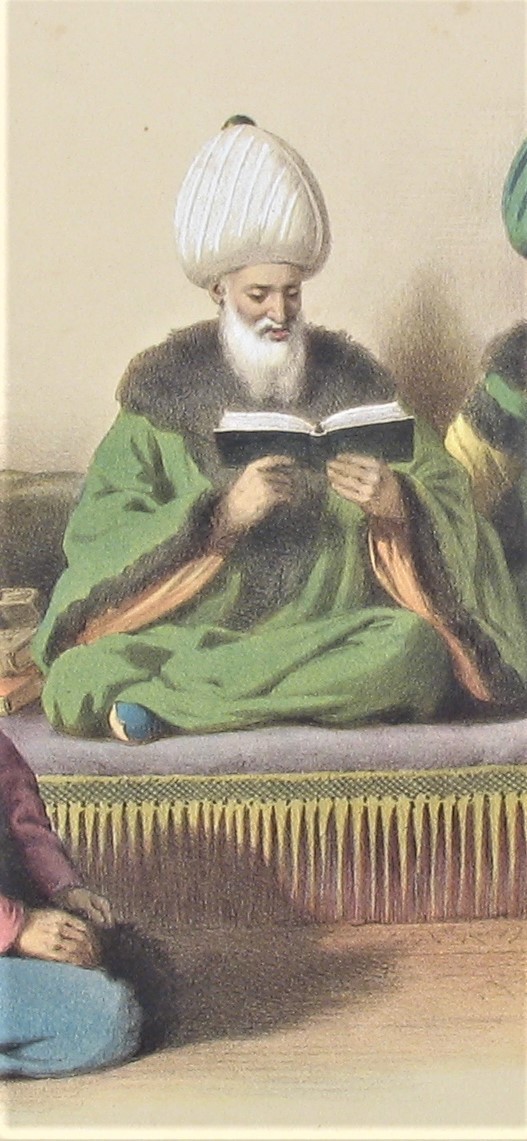
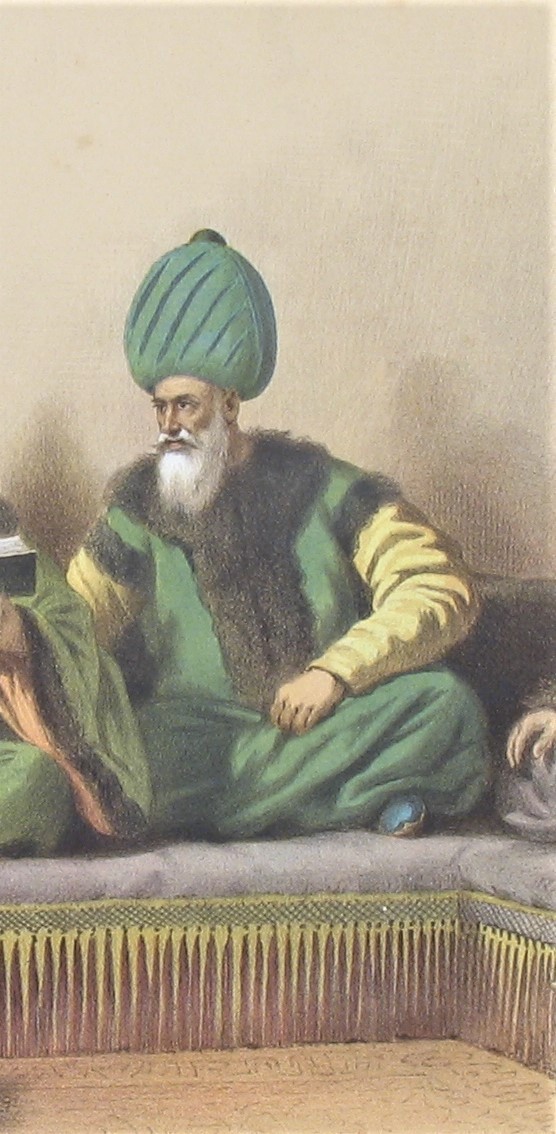
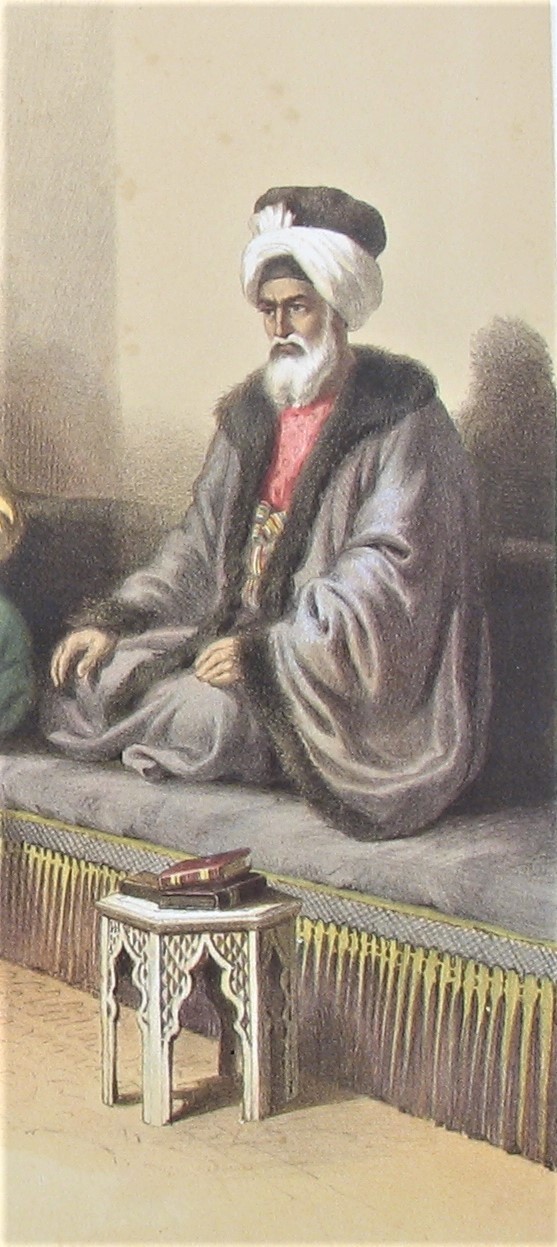
Plate 7 from Les Costumes de la Cour Ottomane, Arif Pasha's monumental 1863 record of Ottoman ceremonial dress, printed in Paris by Lemercier. This sheet shows a formal judicial and religious assembly, the senior legal and clerical officials of the Ottoman court, each identified on the plate in Ottoman Turkish, French, and modern Turkish.
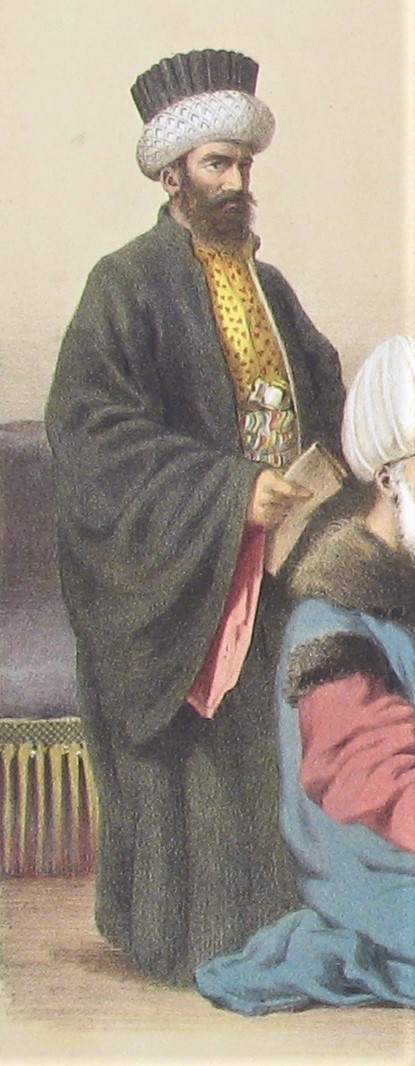
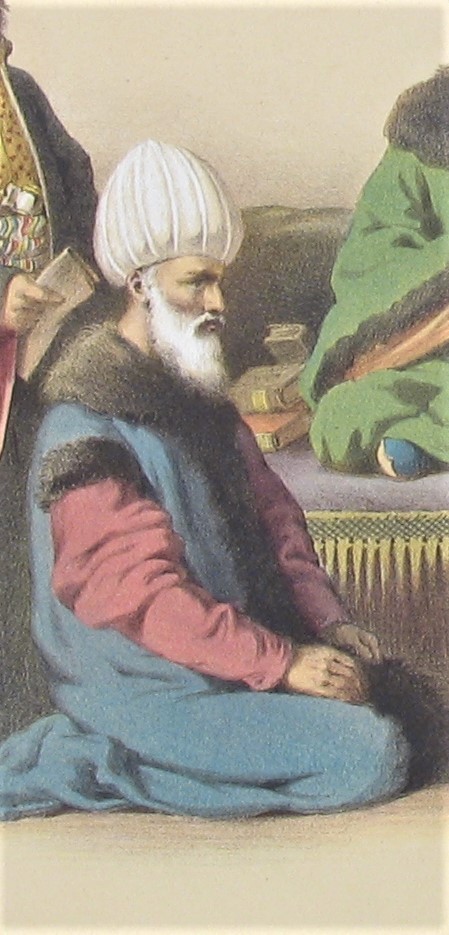
The five figures, left to right, are the Kazasker Kâtibi (summons official to the Chief Justice), the Mekke Kadısı (Judge of Mecca), the Rumeli Kazaskeri (Chief Justice of Rumelia), the Nakibü'l-eşraf (Chief of the Corps of Descendants of the Prophet), and the İstanbul Kadısı (Judge of Constantinople).
Arif Pasha (1808–1865) compiled the series during the Tanzimat reform era (1839–1876), when the Ottoman administration was undergoing wholesale reorganization. The plates were both aesthetic achievements of Orientalist chromolithography and documentary tools for European diplomatic audiences. The printing is true multi-stone chromolithography, successive layers of oil-based color drawn on separate stones, not stencil or hand-coloring, with the close registration and saturated color characteristic of Lemercier's finest work.
Photographs
Details
| Artist | Arif Pasha (1808–1865) |
| Lithographer | M. Julien |
| Printer | Lemercier, Paris |
| Date | 1863 |
| Series | Costumes de la Cour Ottomane, Premier Livre |
| Plate | Plate 7 of 16 |
| Technique | Multi-stone chromolithography |
| Sheet / Image | 21.75 × 15.4 in (55.2 × 39 cm) sheet; 13.4 × 9.6 in (34 × 24.5 cm) image area |
| Reference | eBay item 278188780510 |
Condition
Rescued from a damp basement in a crumbling frame with poor matting, the border areas show heavy soiling, foxing and water staining, and the verso has water stains, foxing and edge tears. The lithograph itself has survived far better, with very good color retention. Professional cleaning and mounting are recommended before framing.
More from Books & Manuscripts
Picturesque Palestine, Sinai & Egypt, Issue No. XXXI, 1882
US $65.00 · or best offer
Handwritten Hebrew Shema Scroll on Vellum
US $85.00 · or best offer
Arif Pasha, Ottoman Court Costumes, Plate 2, 1863
US $1,800.00 · or best offer
Ottoman Military Topographic Map of Ayvalik, 1927
US $75.00 · or best offer
Fil Caravan · Art & Antiques, New York · inquiries@filcaravan.com
eBay item 278188780510 · https://www.ebay.com/itm/278188780510
https://filcaravan.com/listings/278188780510.html