 Fil Caravan
Ceramics & Porcelain
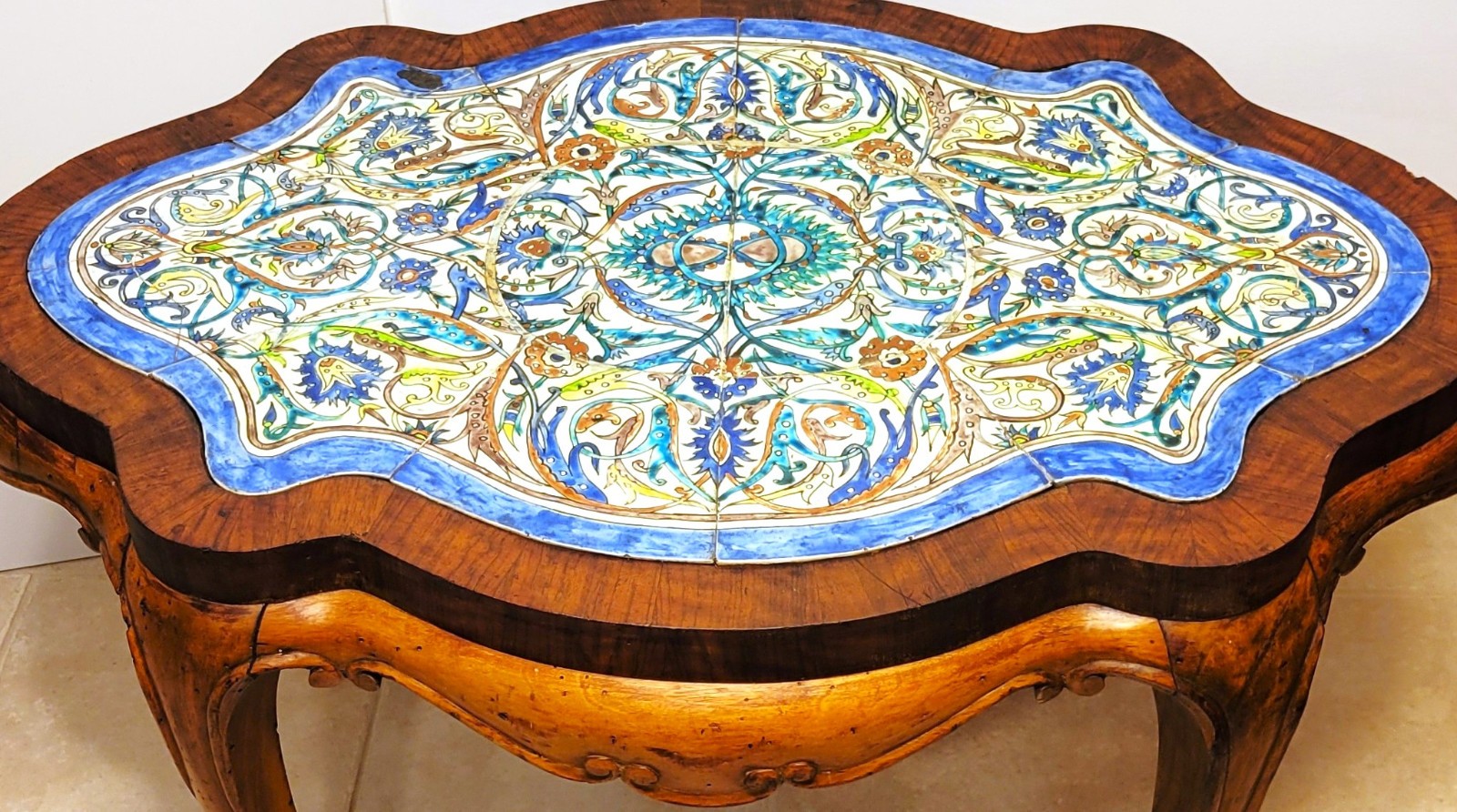
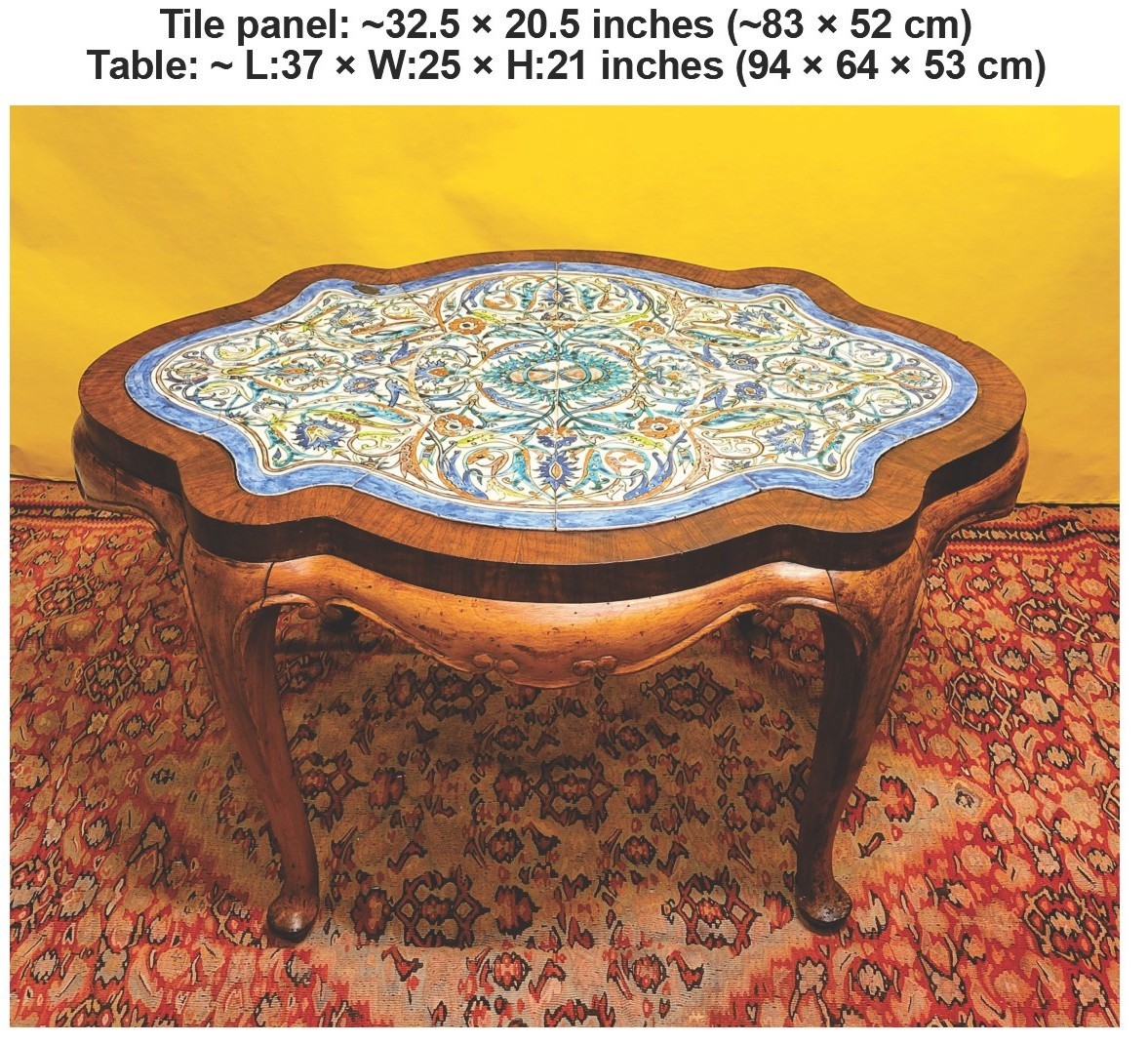
Ottoman Kütahya Tile Panel in a French Fruitwood Table
Twelve-tile underglaze ceramic panel · Kütahya, Anatolia · 19th century, mounted in a period French table
US $7,500.00 · or best offer
Description
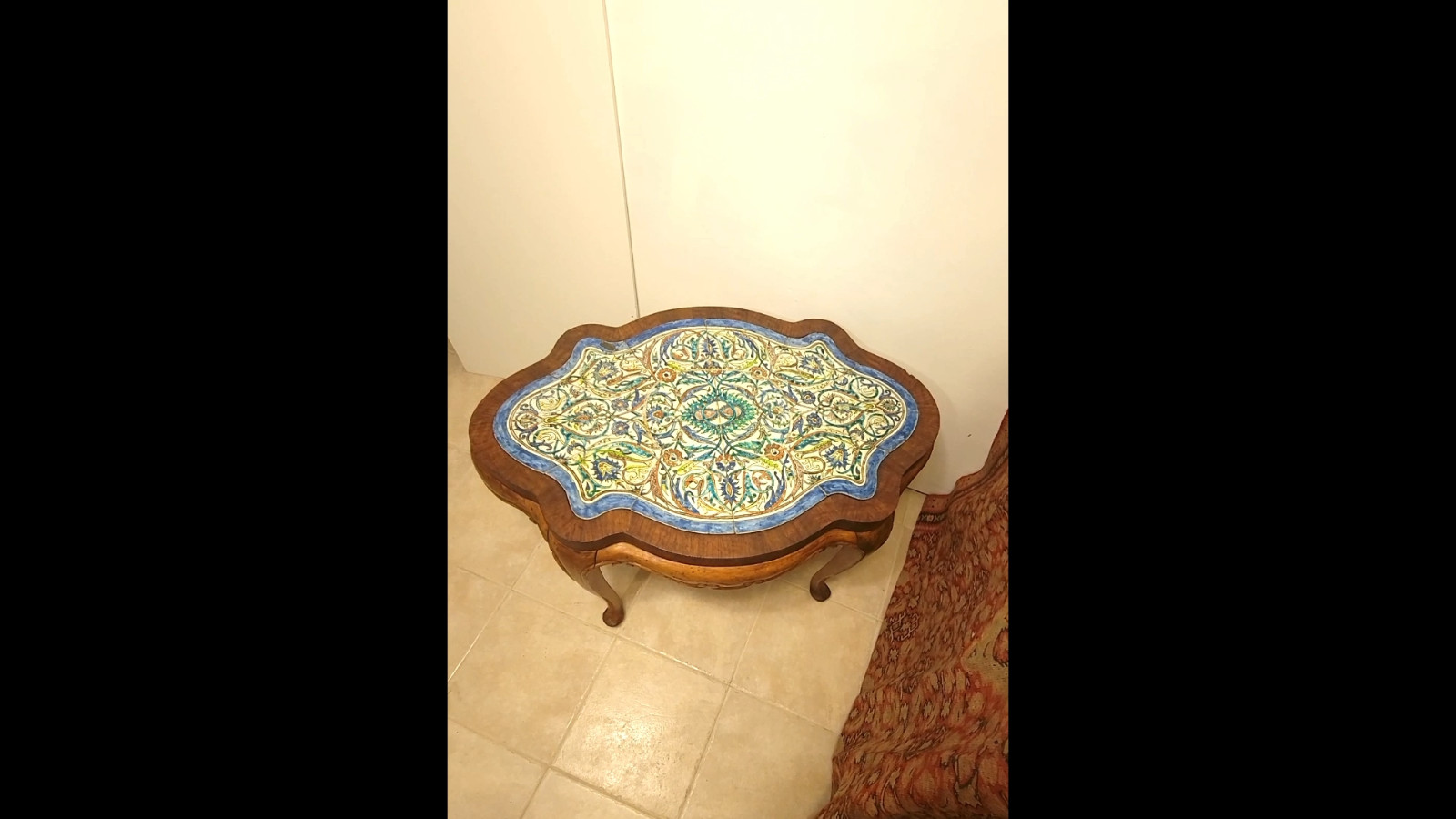
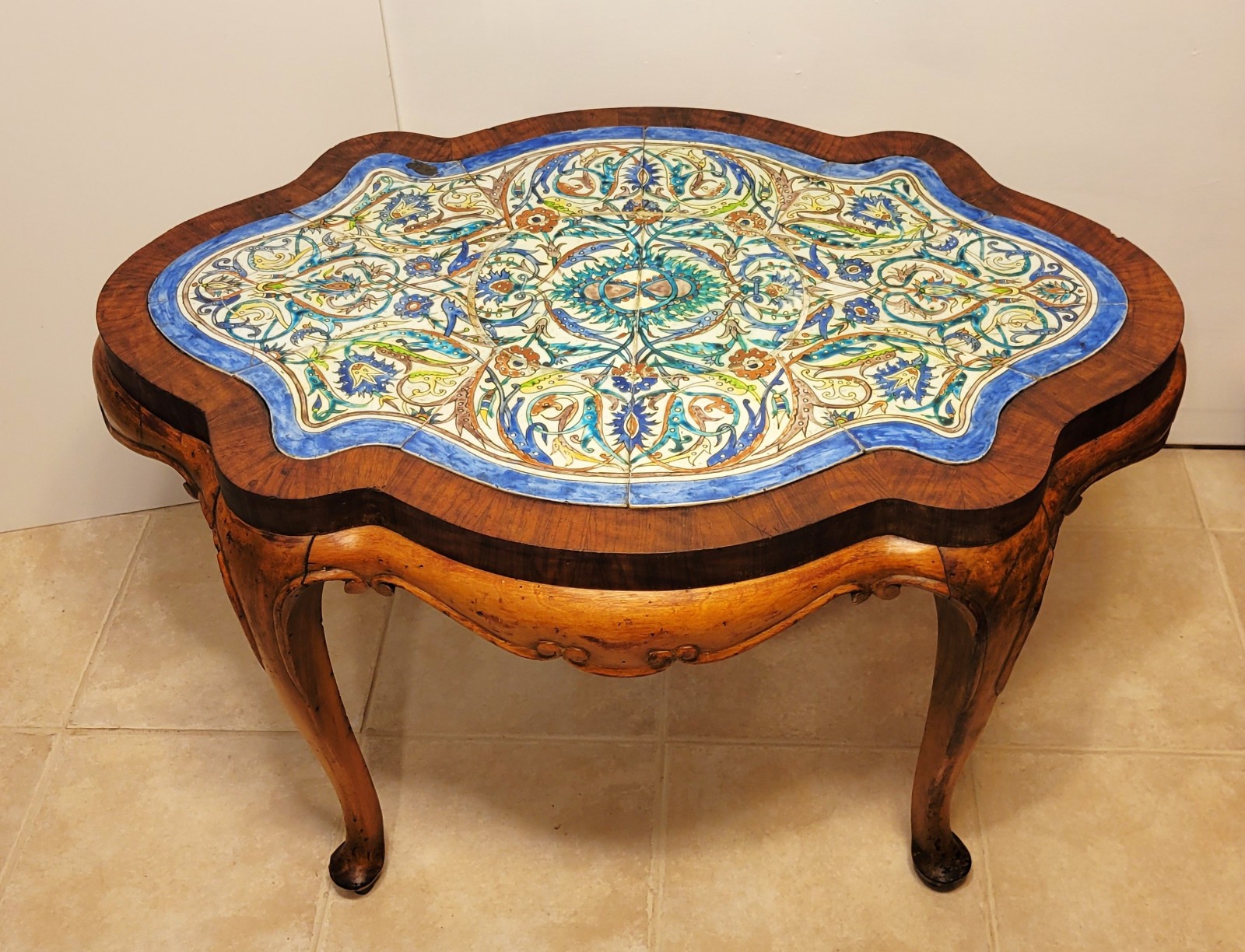
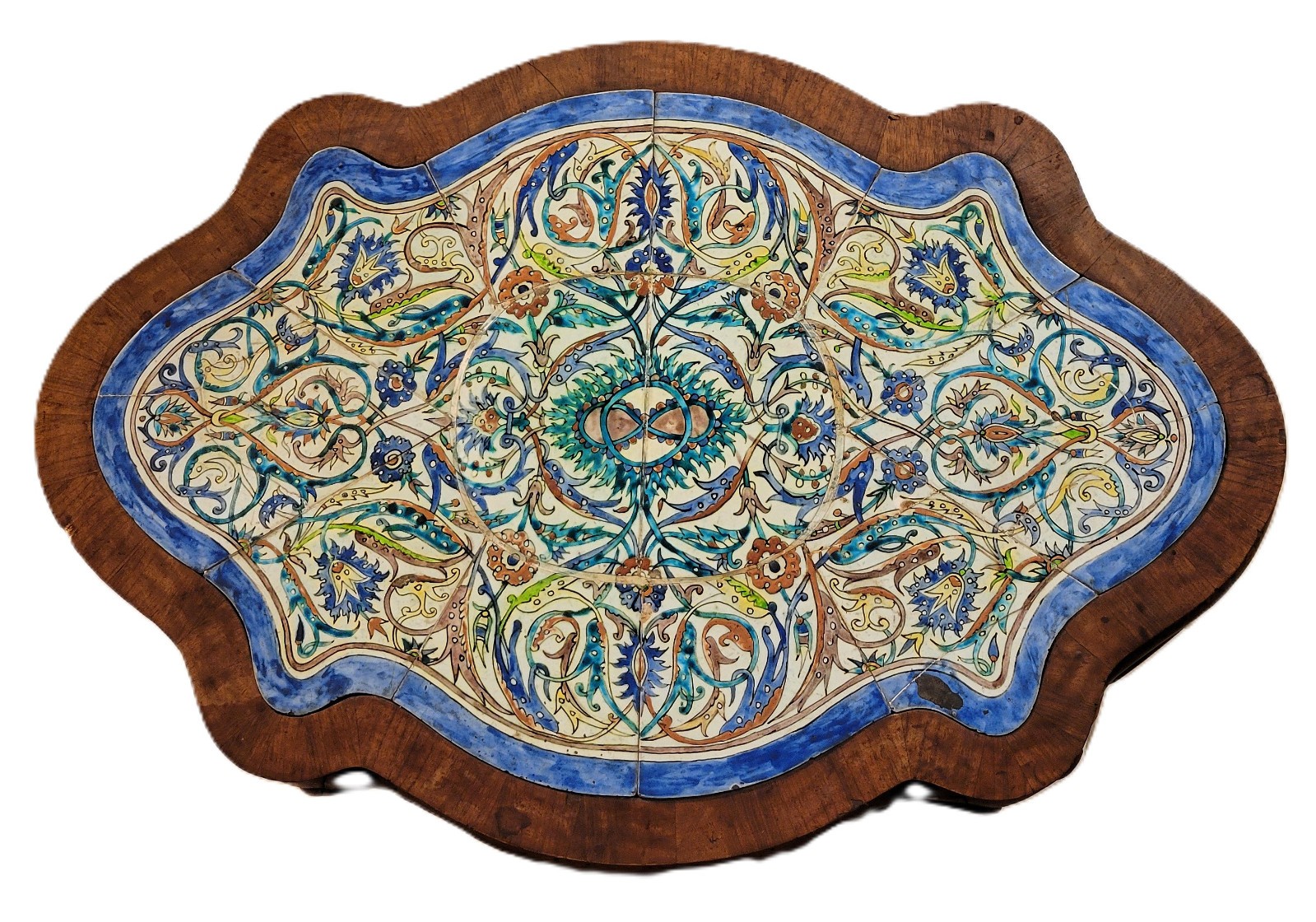
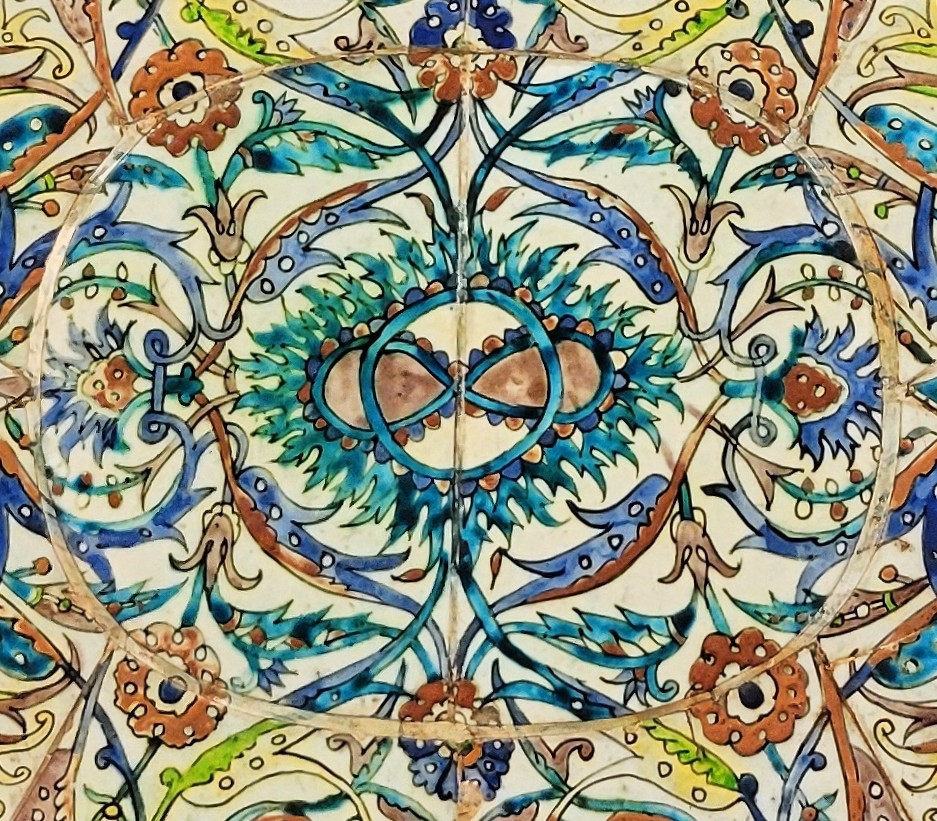
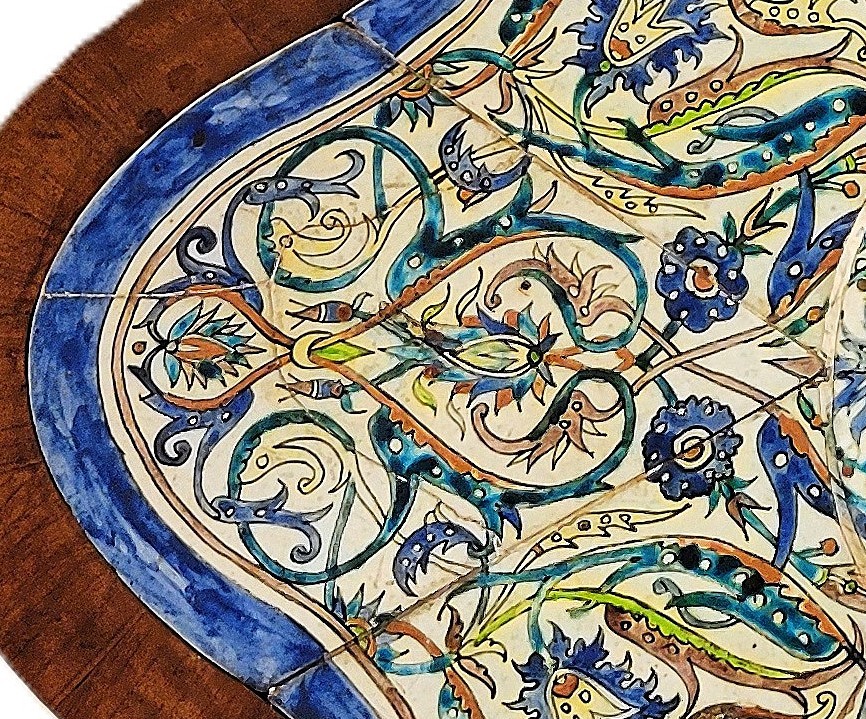
A nineteenth-century Ottoman Kütahya ceramic panel of twelve tiles, carrying the Iznik-style vocabulary that Kütahya workshops preserved long after the Iznik kilns declined. The composition turns on a central palmette medallion framed by scrolling saz leaves and stylized tulips, drawn in cobalt blue, turquoise, and green over a clean white ground. At some point in the same century the panel was set into a shaped French carved fruitwood table, pairing Ottoman ceramic art with European cabinetmaking.
The palette's defining note is the raised Armenian bole red, a thickly applied iron-oxide underglaze that stands in physical relief without bleeding or browning in the second firing. The floral patterns and medallions are outlined in concentrated manganese dioxide (tahrir), the lines reading warm purplish-black to chocolate-brown under close inspection. Both features are associated with authentic Kütahya workshop production of the eighteenth and nineteenth centuries.
Kütahya's ceramic industry in this period was substantially the work of local Armenian master craftsmen, a history documented in John Carswell's two-volume study Kütahya Tiles and Pottery from the Armenian Cathedral of St. James, Jerusalem (Oxford University Press, 1972), which classifies the medallion typologies this panel follows. The same design templates, symmetrical palmette medallions, scrolling arabesques, saz-leaf borders, carried forward into the Jerusalem studio tradition of the Kütahya-trained master potter David Ohannessian (1884–1953).
Photographs
Details
| Origin | Kütahya, Anatolia (Ottoman Empire) |
| Period | 19th century |
| Form | Twelve-tile ceramic panel, mounted |
| Technique | Underglaze painting; raised Armenian bole red; manganese dioxide outlines (tahrir) |
| Palette | Cobalt blue, turquoise, green and iron red on white ground |
| Panel Dimensions | Approx. 32.5 × 20.5 in (83 × 52 cm) |
| Table Dimensions | 37 × 25 × 21 in (94 × 64 × 53 cm) |
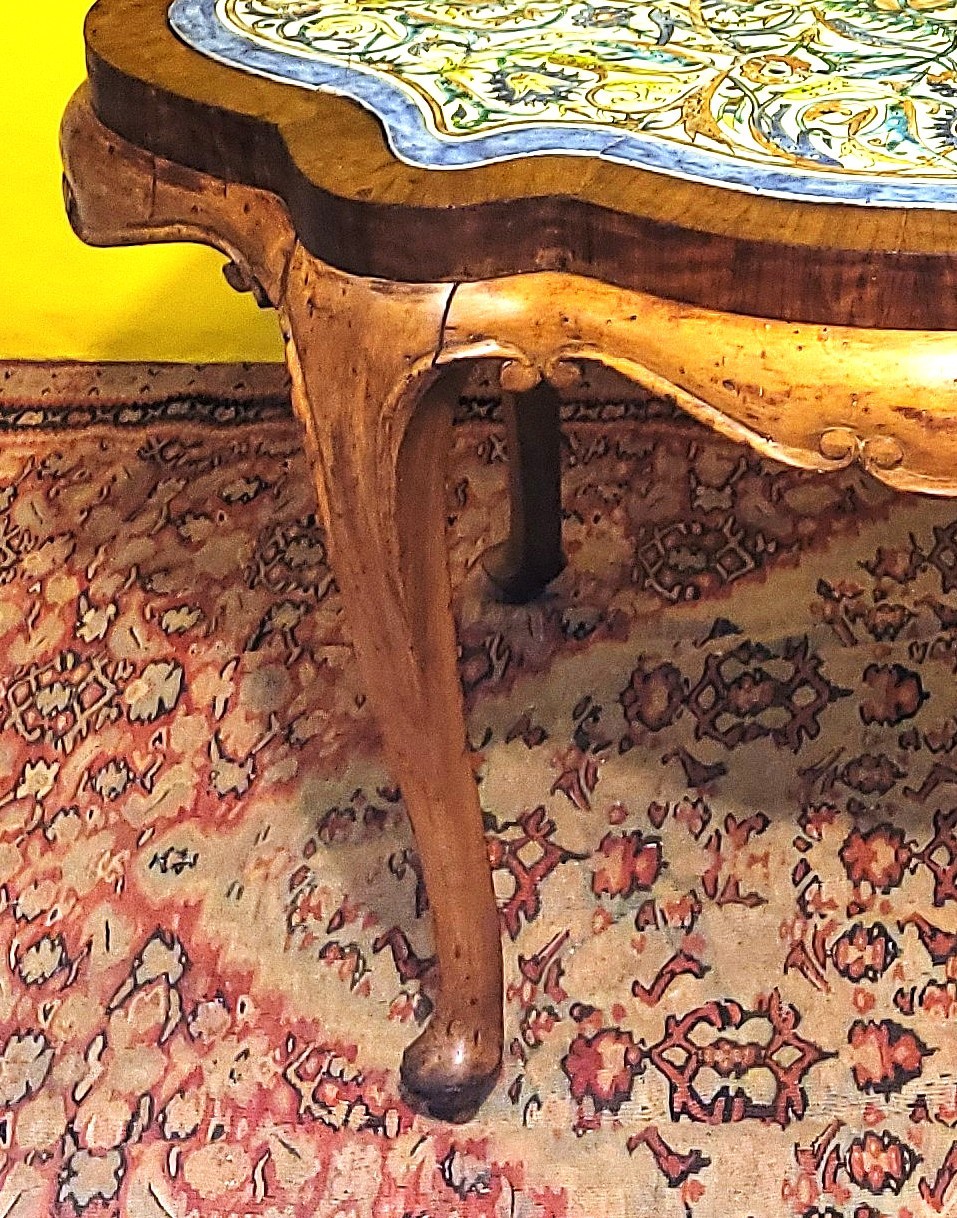
| Mount | 19th-century French carved fruitwood table |
| Reference | eBay item 278136999957 |
Condition
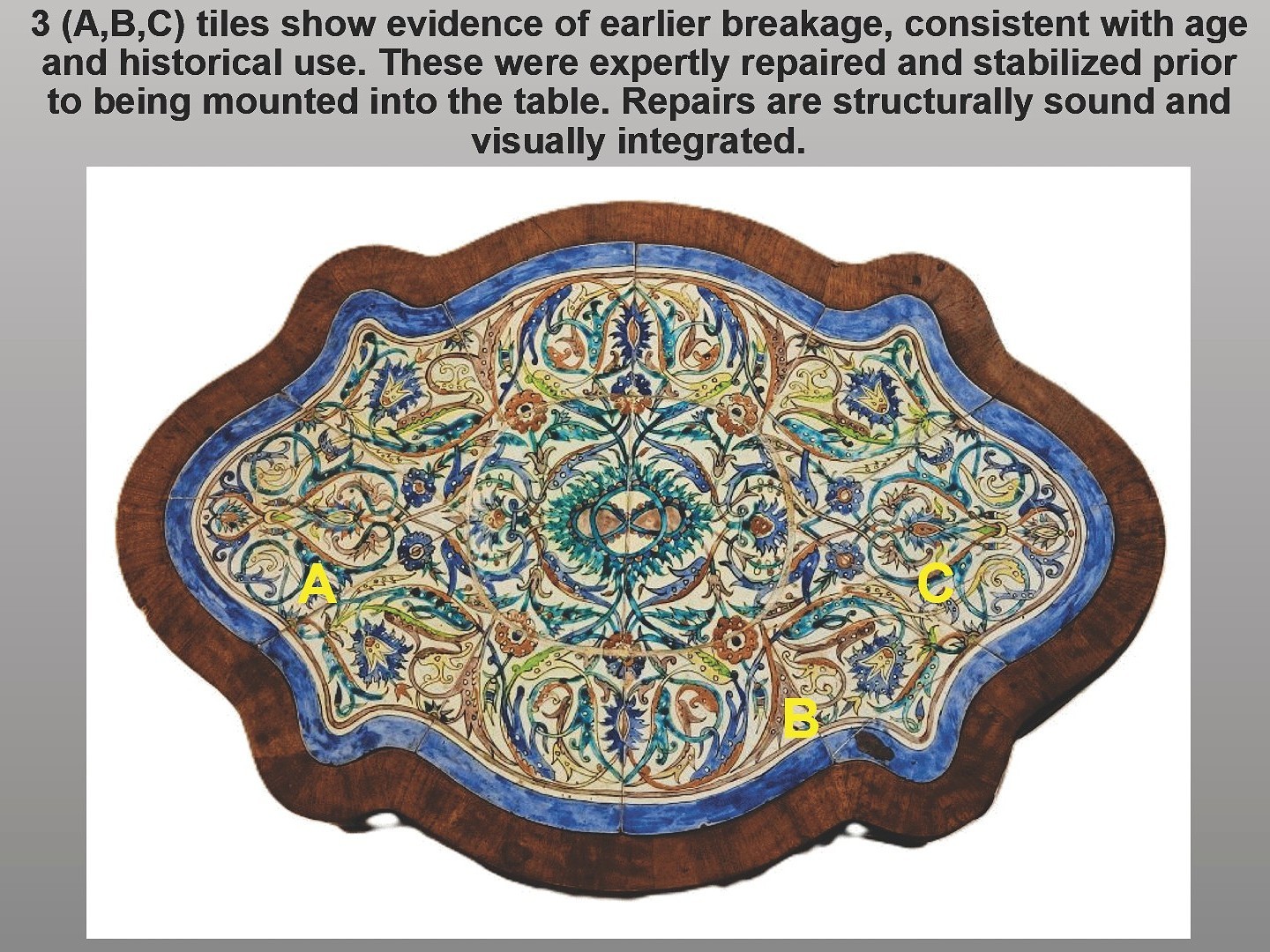
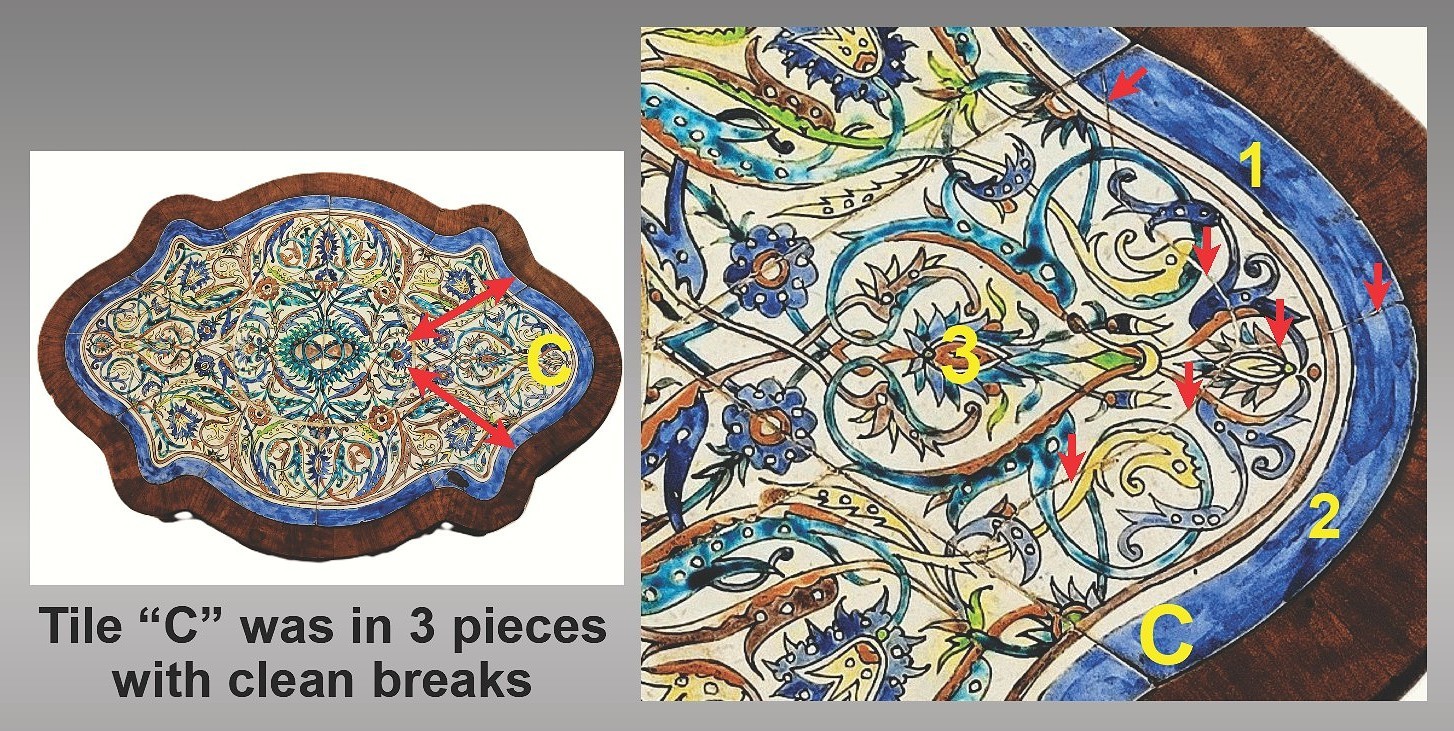
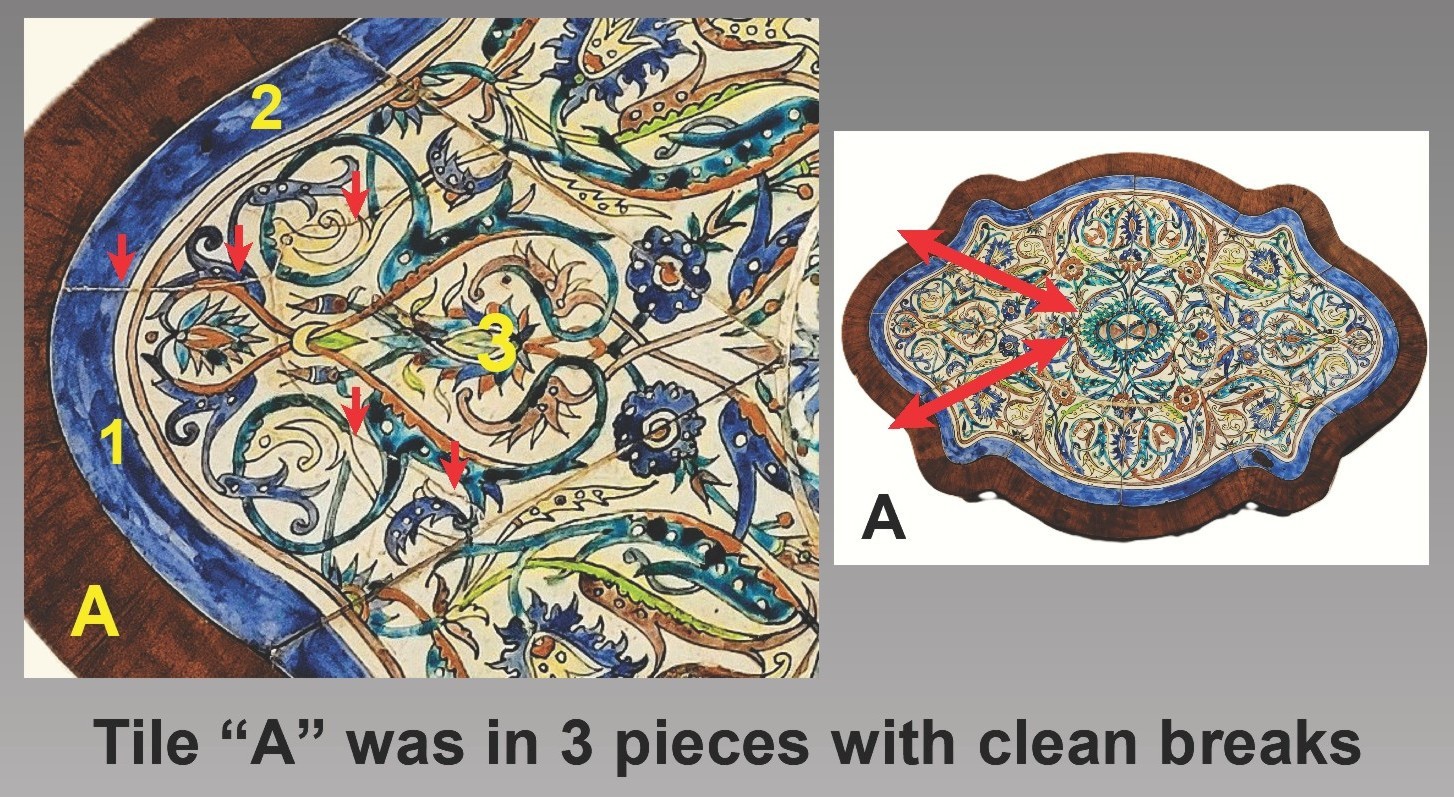
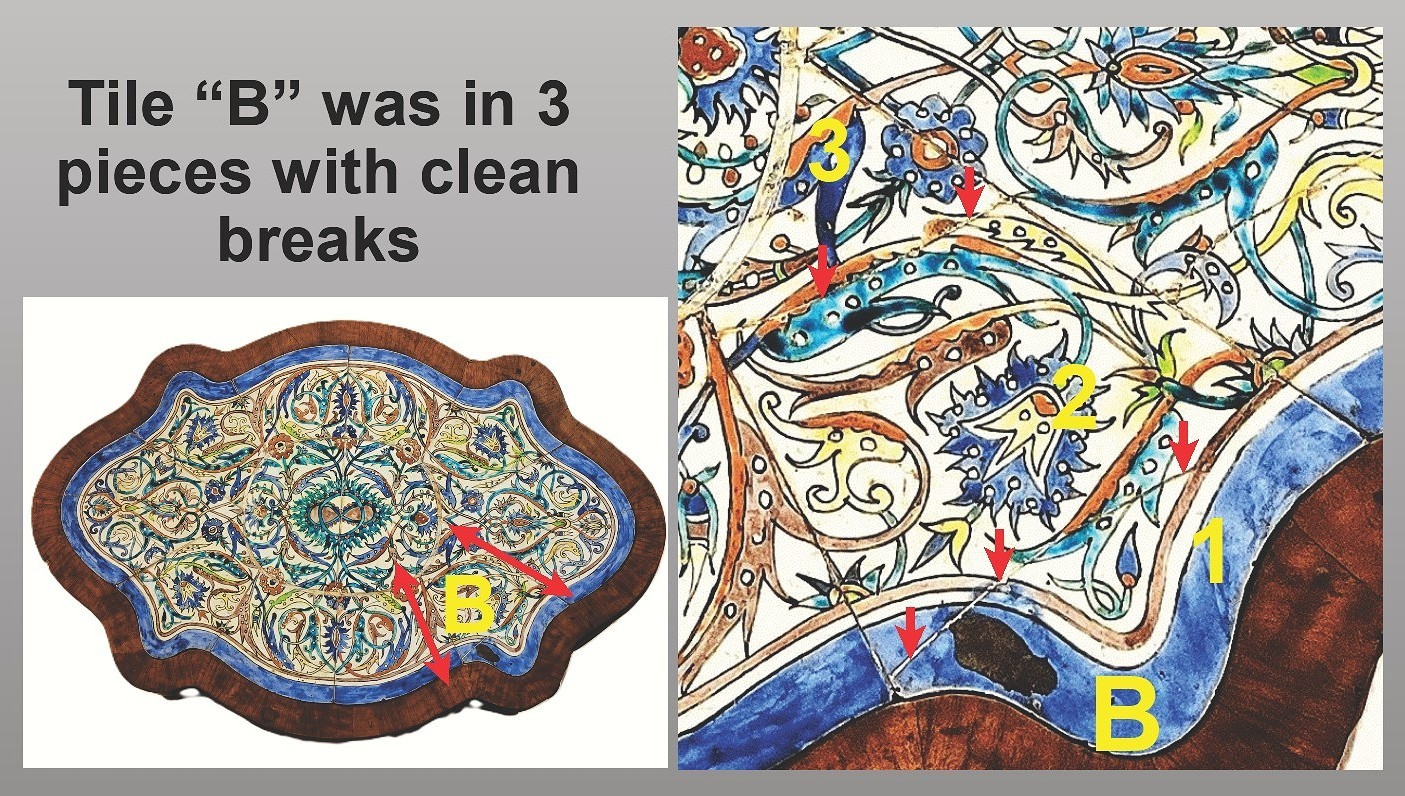
Three tiles in the panel (designated A, B and C) show historic breakage with old professional restoration; the repairs are stable, structurally integrated, and visually consolidated within the composition. The antique wooden frame shows expected surface wear, minor marks, and long-dormant historic worm holes. The form remains stable and secure for use.
More from Ceramics & Porcelain
Fil Caravan · Art & Antiques, New York · inquiries@filcaravan.com
eBay item 278136999957 · https://www.ebay.com/itm/278136999957
https://filcaravan.com/listings/278136999957.html