 Fil Caravan
Since 1976
Fifty years in the New York trade.
FIL CARAVAN INC., Dealers in Art and Antiques. A Manhattan gallery of Islamic art, rugs, silver, manuscripts, arms and metalwork, kept by Nabi Israfil since 1976. Among the first in the trade to take a website and an email address, and still dealing today, now in the top one percent of sellers in Middle Eastern antiques on eBay.
A curated collection from a life lived in New York art and antiques, born of the joy of finding hidden things and bringing them to life.
The house, in order
Fifty years, station by station
From the gallery on 57th Street to Harvard, the United Nations, and the collection catalogued today.
-
1970
A name in a book
As a mathematics major at New York University, Nabi Israfil takes a graduate course on Arab painting from Professor Richard Ettinghausen, formerly curator of the Freer Gallery of Art. On the cover of the book the course is built on is the archangel Israfil, striding forward and blowing his trumpet, painted in Iraq about 1370. It is the first time he sees his own name illuminated.
How it beganArab Painting Richard Ettinghausen, and an archangel on the cover -
May 1975
A postcard from Damascus
Reading geology in Beirut, he spends his weekends in the museums and bazaars of Damascus. In May he sends his mother in New Jersey a postcard of a sixteenth century astrolabe from the National Museum. On the back, in Turkish: today I am shopping in Damascus and I thought of you. Seven years later he will own an astrolabe himself, and sell it.
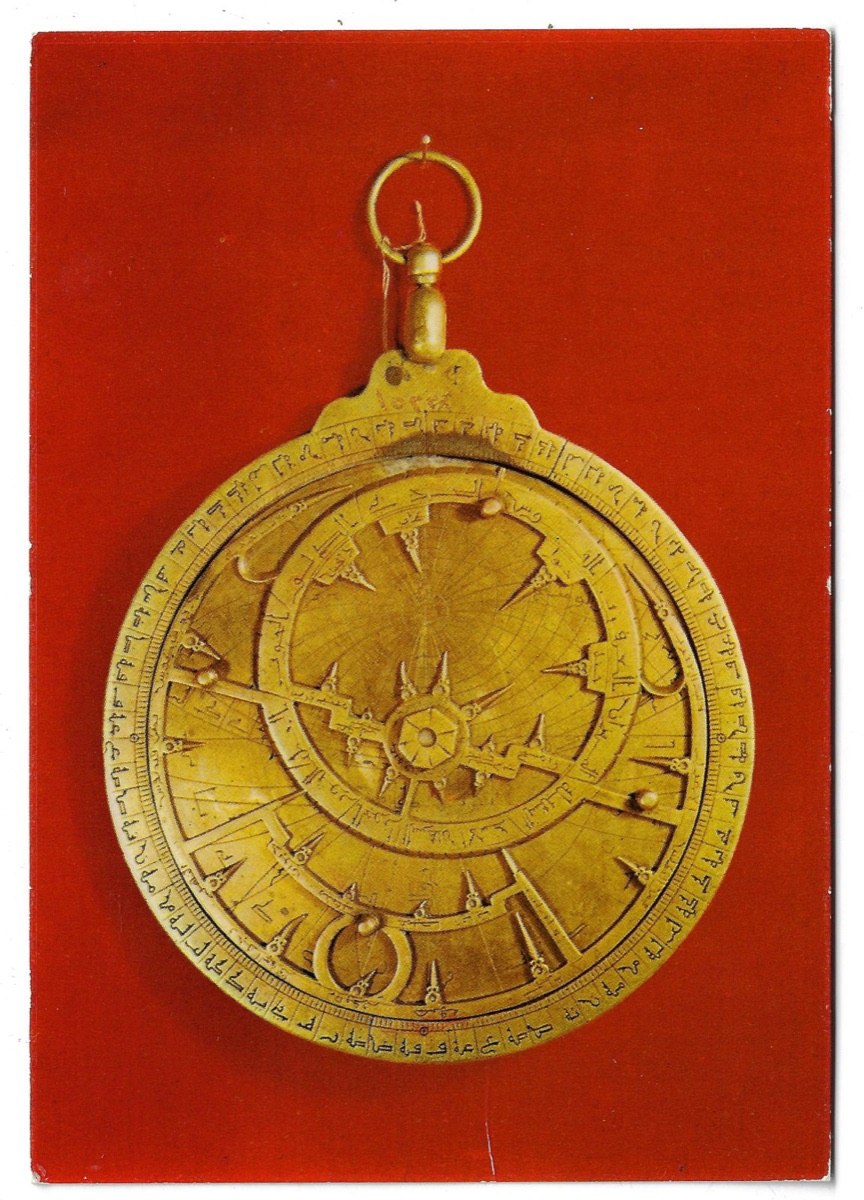
The card he chose: a sixteenth century astrolabe in the National Museum of Damascus. -
Summer 1975
The first things sold
The civil war closes the university. He leaves Beirut through Damascus, and works his passage home to Boston on a Greek oil tanker, two hundred miles up the Orinoco and on to Liverpool and Norway. The copper, brass and silk he had bought as a student are sold to dealers in New York. They are the first things he ever sold. On the drive down from Boston, he and his brother decide to open a shop.
The whole story -
May 1976
The house is founded
FIL CARAVAN INC. opens in the Manhattan Art and Antiques Center at 1050 Second Avenue, in one of the smallest spaces in the building, ten feet by ten. It grows twice, and by 1985 it is the largest single gallery there, some twelve hundred square feet given to lectures and exhibitions. The name is set in 1976 and has not been changed since.

The mark of the house, unchanged in fifty years. -
1982
An exhibition of Islamic works of art
Exhibition and sale, 15 October to 15 December. The piece on the announcement is a Safavid astrolabe from Persia dated 1139 A.H., 1726 in the Western calendar, seven inches across, bought at Parke-Bernet. Under the name on the sheet: Dealers in Islamic Antiques.
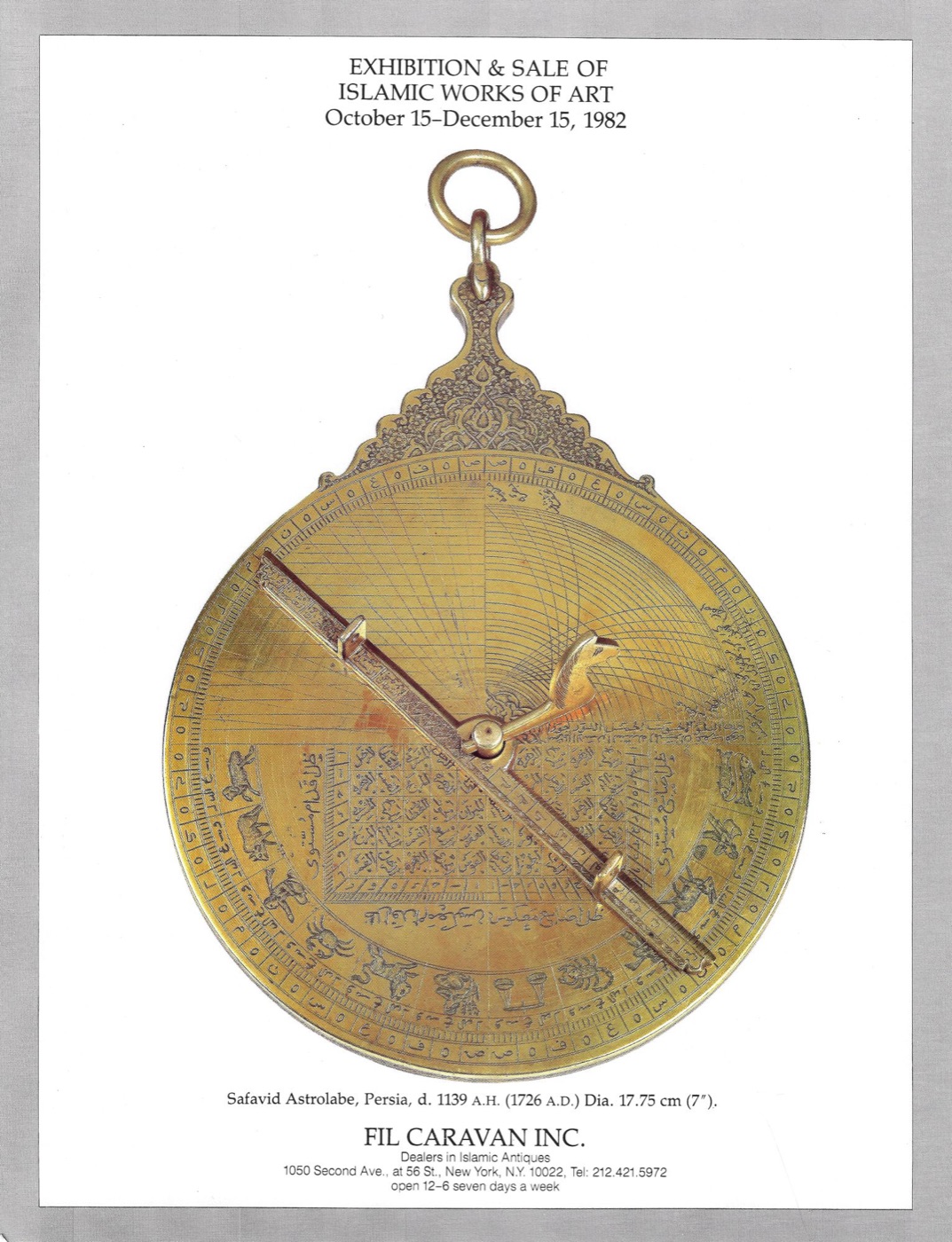
The 1982 announcement, and the astrolabe he had admired on a postcard seven years before. -
1982 to 1996
The Russian Tea Room
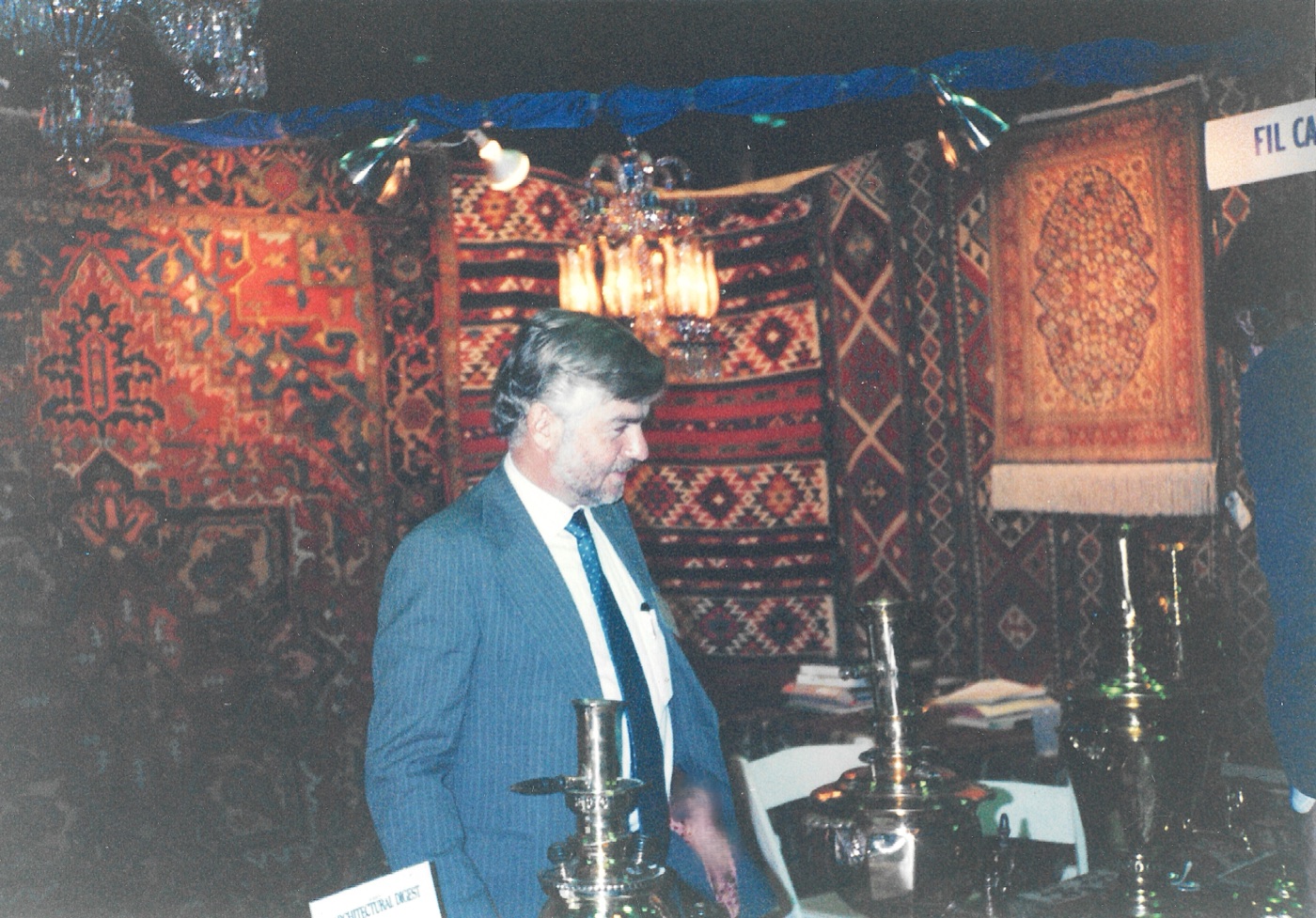
The first sale to the Russian Tea Room is made in May 1982, and several dozen antique samovars and brass pieces follow. In 1985 the house furnishes the newly expanded banquet rooms upstairs. When the restaurant changes hands late in 1996, the new owner asks this house to appraise the samovars that came with it. There are thirty one.
The samovar trade -
Since 1985
The World Music Institute
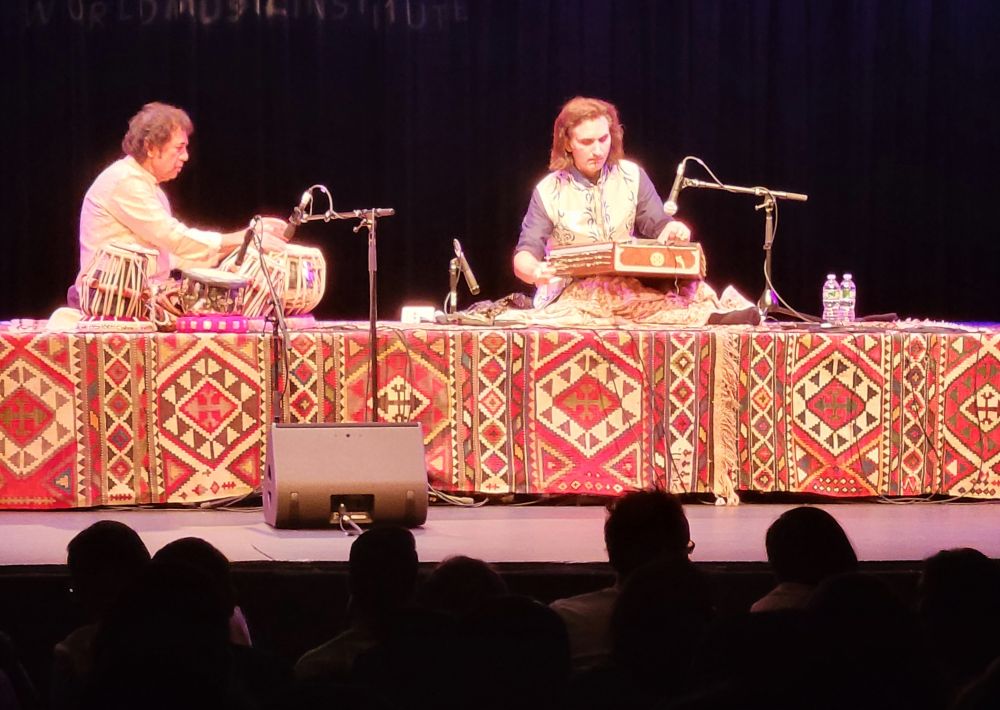
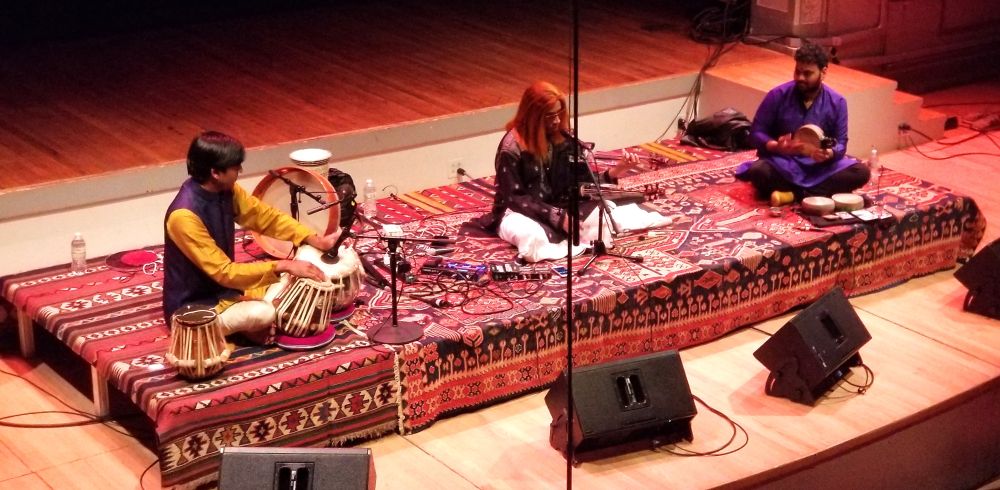
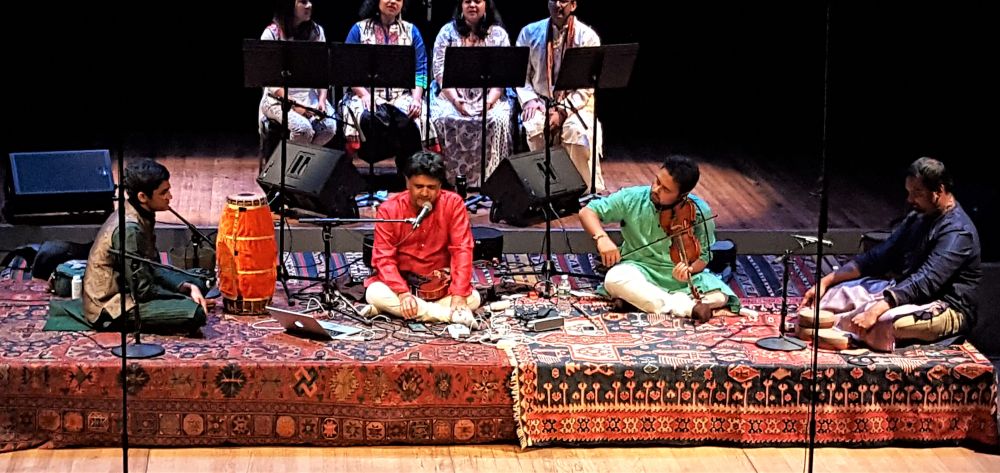
The house has supported the World Music Institute from its founding, and has dressed stages for world renowned artists with its antique rugs and textiles ever since.
See the photographs -
1988
An Ottoman conference
The gallery holds a conference on Ottoman costume and the art of arms. The speaker is Professor Dr. Zdzislaw Zygulski Jr., director of the National Museum in Krakow. Hurriyet gives the evening a full page.
Read the pageAntika galerisinde Osmanli konferansi Hurriyet, 11 May 1988 -
1990
301 East 57th Street
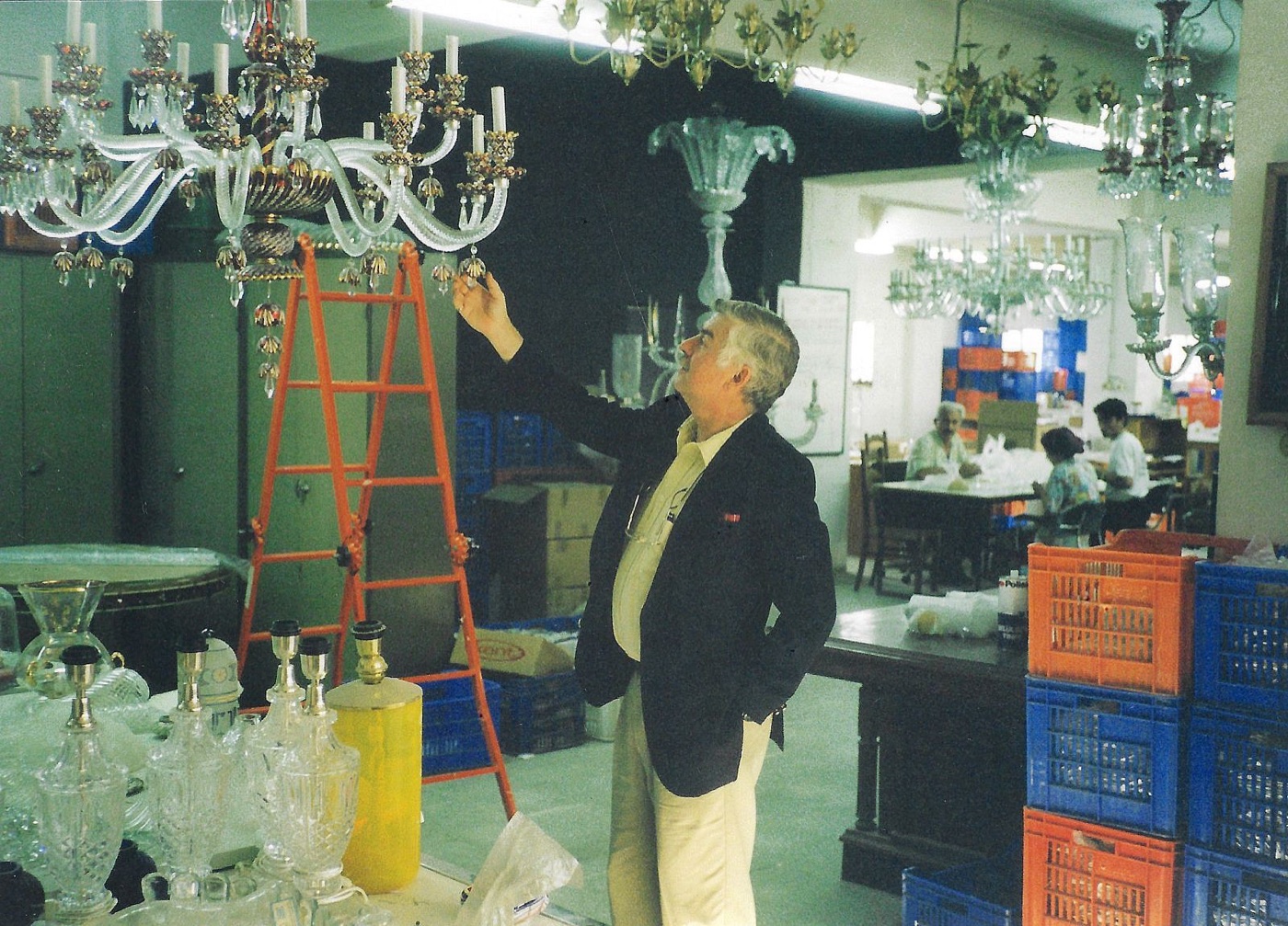
The house outgrows the Antique Center and takes the former Rolls-Royce showroom on the corner of 57th Street and Second Avenue: forty feet of frontage on the avenue, some two thousand five hundred square feet, room enough to hang the largest carpets. The windows stop traffic.
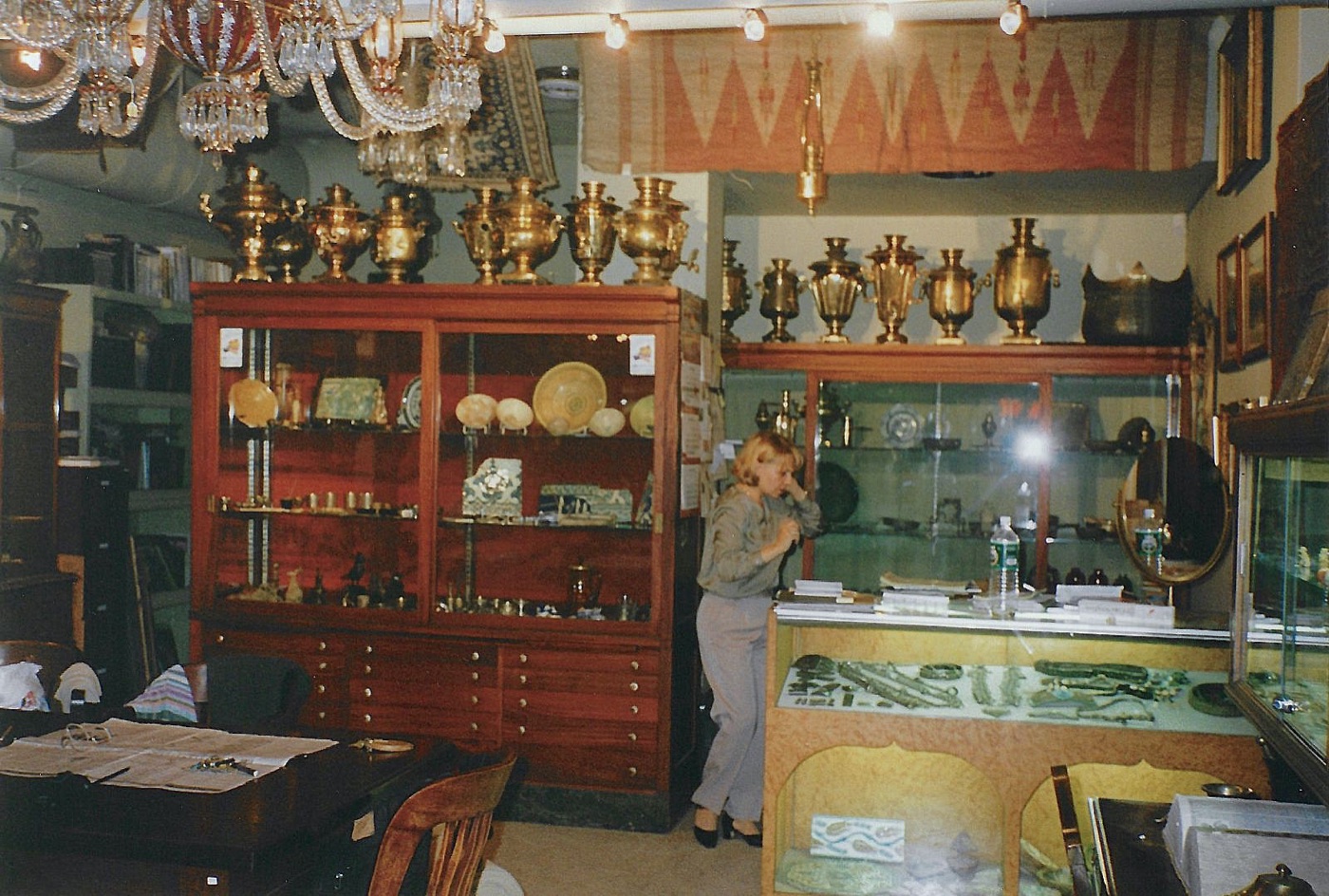
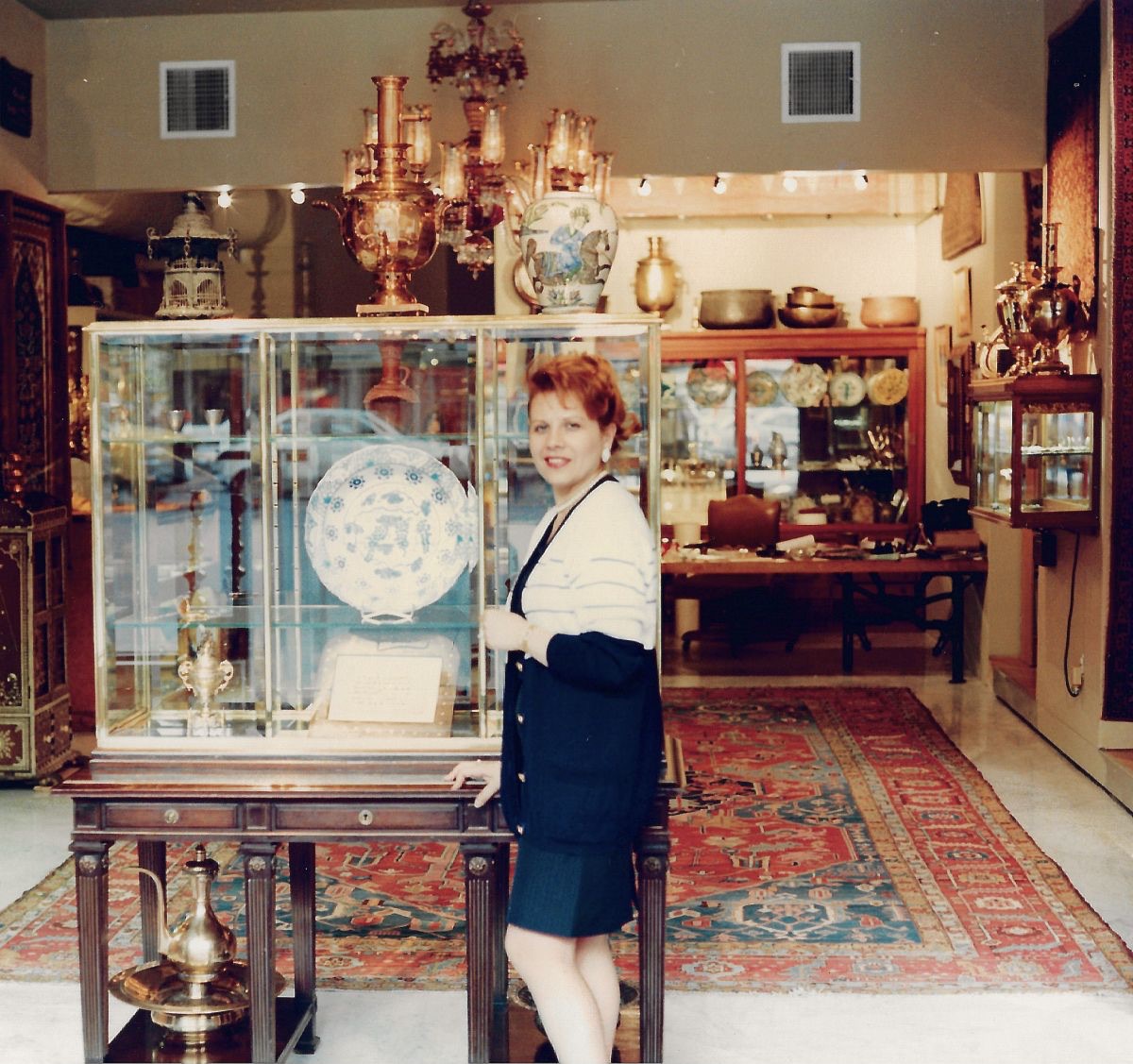
The gallery on 57th Street, 1993: samovars ranked along the cabinets, chandeliers overhead. -
1990
The collector's handbook
The house does not only deal in samovars. It publishes the collector's handbook on them: fifty six figures, a map, the makers set out by city and by date, and the Cyrillic alphabet for reading the marks. Twenty five dollars and postage, from the gallery.
The bookSamovars The Art of the Russian Metalworkers -
January 1995
The lecture room
The gallery runs a lecture series in its own rooms. On the eleventh, Dr. Philip Gould on the essential differences of Eastern and Western art. On the twelfth, Dr. Leo S. Figiel on the art of Damascus steel. Twenty dollars a lecture, refreshments afterwards, and an exhibition of Islamic arms and armour to follow.
The programme -
1995 to 2005
The United Nations
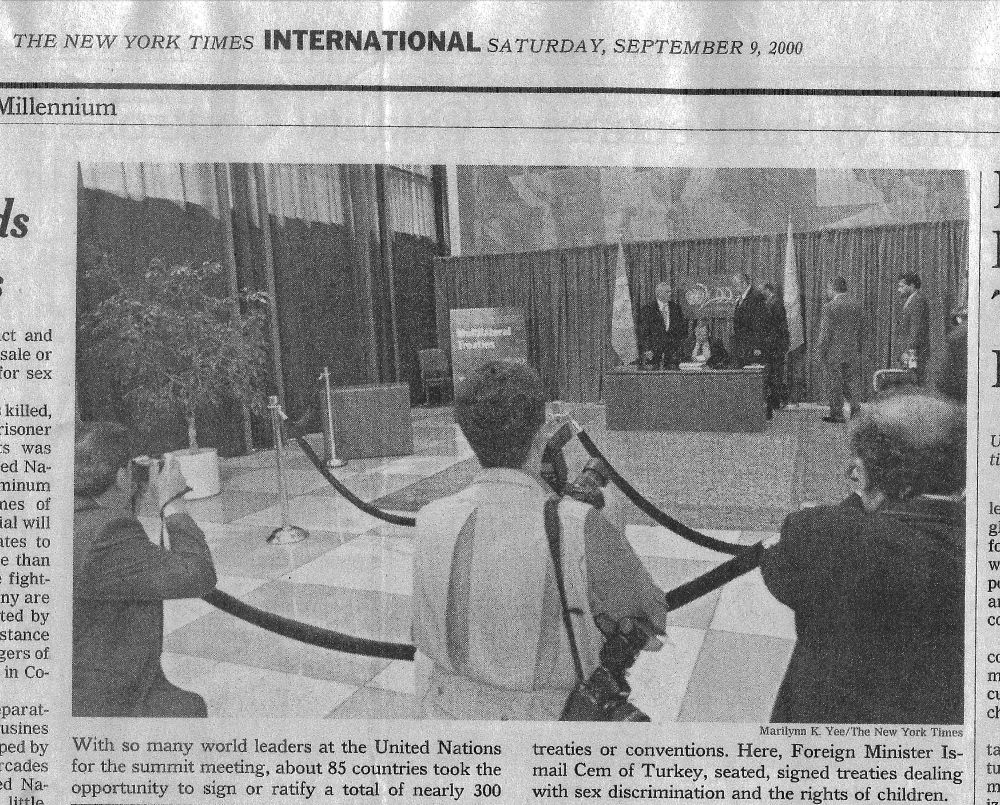
About thirty conference rooms are laid with antique oriental rugs from this house, with several oversize rugs for the special event areas. Four occasions are named, from the fiftieth anniversary to the World Summit of 2005.
The four occasionsMillennium Summit 6 to 8 September 2000, New York -
1996
A samovar for Harvard
On 9 April the Davis Center for Russian Studies presents a samovar from this house to Kathryn W. Davis. In May the centre writes to 301 East 57th Street, giving Fil Caravan leave to publish the photograph.
The letter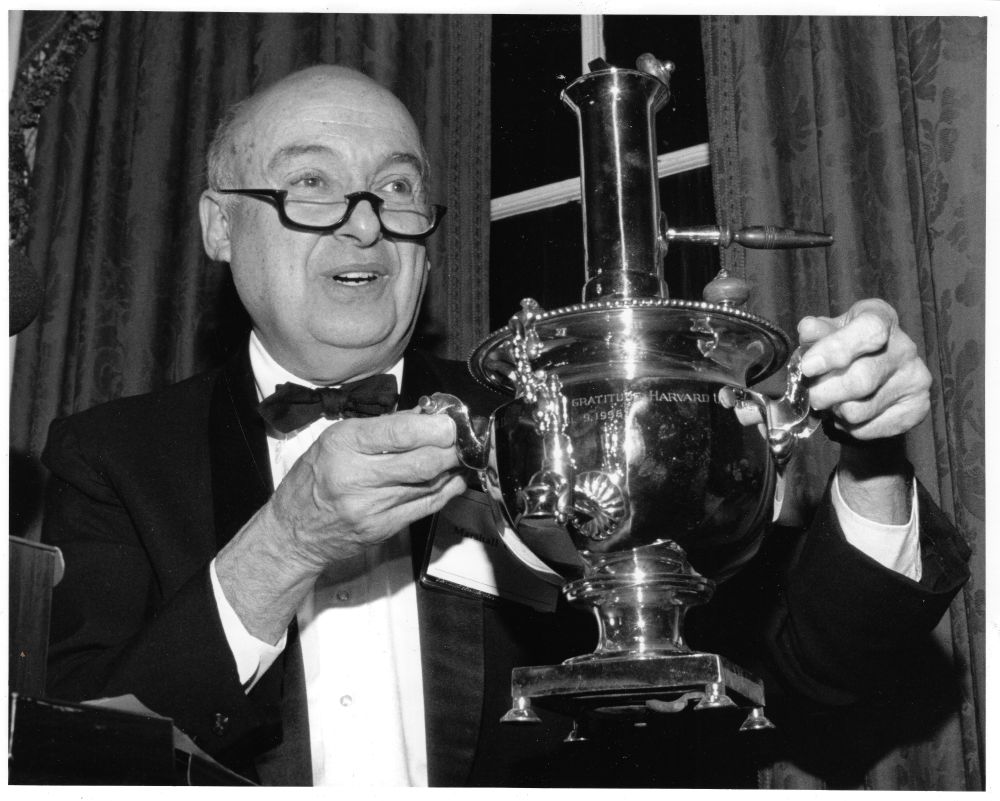
Marshall I. Goldman with the samovar, engraved in gratitude to Harvard. -
2001
The gallery closes
FIL CARAVAN INC., the gallery on 57th Street, closes after twenty five years in the trade. The dealing does not stop. It moves to a smaller room and carries on.
-
The move
240 East 56th Street, Suite 2E
The house takes new premises at 240 East 56th Street, Suite 2E, New York, NY 10022. Telephone 212-421-5972.
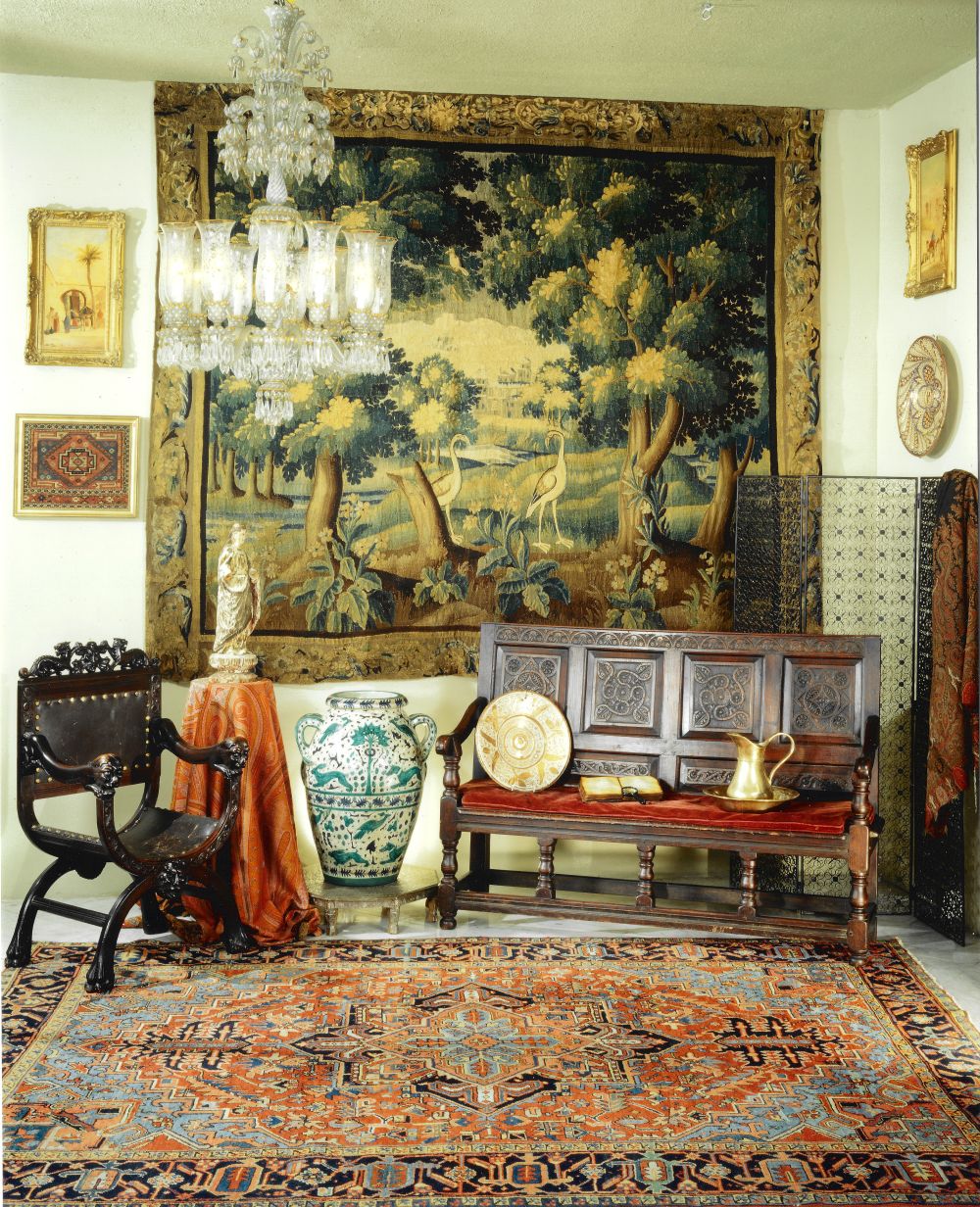
A corner of the gallery: a verdure tapestry with herons, a Venetian glass chandelier, a carved bench, a Heriz carpet. -
Online
The first filcaravan.com
While most of the trade was still working by telephone and fax, the gallery advertisement already carried a web address and an email address. Fil Caravan was online early, and it is the same address you are reading this on.
Web: www.filcaravan.com E-mail: filcaravan@att.net -
2017
The collection goes to eBay
The house begins selling on eBay under the name europroducts, and has been listing there ever since. Today that shop ranks in the top one percent of sellers in Middle Eastern antiques, with one hundred percent positive feedback.
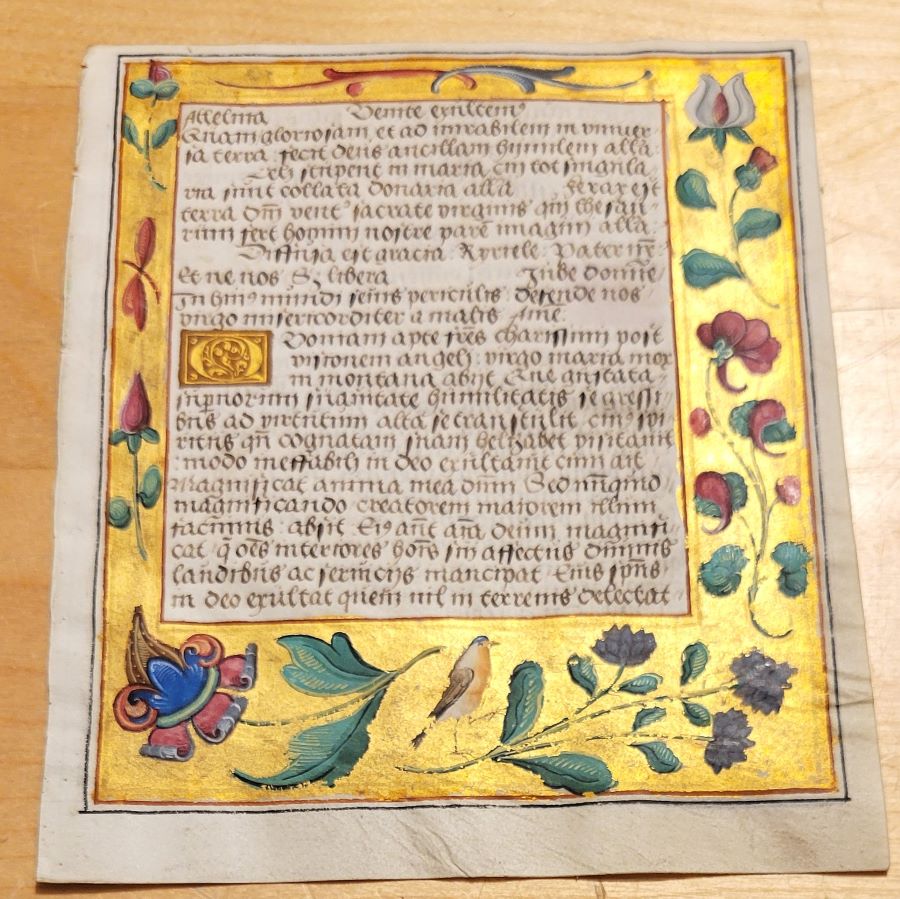
A Psalter leaf on vellum, gold ground, roses and columbine, with a small bird at the foot. -
2026
The house comes back online
filcaravan.com is rebuilt, with 193 pieces catalogued, each with a page of its own, in seven languages.
Enter the collection
1970 to 1975
Before there was a shop
A course at New York University, a name on the cover of a book, and a postcard sent home from Damascus by a student who had not yet sold anything.
In 1970, reading mathematics at New York University, Nabi Israfil enrolled in a graduate course on Arab painting given by Professor Richard Ettinghausen, formerly curator of the Freer Gallery of Art in Washington. The book the course was built on carried a painting on its cover: the archangel Israfil, striding forward and blowing his trumpet, made in Iraq about 1370 and held at the Freer. Ettinghausen called it likely the last outstanding achievement of Arab manuscript painting. It was the first time he had seen his own family name illuminated.
He moved to Columbia University, took his degree in geology, and went on reading Persian literature. There he sat a course on oriental rugs under Professor Emeritus Maurice Dimand, curator of textiles at the Metropolitan Museum of Art. Neither course was training for a trade. Both turned out to be exactly that.
Graduate work in geology took him to the American University of Beirut, and his weekends to Damascus, which he found richer than Beirut: the museums, the Great Mosque, and the bazaars. On a student's budget he bought a little copper and brass, some modern silk, some bead jewellery. In the spring of 1975 he drove to Damascus, Homs and Aleppo and walked the antique rug markets, looking at Persian, Caucasian and Turkish carpets with Dimand's course behind him, and no idea that antique rugs would one day be half the business.
Today I am shopping in Damascus and I thought of you. I only bought a few things.
Nabi Israfil to his mother, postcard postmarked Damascus, 13 May 1975, in translation from the Turkish
The way home
By the summer of 1975 the civil war had made Beirut unsafe for foreign students. He left through Damascus for Poland, spent a month there and drove from the coast down to Krakow and the Carpathians, then took passage home as a student guest on a Greek oil tanker, the Pontus. The ship went from Boston two hundred miles up the Orinoco to load oil, on to Liverpool to unload it, and, when the news from Beirut got worse, on again to Norway rather than back to the university. He hitchhiked to Oslo and saw the Kon-Tiki. He was met in Boston by his brother Cengiz.
The dozen or so pieces he had carried back from Syria he sold to dealers in New York. They were the first things he ever sold. Driving down from Boston, the two brothers talked about opening a small antique shop and importing from Turkey and the Middle East, and decided to give it a try. Cengiz, then a banker at Morgan Guaranty Trust Company, helped finance it. The shop opened the following May.
Hurriyet, 11 May 1988
An Ottoman conference at the antique gallery
Under the running banner Amerika'dan Haberler, News from America, the Turkish daily gave the evening a full page.
The paper describes Fil Caravan Inc. as one of the important galleries of the Manhattan Art and Antiques Center, and its owner, Mehmet Nabi Israfil, as the man who organised the conference. The subject was Ottoman costume and the art of arms, and it drew great interest from New York art lovers.
The speaker was Professor Dr. Zdzislaw Zygulski Jr., director of the National Museum in Krakow and a leading authority on arms and armour, who told the room that the splendour of Ottoman art was breathtaking. Mrs Ettinghausen was among the guests.
A gallery said to hold one of the widest collections of Islamic art in the world.
Hurriyet on Fil Caravan, 11 May 1988, in translation
From the 1995 advertisement
What the gallery carried
Under the word Featuring, the advertisement set out the whole trade of the house in one breath. It is worth reading slowly.
- Islamic art & antiques
- Jewelry
- Amber
- Calligraphy
- Maps
- Illuminated manuscripts
- Metal arts
- Arms & armour
- Ceramics
- Chandeliers
- Furniture
- Silver
- Russian samovars
- Textiles
- Kilims
- Oriental rugs
“Antique Russian brass samovar from our broad selection, the largest in the country.”
Caption, Fil Caravan advertisement, about 1995
“TURKOMAN PRAYER RUG, Late 19th century, 3 feet 5 inches by 4 feet 1 inch.”
Caption, Fil Caravan advertisement, about 1995
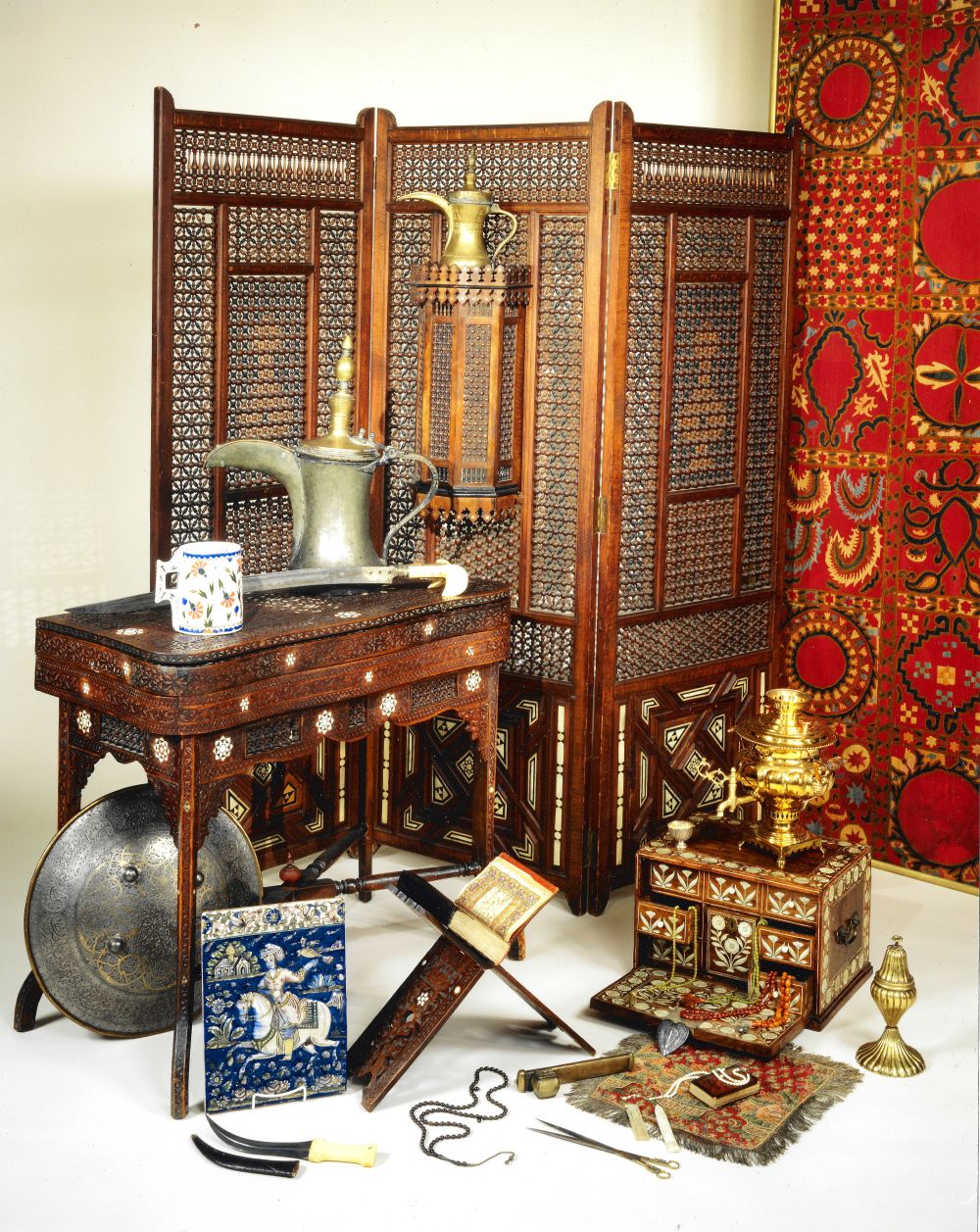
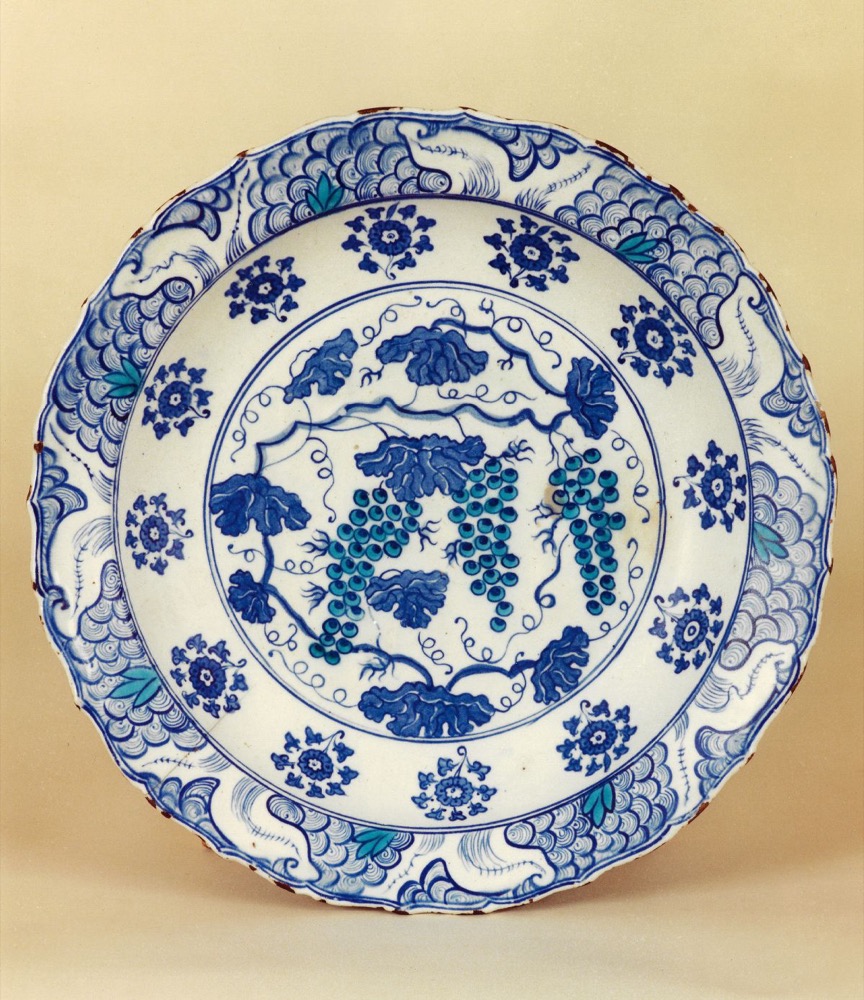
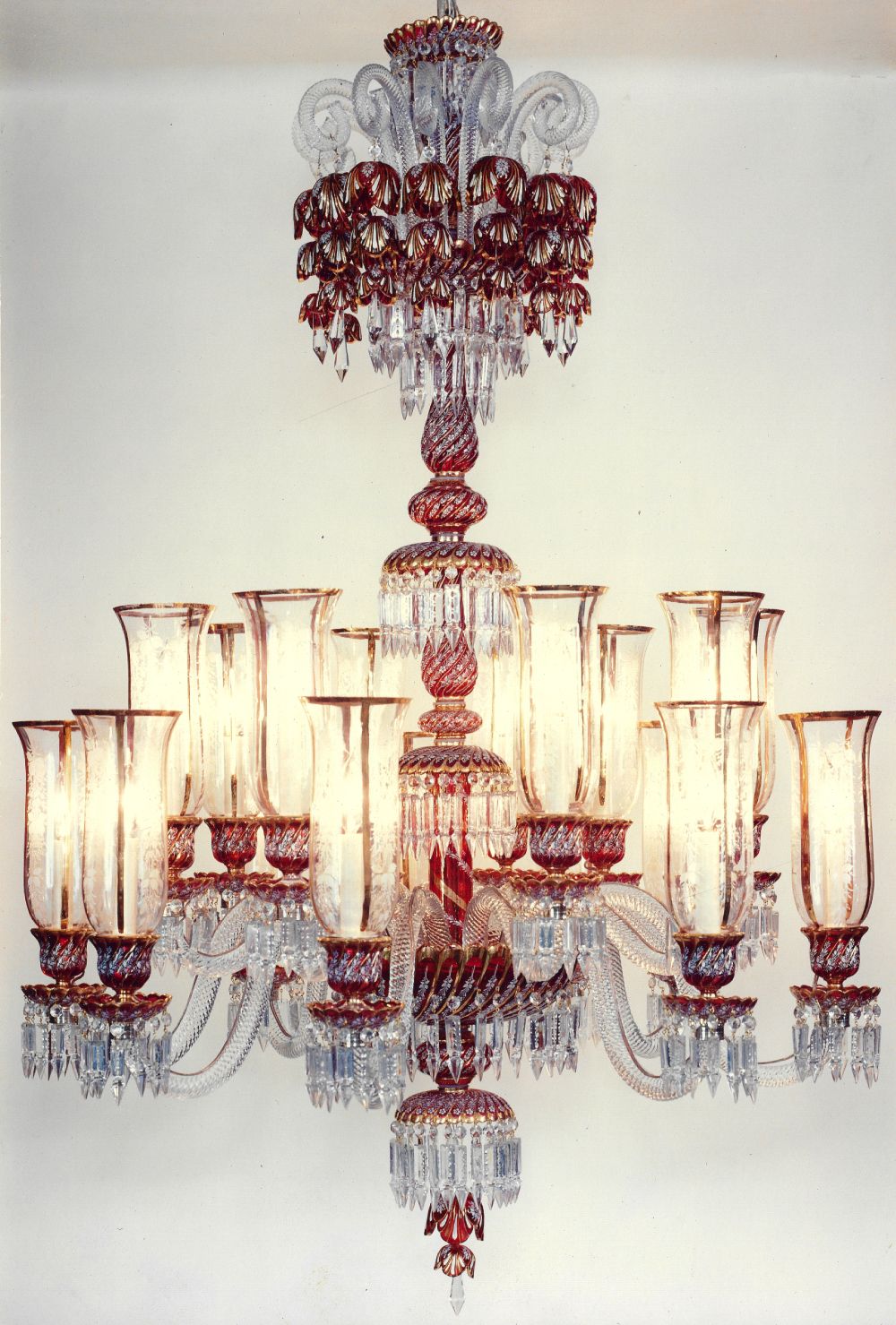
The other half of the trade
The same page offers something besides objects. Buying and selling is the visible half of a dealer's work; the rest is knowing what a thing is, what it is worth, and how it should be put right.
“Let us be your design source and consultant for Middle Eastern decor. Appraisal and Restoration Services.”
Fil Caravan advertisement
That offer still stands. Request an appraisal.
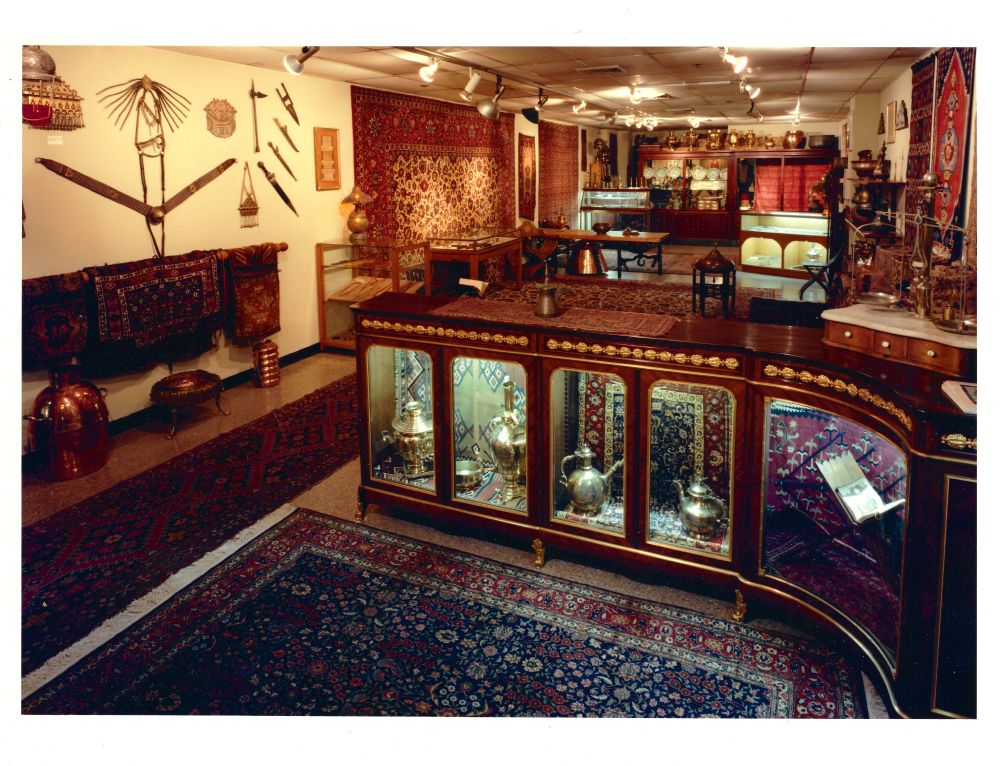
“We invite you to visit our spacious gallery.”
1982 and 1983
Where the magazines sent people
Within six years of opening, the house was the address the trade press gave out.
In March 1982, writing on Russian samovars, Signature told its readers that to find a good one they would have to prowl antique shops here and abroad, or find a good source. It named one: Fil Caravan Inc. in New York City. The clipping in the archive still carries the gallery's own rubber stamp in the margin, 1050 Second Avenue.
Two months later the house made its first sale to the Russian Tea Room, which held the largest private collection of samovars outside Russia. The two facts belong together.
To find one, you will have to prowl through antique shops both here and abroad, or find a good source such as Fil Caravan Inc. in New York City.
John J. Poister, Signature, March 1982
The following May the British magazine Antique Collector ran a long feature on Ottoman copper, timed to the Council of Europe exhibition on Anatolian civilisations in Istanbul. The objects photographed for it were the gallery's. The credit at the foot of the page reads: illustrations by courtesy of Fil Caravan Inc, Manhattan Arts and Antiques Centre, 1050 Second Avenue, New York.
The gallery as a lecture room
Scholars, twenty dollars a seat
The 1988 conference was not a single evening. For years the gallery ran a programme, and asked the audience to buy a ticket.
The announcement for the 1995 season went out on the gallery's own letterhead, 301 East 57th Street, and promised an exhibition of Islamic arms and armour to follow. Two lectures, on consecutive evenings, in the galleries on Second Avenue off the north east corner of 57th Street.
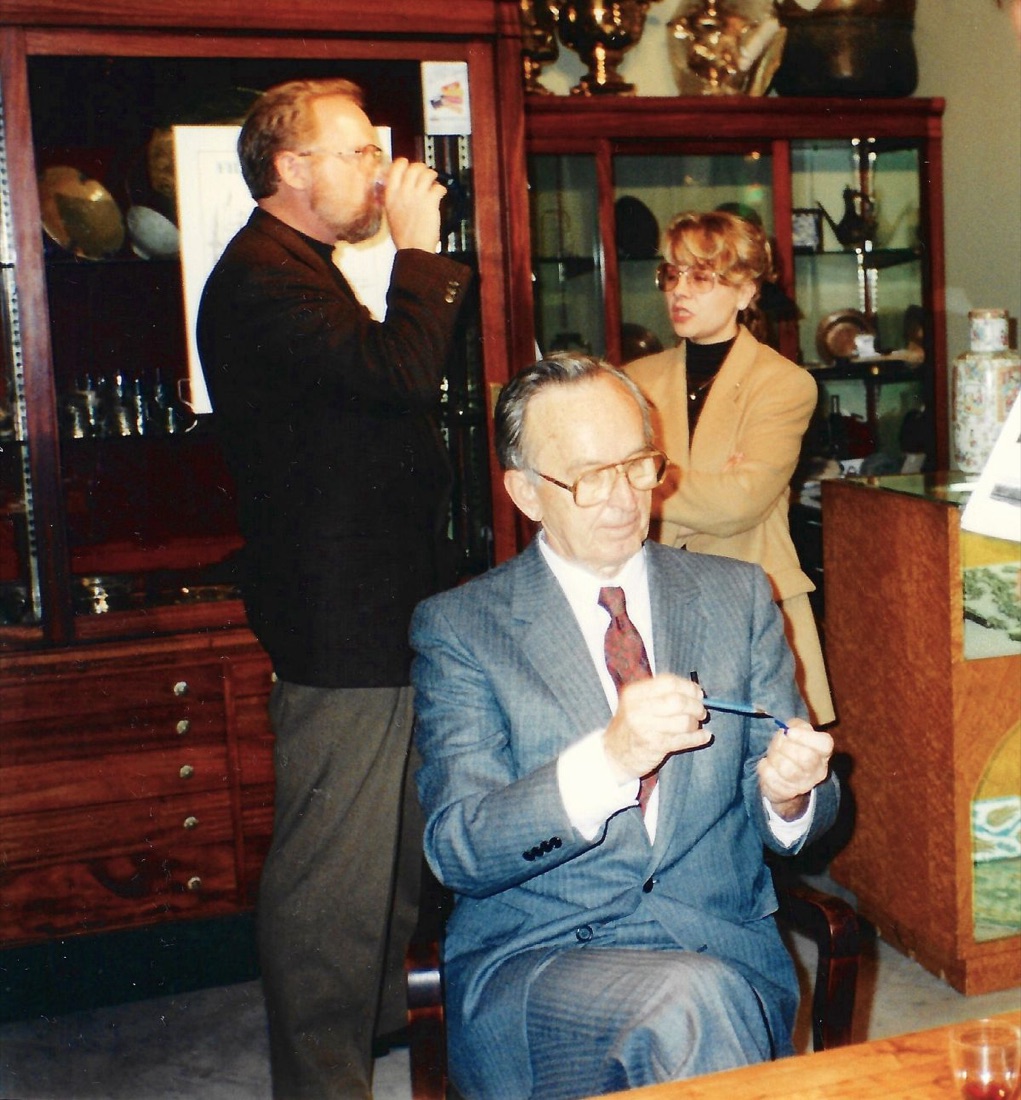
On Wednesday 11 January, Dr. Philip Gould, Art History Professor Emeritus, on the essential differences of Eastern and Western art. Gould had taught at Columbia, Sarah Lawrence and National Taiwan University, curated museum exhibitions and produced documentaries. On Thursday 12 January, Dr. Leo S. Figiel, on the art of Damascus steel: the Kirk Nardaban pattern, the rose pattern, and how the blades were made. Figiel had practised radiology in Detroit for forty years, collected Japanese and Indian arms, given pieces to the Detroit Institute of Arts, the University of Michigan Museum of Art, the Flint Art Museum, the Smithsonian and the Denver Art Museum, and written the book on the subject.
Admission twenty dollars a lecture. Refreshments afterwards. Space is limited, we urge you to purchase tickets early.
The evening itself
Professor Zygulski of the National Museum in Krakow, who had spoken at the Ottoman conference in 1988, came back to lecture again in the 1990s. The photographs of those evenings show the same mahogany cabinets, the same crowded rooms, and a queue for the signing table.
In print, and in Cambridge
The book on samovars, and a samovar for Harvard
The house did not only deal in samovars. It published the collector's handbook on them.
A gallery advertisement of the 57th Street years announces it at the foot of the column, under the whole trade of the house set out in capitals.
“Now available a collector's handbook, Samovars: The Art of the Russian Metalworkers.”
Fil Caravan advertisement, 301 East 57th Street
To order, twenty five dollars and postage. The same page carries the address, the telephone and the fax, and the words the house set under its own name: Dealers in Islamic Art & Antiques.
The Russian Tea Room
The first sale to the Russian Tea Room was made in May 1982, and over the years several dozen antique samovars and brass pieces went the same way. In 1985 Faith Stewart-Gordon expanded the banquet room on the second floor, and this house furnished much of what stood in it. When Warner LeRoy bought the restaurant late in 1996 he asked Fil Caravan to appraise the samovars that had come with the sale. There were thirty one, and many of them had been sold to the Tea Room by this house in the first place.
By then the restaurant held the largest private collection of samovars outside Russia. The house had helped assemble it, and was asked to value it.
On 9 April 1996 the Davis Center for Russian Studies presented a samovar from this house to Kathryn W. Davis. On 23 May, on Harvard University Russian Research Center letterhead, Marshall I. Goldman, the centre's associate director, wrote to Nabi Israfil at 301 East 57th Street and gave Fil Caravan leave to publish the photograph of himself holding it. The letter is also the proof of the address: the gallery was still on 57th Street in 1996.
1995 to 2005
The United Nations
For a decade the house laid the floors of the United Nations for its largest occasions.
“We decorated about 30 conference rooms with antique oriental rugs plus several oversize large rugs for special events areas.”
Nabi Israfil
- 1995The Fiftieth Anniversary Special Commemorative Meeting.
- 2000The Millennium Summit, 6 to 8 September 2000, New York.
- 2001The special postponed General Debate of the 56th Session of the General Assembly. One room was decorated for it.
- 2005The World Summit, 14 to 16 September 2005, New York.
Since 1985
The World Music Institute
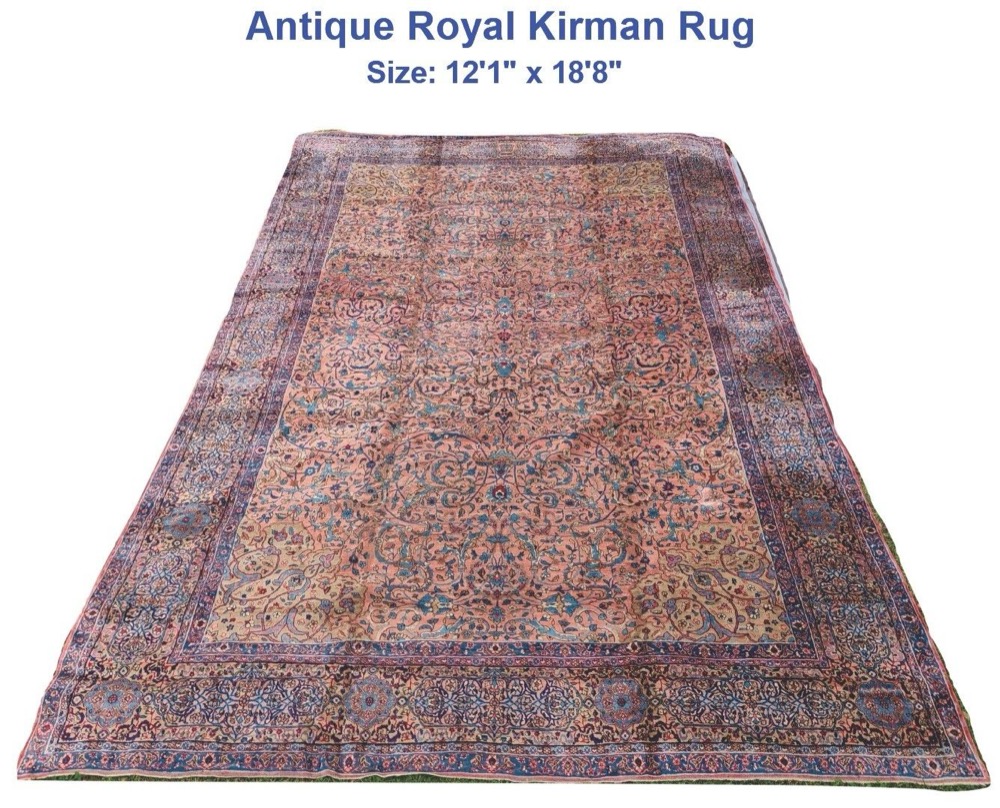
A rug is furniture, and it is also a floor, a seat and a stage. The kilims and rugs of this house have been sat on in front of a New York audience, which is more than most objects in a gallery can say.
“We have been supporters of the World Music Institute since its founding in 1985. We have decorated stages for world renowned artists with our antique oriental rugs and textiles.”
Nabi Israfil
The other half of the house
Izabella
She is in the founding photographs and she is in the shop, across four decades and two continents.
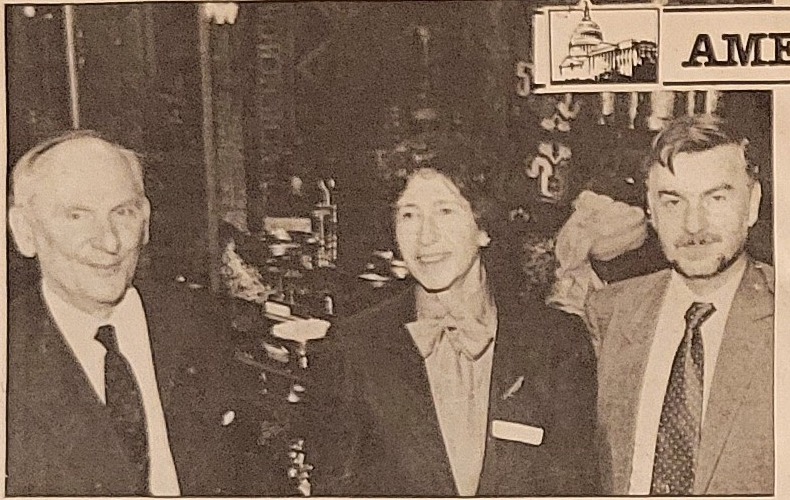
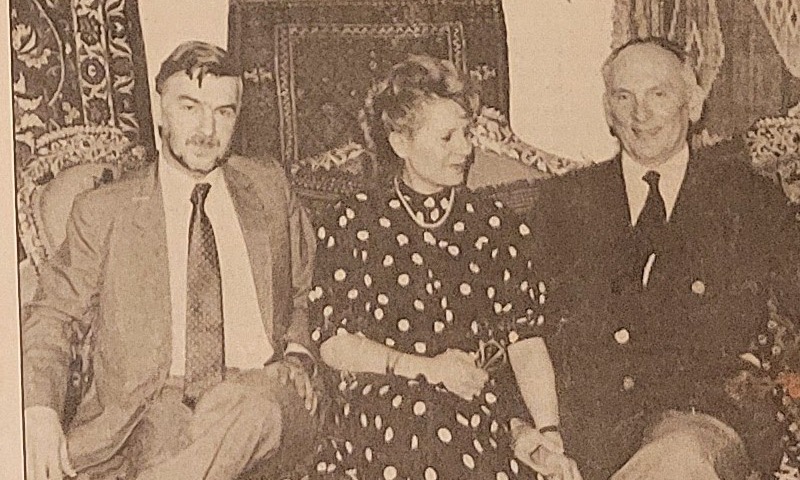
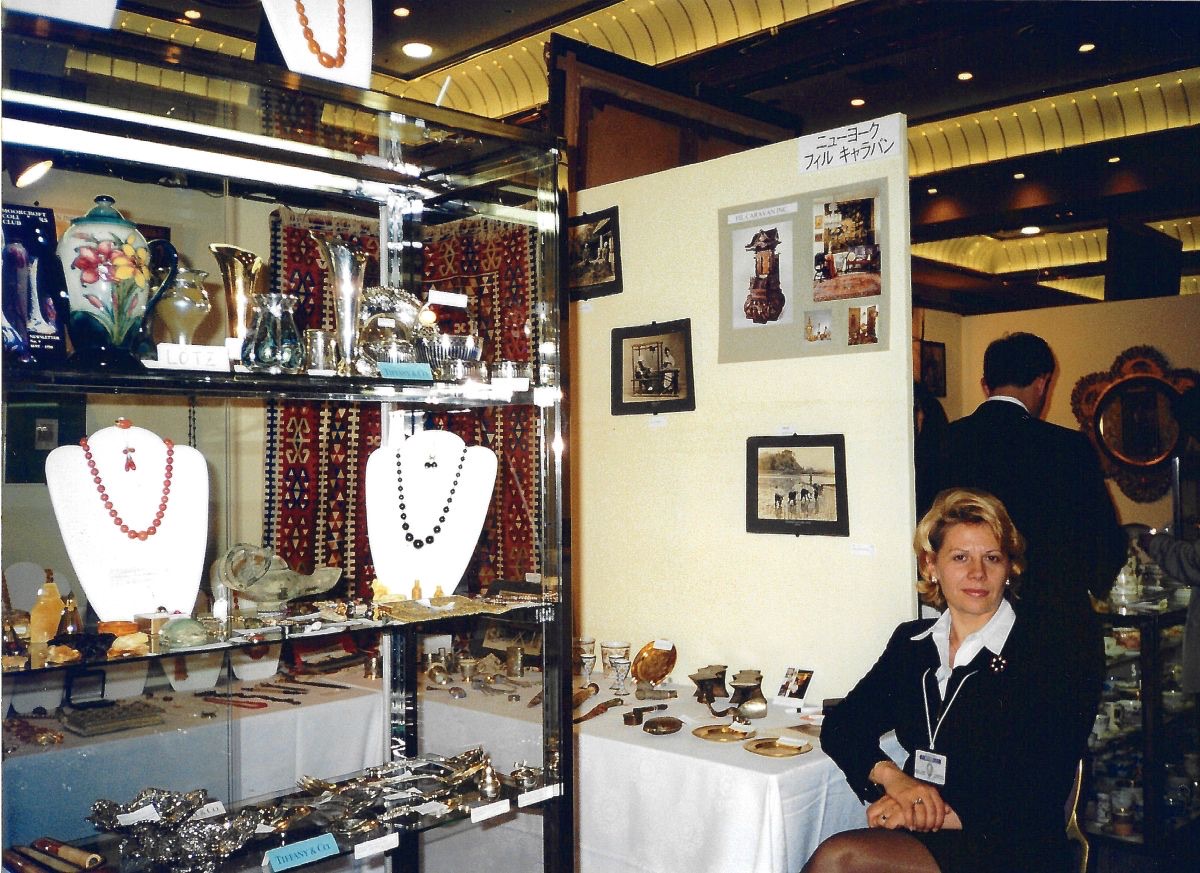
Izabella Israfil sits beside her husband in the gallery in the Hurriyet photograph of 1988. She is at the counter on 57th Street in 1992, in front of the vitrine with a large blue and white charger in it and a Heriz carpet under her feet. She is at the display cases in 1995. And in 1999 she is in Tokyo, running the Fil Caravan stand at the Japantiques fair under a sign that reads, in Japanese, New York, Fil Caravan.
The photograph on the right was taken in the arms room in 1995. There is a notice on the wall behind her asking visitors to ask for assistance before handling the arms. She is handling the arms.
A gallery of this kind is rarely one person, and the record here is plain about it. What is missing is her own account, in her own words, and it belongs on this page when she gives it.
Where the work went
A dealer to the city
Nabi Israfil has dealt in art and antiques in New York for fifty years. About thirty conference rooms at the United Nations were laid with rugs from this house. Harvard's Davis Center for Russian Studies commissioned a samovar from it and gave that samovar to Kathryn W. Davis. The Russian Tea Room bought from it for fourteen years and then asked it to appraise the collection. Musicians have sat on its kilims at the World Music Institute since 1985.
Scholars lectured in its rooms: Professor Zdzislaw Zygulski Jr. of the National Museum in Krakow, Dr. Philip Gould, Dr. Leo S. Figiel. Magazines borrowed its stock to photograph and printed its name in the credits. The trade press sent collectors to its door.
The gallery door was its own kind of record. The earliest stars to visit were Joni Mitchell and Anthony Quinn; the last was Michael Jackson.
The house is open
Fifty years of it, catalogued and on the wall again
The galleries are behind us. The collection is not. Every piece has a page, a photograph and a price. If instead you have something of your own and want to know what it is, that is the other half of the trade.